Inforsa Forensic Mental Health Care, Vlaardingenlaan 5, 1059, GL, Amsterdam, the Netherlands.
Department of Child and Adolescent Psychiatry, Amsterdam University Medical Center, Meibergdreef 5, 1105, AZ, Amsterdam, the Netherlands.
BMC Psychiatry. 2020 Aug 25;20(1):418. doi: 10.1186/s12888-020-02819-2.
Forensic psychiatric patients often suffer from a multitude of severe psychiatric and social problems. Meanwhile multimodal evidence-based interventions are scarce and treatment effectiveness is in need of improvement. The main goal of forensic psychiatric treatment is to address psychiatric and social factors and thereby mitigate criminal behaviour. Notably, a supportive social network is an important protective factor for criminal behaviour. As such, improving a poor social network may decrease the risk of criminal recidivism. This study aims to examine the effectiveness of the addition of an informal social network intervention (FNC) to treatment as usual (TAU) among forensic psychiatric outpatients.
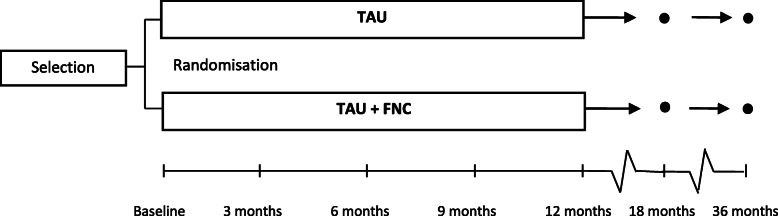
In a mono-center randomized controlled clinical trial with two parallel groups, forensic psychiatric outpatients with social network-related problems (N = 105) will be allocated to either TAU + FNC or TAU alone. The informal social network intervention consists of a 12-month coaching intervention, performed by the forensic network coach (a volunteer trained by an informal care institute). Assessments will be conducted at baseline and 3 months, 6 months, 9 months, 12 months, and 18 months after baseline. The primary outcome variable is mental wellbeing. Psychiatric functioning, criminal recidivism, substance abuse, quality of life, social network, social support, loneliness and self-sufficiency are included as secondary outcomes. A variety of potential mediators and moderators of effectiveness will be explored. Additionally, a qualitative evaluation of effectiveness will be performed.
This study will contribute to the existing literature of forensic treatment effectiveness as it is the first RCT examining the effectiveness of adding a social network intervention in a forensic outpatient population. If effectiveness is shown, forensic mental health care could be optimized by collaborating with informal care or community initiatives aimed at improving a positive social network. In addition, results will provide insight regarding mediators and moderators of treatment effectiveness.
This study is registered at the Netherlands Trial Register ( NTR7163 ). Date of registration: 16 april 2018.
法医精神病患者通常患有多种严重的精神和社会问题。同时,多模式循证干预措施稀缺,治疗效果需要提高。法医精神病治疗的主要目标是解决精神和社会因素,从而减轻犯罪行为。值得注意的是,一个支持性的社会网络是犯罪行为的一个重要保护因素。因此,改善不良的社会网络可能会降低犯罪复发的风险。本研究旨在检验在法医门诊患者中添加非正式社会网络干预(FNC)对常规治疗(TAU)的效果。
在一项具有两个平行组的单中心随机对照临床试验中,将有社会网络相关问题的法医门诊患者(N=105)分配到 TAU+FNC 或 TAU 组。非正式社会网络干预包括为期 12 个月的辅导干预,由法医网络教练(一名由非正式护理机构培训的志愿者)进行。评估将在基线和 3 个月、6 个月、9 个月、12 个月和 18 个月后进行。主要结局变量是心理健康。精神病功能、犯罪复发、药物滥用、生活质量、社会网络、社会支持、孤独感和自立能力作为次要结局。将探索各种潜在的有效性中介和调节因素。此外,还将对有效性进行定性评估。
本研究将为法医治疗效果的现有文献做出贡献,因为它是第一个在法医门诊人群中检验添加社会网络干预有效性的 RCT。如果显示出有效性,通过与旨在改善积极社会网络的非正式护理或社区倡议合作,法医精神保健可以得到优化。此外,研究结果将为治疗效果的中介和调节因素提供见解。
本研究在荷兰试验注册中心(NTR7163)注册。注册日期:2018 年 4 月 16 日。