Department of Dermatology, Incheon St. Mary's Hospital, The Catholic University of Korea, Seoul 06591, Korea.
Department of Biomedicine & Health Sciences, The Catholic University of Korea, Seoul 06591, Korea.
Int J Mol Sci. 2020 Aug 24;21(17):6079. doi: 10.3390/ijms21176079.
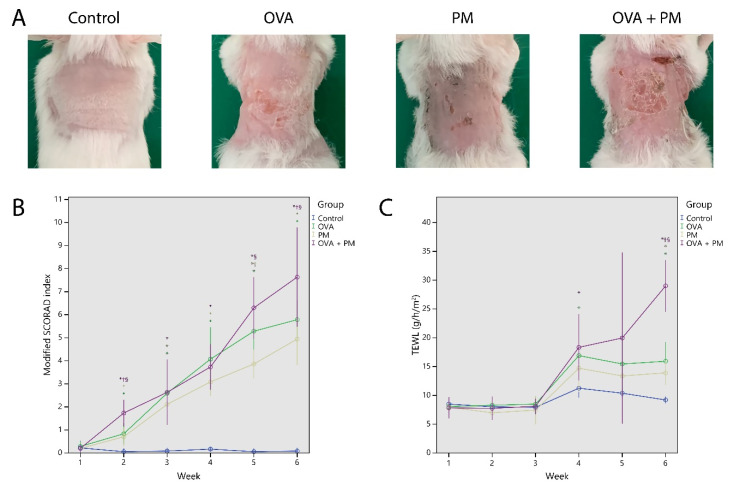
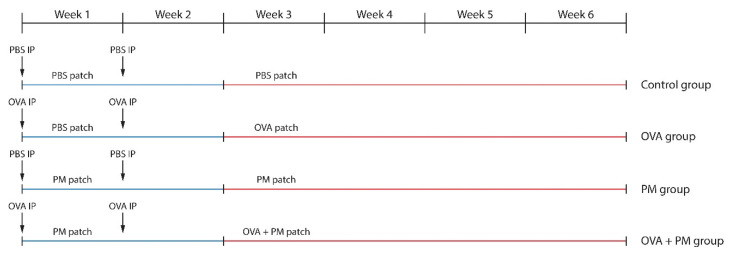
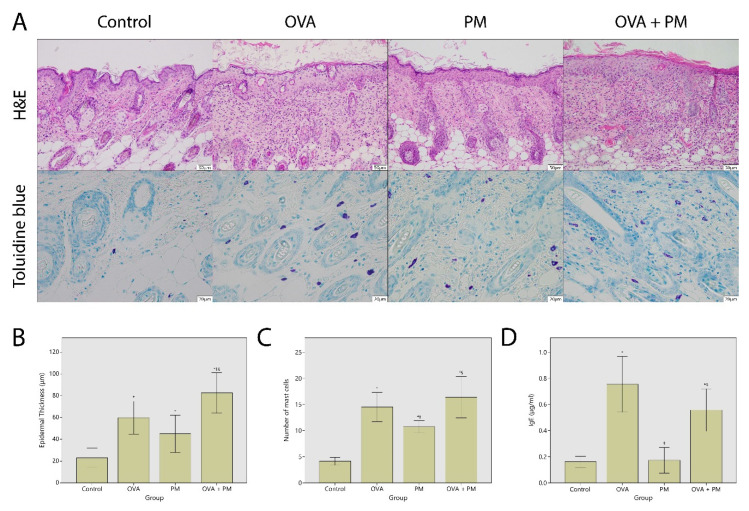
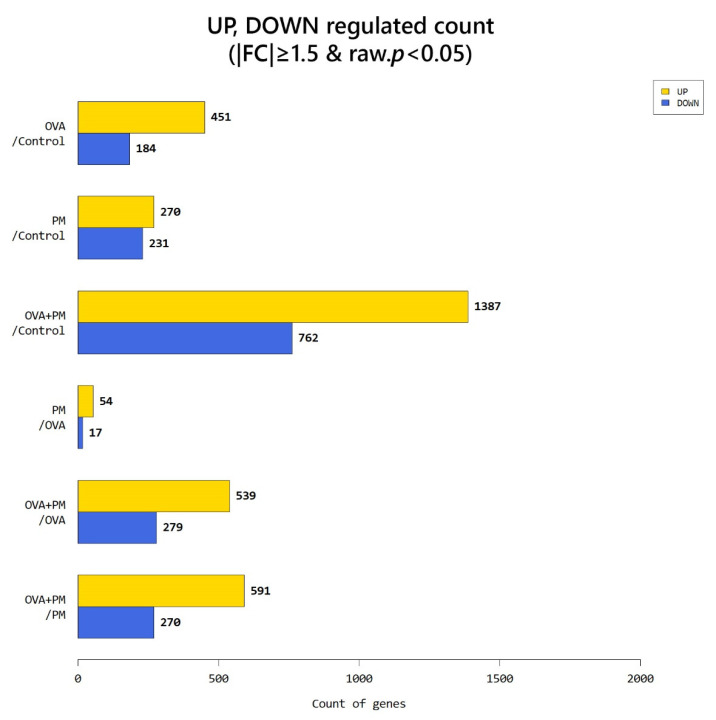
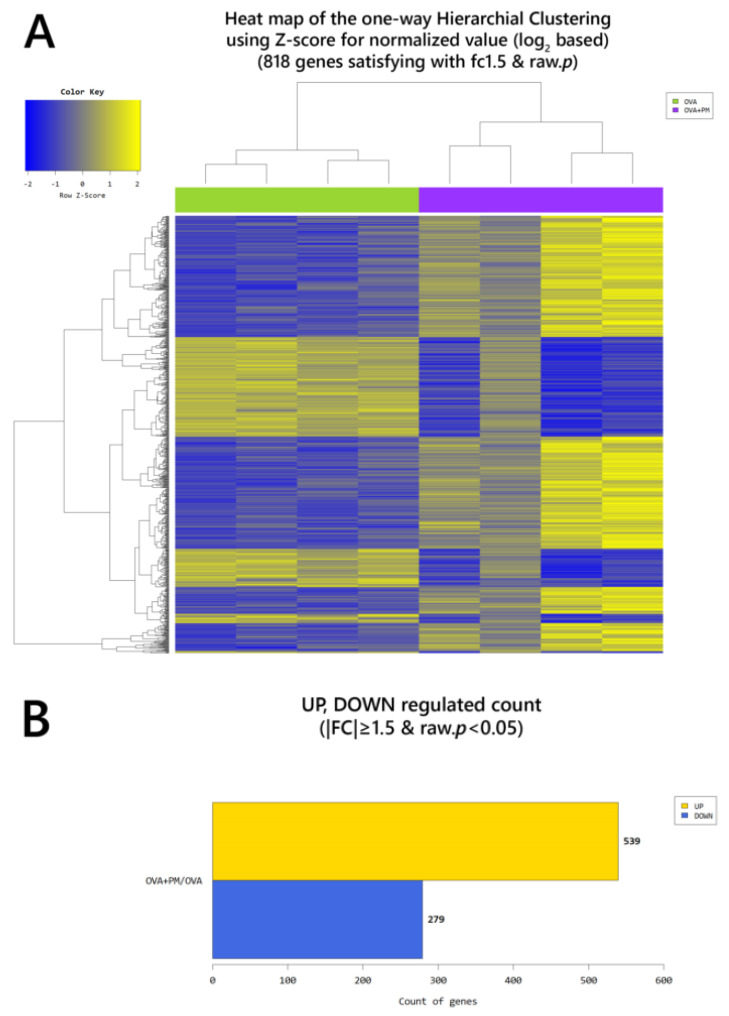
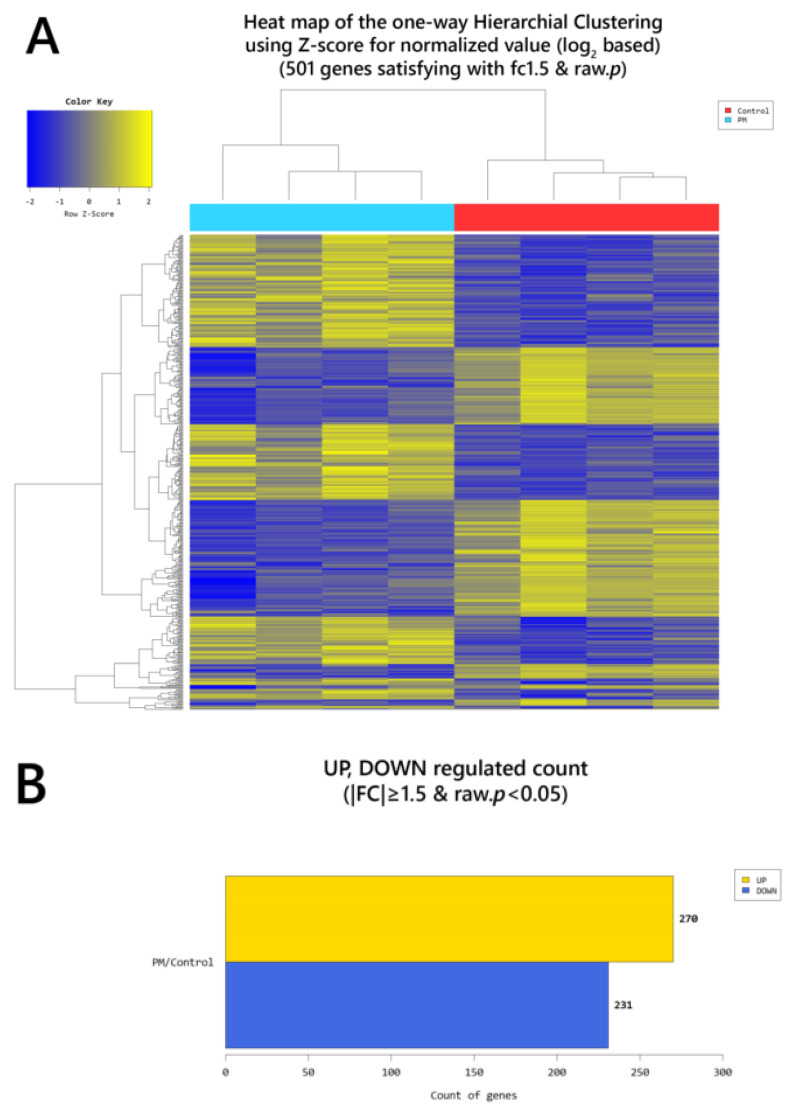
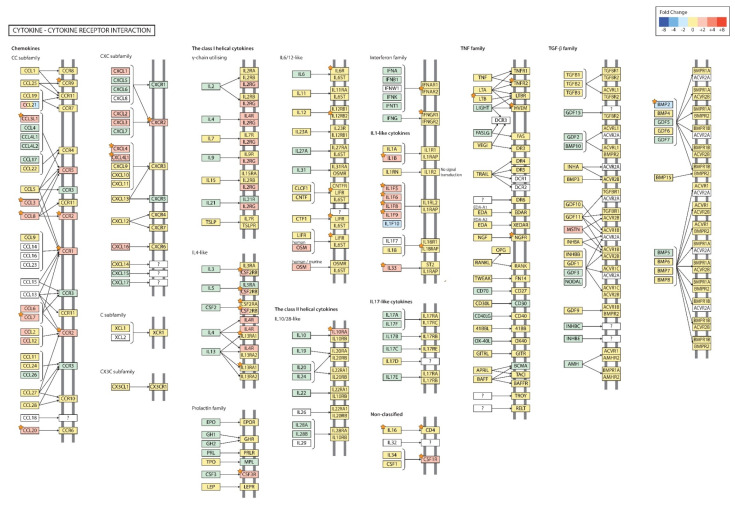
Air pollution reportedly contributes to the development and exacerbation of atopic dermatitis (AD). However, the exact mechanism underlying this remains unclear. To examine the relationship between air pollution and AD, a clinical, histological, and genetic analysis was performed on particulate matter (PM)-exposed mice. Five-week-old BALB/c mice were randomly divided into four groups (control group, ovalbumin (OVA) group, PM group, OVA + PM group; = 6) and treated with OVA or PM alone or together. Cutaneous exposure to OVA and PM alone resulted in a significant increase in skin severity scores, trans-epidermal water loss (TEWL) and epidermal thickness compared to the control group at Week 6. The findings were further accentuated in the OVA + PM group showing statistical significance over the OVA group. A total of 635, 501, and 2149 genes were found to be differentially expressed following OVA, PM, and OVA + PM exposure, respectively. Strongly upregulated genes included , , , , (OVA vs. control), , , , , , (PM vs. control) and , , , , (OVA + PM vs. control). In comparing the groups OVA + PM with OVA, 818 genes were differentially expressed with , , , , being the most highly upregulated in the OVA + PM group. Taken together, our study demonstrates that PM exposure induces/aggravates skin inflammation via the differential expression of genes controlling skin barrier integrity and immune response. We provide evidence on the importance of public awareness in PM-associated skin inflammation. Vigilant attention should be paid to all individuals, especially to those with AD.
据报道,空气污染会导致特应性皮炎(AD)的发生和恶化。然而,其具体机制尚不清楚。为了研究空气污染与 AD 之间的关系,对暴露于颗粒物(PM)的小鼠进行了临床、组织学和遗传学分析。将 5 周龄的 BALB/c 小鼠随机分为四组(对照组、卵清蛋白(OVA)组、PM 组、OVA+PM 组;每组 6 只),并单独或联合给予 OVA 或 PM 处理。与对照组相比,单独接触 OVA 和 PM 会导致第 6 周时皮肤严重程度评分、经表皮水分丢失(TEWL)和表皮厚度显著增加。OVA+PM 组的结果进一步加重,与 OVA 组相比具有统计学意义。OVA、PM 和 OVA+PM 暴露后分别发现 635、501 和 2149 个基因差异表达。上调基因包括 、 、 、 (OVA 与对照)、 、 、 、 (PM 与对照)和 、 、 、 (OVA+PM 与对照)。在比较 OVA+PM 组与 OVA 组时,818 个基因差异表达,其中 、 、 、 在 OVA+PM 组中表达上调最明显。综上所述,我们的研究表明,PM 暴露通过控制皮肤屏障完整性和免疫反应的基因的差异表达诱导/加重皮肤炎症。我们提供了关于公众对 PM 相关皮肤炎症的认识的重要性的证据。应密切关注所有人,尤其是 AD 患者。