Département de Biologie, Université de Sherbrooke, Sherbrooke, Québec, Canada.
Maryland Pathogen Research Institute, University of Maryland, College Park, Maryland, USA.
mSphere. 2020 Aug 26;5(4):e00748-20. doi: 10.1128/mSphere.00748-20.
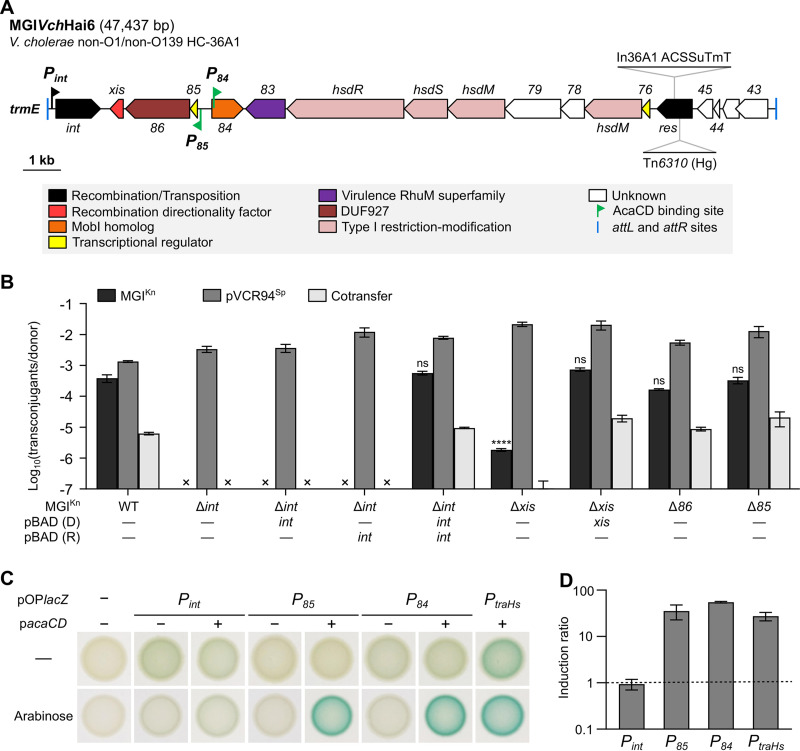
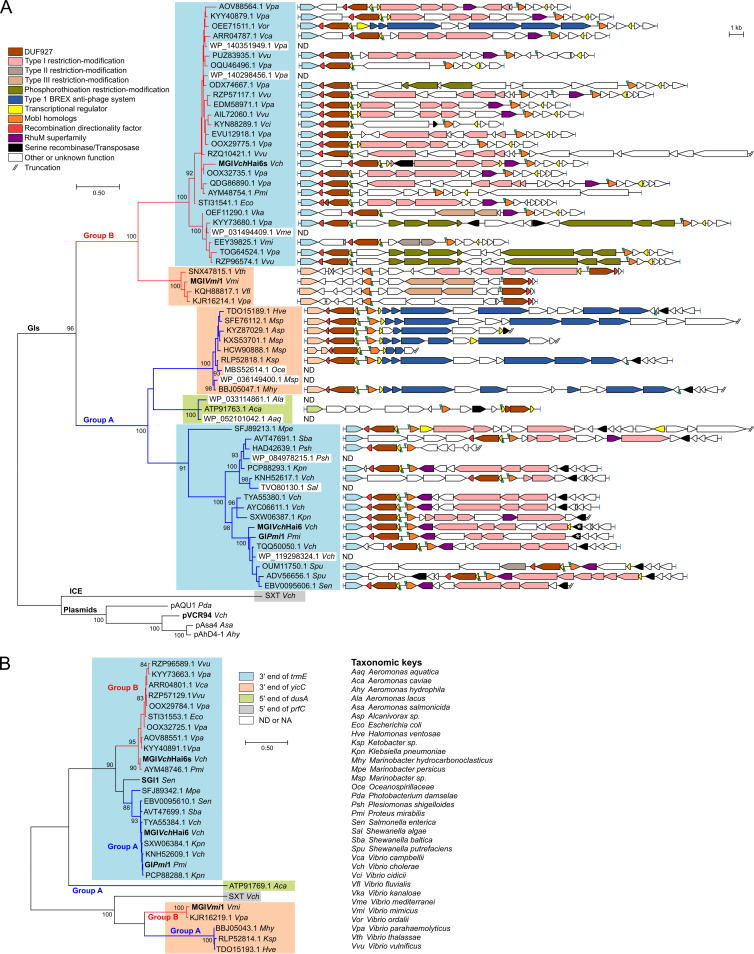
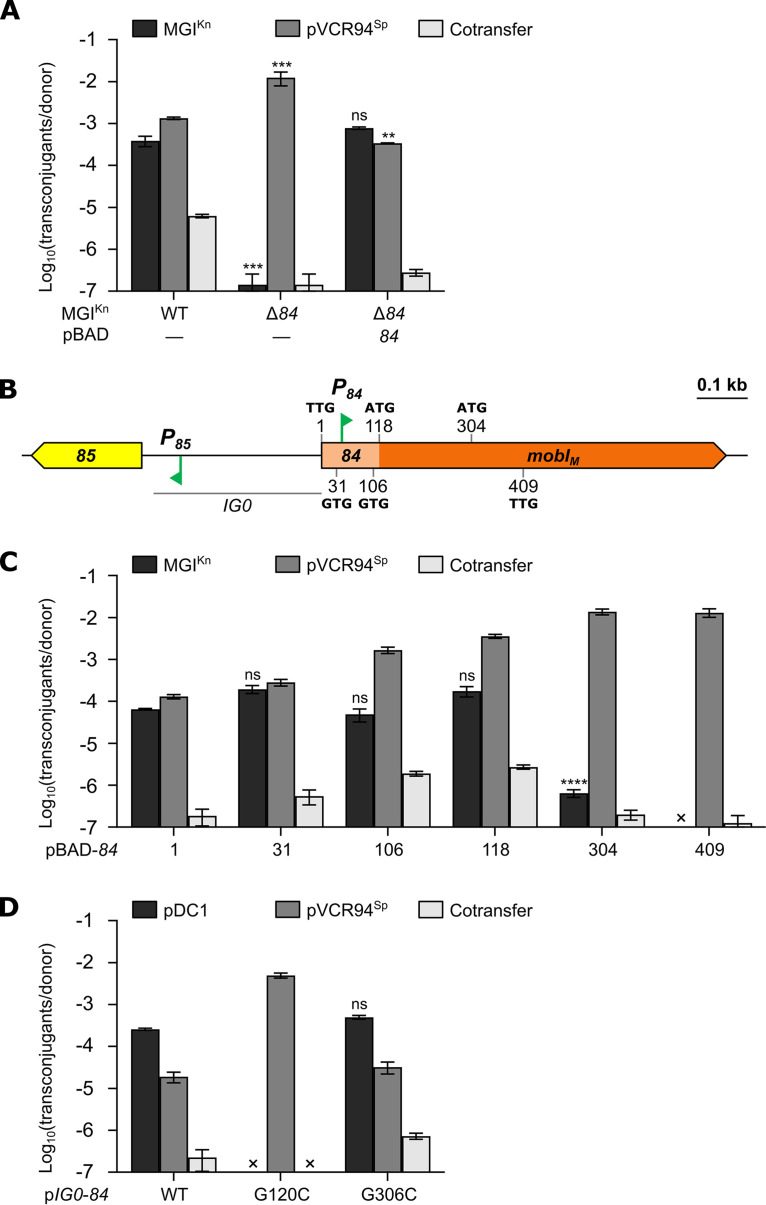
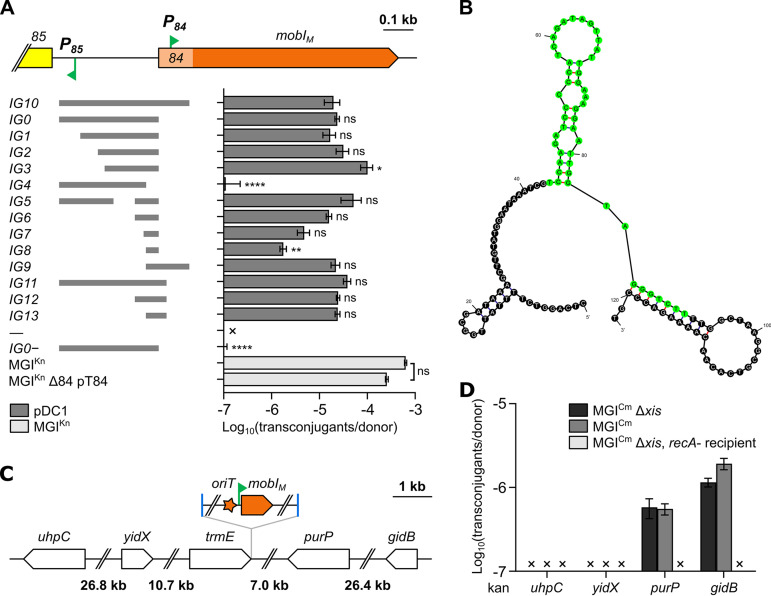
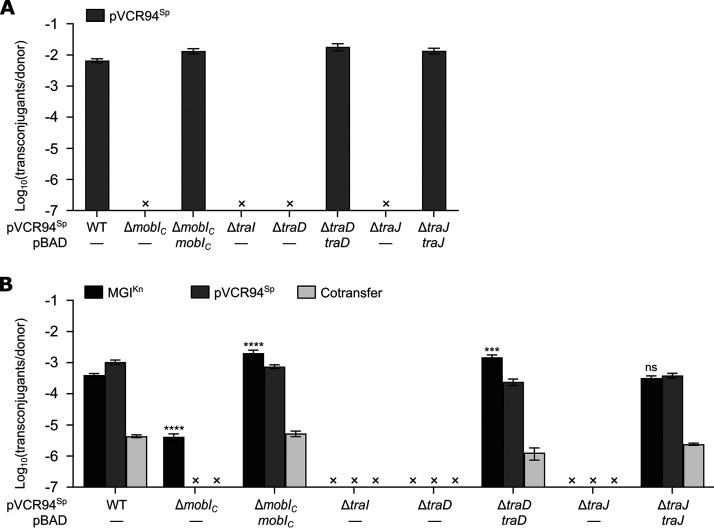
Cholera remains a formidable disease, and reports of multidrug-resistant strains of the causative agent have become common during the last 3 decades. The pervasiveness of resistance determinants has largely been ascribed to mobile genetic elements, including SXT/R391 integrative conjugative elements, IncC plasmids, and genomic islands (GIs). Conjugative transfer of IncC plasmids is activated by the master activator AcaCD whose regulatory network extends to chromosomally integrated GIs. MGIHai6 is a multidrug resistance GI integrated at the 3' end of ( or ) in chromosome 1 of non-O1/non-O139 clinical isolates from the 2010 Haitian cholera outbreak. In the presence of an IncC plasmid expressing AcaCD, MGIHai6 excises from the chromosome and transfers at high frequency. Herein, the mechanism of mobilization of MGIHai6 GIs by IncC plasmids was dissected. Our results show that AcaCD drives expression of GI-borne genes, including and , involved in excision and mobilization. A 49-bp fragment upstream of was found to serve as the minimal origin of transfer () of MGIHai6. The direction of transfer initiated at was determined using IncC plasmid-driven mobilization of chromosomal markers via MGIHai6. In addition, IncC plasmid-encoded factors, including the relaxase TraI, were found to be required for GI transfer. Finally, exploration of genomes identified 47 novel related and potentially AcaCD-responsive GIs in 13 different genera. Despite sharing conserved features, these GIs integrate at , , or and carry a diverse cargo of genes involved in phage resistance. The increasing association of the etiological agent of cholera, serogroup O1 and O139, with multiple antibiotic resistance threatens to deprive health practitioners of this effective tool. Drug resistance in cholera results mainly from acquisition of mobile genetic elements. Genomic islands conferring multidrug resistance and mobilizable by IncC conjugative plasmids were reported to circulate in non-O1/non-O139 clinical strains isolated from the 2010 Haitian cholera outbreak. As these genomic islands can be transmitted to pandemic serogroups, their mechanism of transmission needed to be investigated. Our research revealed plasmid- and genomic island-encoded factors required for the resistance island excision, mobilization, and integration, as well as regulation of these functions. The discovery of related genomic islands carrying diverse phage resistance genes but lacking antibiotic resistance-conferring genes in a wide range of marine dwelling bacteria suggests that these elements are ancient and recently acquired drug resistance genes.
霍乱仍然是一种严重的疾病,在过去的 30 年中,已常见到引起该疾病的病原体的多药耐药菌株的报告。抗性决定因素的普遍存在主要归因于可移动遗传元件,包括 SXT/R391 整合性共轭元件、IncC 质粒和基因组岛(GI)。IncC 质粒的共轭转移由主激活子 AcaCD 激活,其调控网络扩展到染色体整合的 GI。MGIHai6 是一个多药耐药 GI,整合在非-O1/非-O139 临床分离株 1 号染色体的 3'端,来自 2010 年海地霍乱暴发。在表达 AcaCD 的 IncC 质粒存在的情况下,MGIHai6 从染色体上切除并高频转移。在此,解析了 IncC 质粒对 MGIHai6 GI 的动员机制。我们的结果表明,AcaCD 驱动 GI 携带基因的表达,包括参与切除和动员的 和 。在 的上游发现了 49 个碱基对的片段,用作 MGIHai6 的最小转移起点(oriT)。通过 IncC 质粒驱动的 MGIHai6 染色体标记的动员,确定了转移起始的方向。此外,还发现 IncC 质粒编码的因子,包括松弛酶 TraI,对于 GI 转移是必需的。最后,对 基因组的探索在 13 个不同属中发现了 47 个新的相关且可能对 AcaCD 有反应的 GI。尽管具有保守特征,但这些 GI 整合在 、 或 ,并携带参与噬菌体抗性的多种基因的货物。霍乱的病原体 O1 血清群和 O139 血清群与多种抗生素耐药性的日益关联,有可能使卫生保健工作者失去这一有效工具。霍乱的耐药性主要是由于获得可移动遗传元件引起的。报道称,在 2010 年海地霍乱暴发中分离的非-O1/非-O139 临床株中,存在赋予多药耐药性并可通过 IncC 共轭质粒动员的基因组岛。由于这些基因组岛可以传播给大流行的 O 血清群,因此需要研究它们的传播机制。我们的研究揭示了质粒和基因组岛编码的因子,这些因子对于抵抗岛的切除、动员和整合以及这些功能的调节是必需的。在广泛的海洋栖息细菌中发现了携带各种噬菌体抗性基因但缺乏抗生素抗性基因的相关基因组岛,这表明这些元件是古老的,最近才获得的耐药基因。