Bernaus Ada, Blanco Sandra, Sevilla Ana
Departament de Biologia Cellular, Fisiologia i Immunologia, Facultat de Biologia, Universitat de Barcelona, Barcelona, Spain.
Molecular Mechanisms Program, Instituto de Biología Molecular y Celular del Cáncer, Consejo Superior de Investigaciones Científicas (CSIC), University of Salamanca, Salamanca, Spain.
Front Cell Neurosci. 2020 Jul 29;14:209. doi: 10.3389/fncel.2020.00209. eCollection 2020.
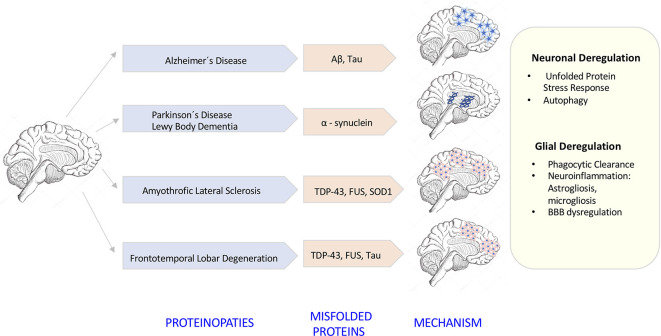
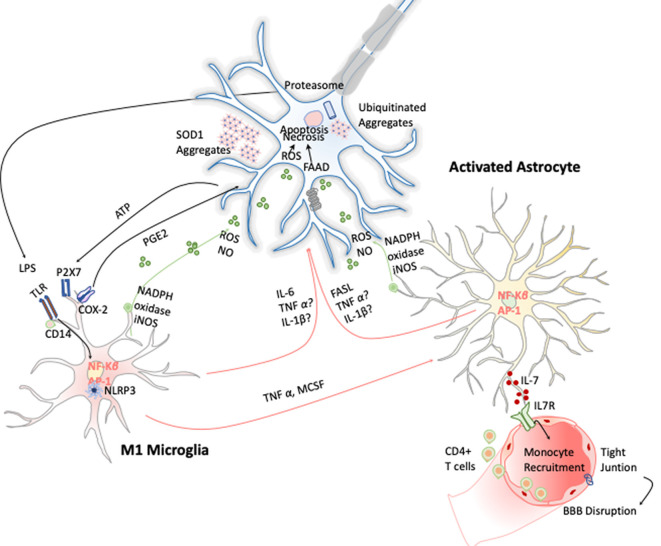
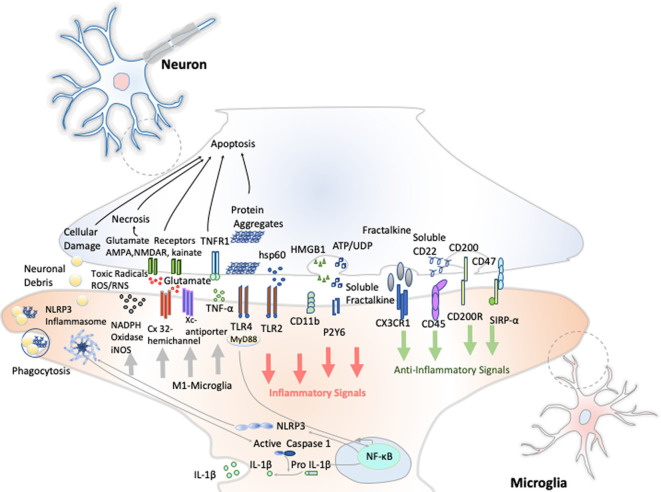
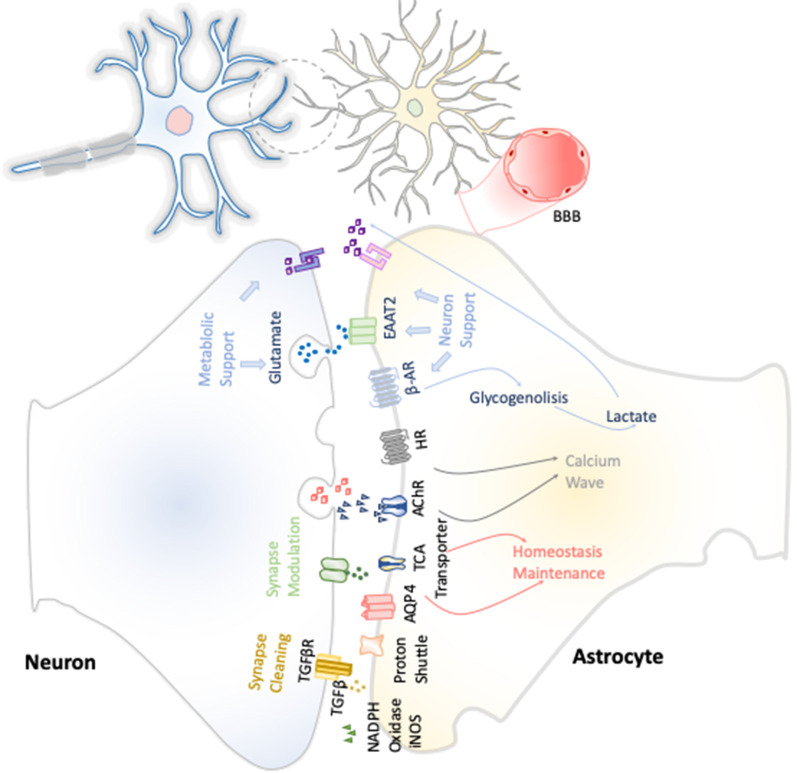
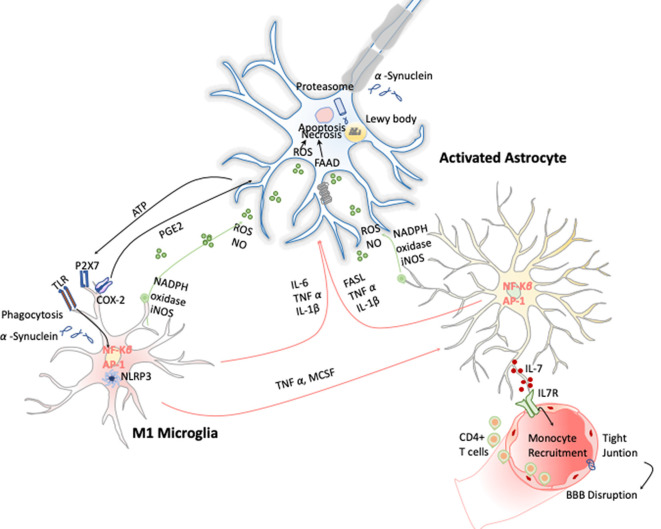
Neuroinflammation constitutes a fundamental cellular process to signal the loss of brain homeostasis. Glial cells play a central role in orchestrating these neuroinflammation processes in both deleterious and beneficial ways. These cellular responses depend on their intercellular interactions with neurons, astrocytes, the blood-brain barrier (BBB), and infiltrated T cells in the central nervous system (CNS). However, this intercellular crosstalk seems to be activated by specific stimuli for each different neurological scenario. This review summarizes key studies linking neuroinflammation with certain neurodegenerative diseases such as Alzheimer disease (AD), Parkinson disease (PD), and amyotrophic lateral sclerosis (ALS) and for the development of better therapeutic strategies based on immunomodulation.
神经炎症是一种基本的细胞过程,用于表明脑内稳态的丧失。胶质细胞在以有害和有益的方式协调这些神经炎症过程中发挥核心作用。这些细胞反应取决于它们与神经元、星形胶质细胞、血脑屏障(BBB)以及中枢神经系统(CNS)中浸润的T细胞的细胞间相互作用。然而,这种细胞间的串扰似乎是由针对每种不同神经学情况的特定刺激所激活的。本综述总结了将神经炎症与某些神经退行性疾病(如阿尔茨海默病(AD)、帕金森病(PD)和肌萎缩侧索硬化症(ALS))相关联的关键研究,以及基于免疫调节开发更好治疗策略的研究。