Calabrese Valeria, Di Maio Anna, Marino Gioia, Cardinale Antonella, Natale Giuseppina, De Rosa Arianna, Campanelli Federica, Mancini Maria, Napolitano Francesco, Avallone Luigi, Calabresi Paolo, Usiello Alessandro, Ghiglieri Veronica, Picconi Barbara
Laboratory of Experimental Neurophysiology, IRCCS San Raffaele Pisana, Rome, Italy.
Department of Medicine, University of Perugia, Perugia, Italy.
Front Aging Neurosci. 2020 Aug 11;12:230. doi: 10.3389/fnagi.2020.00230. eCollection 2020.
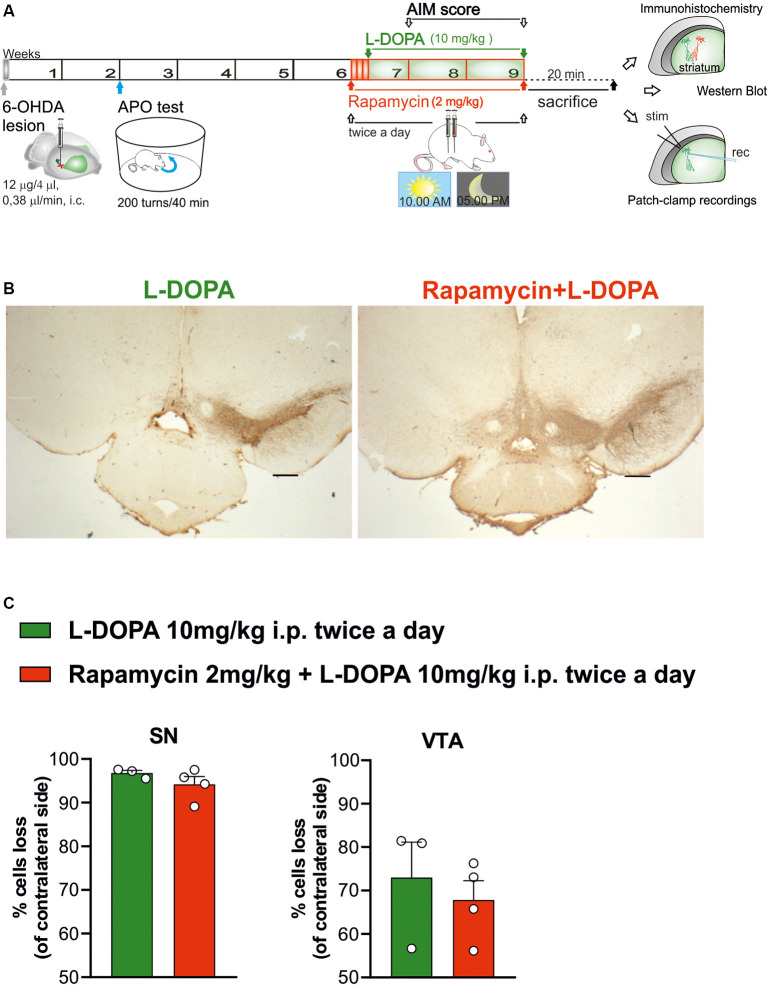
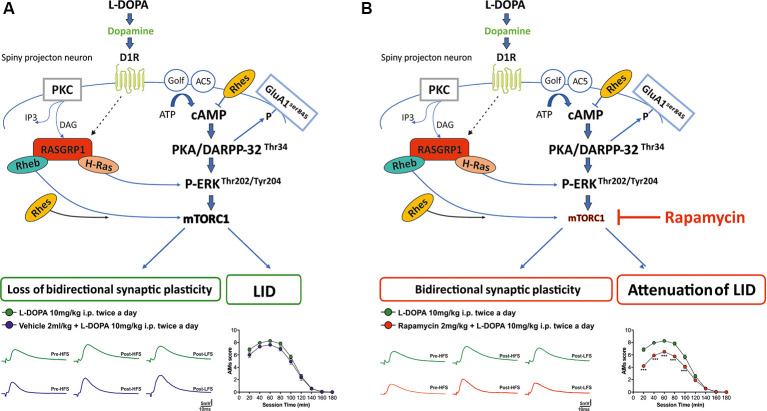
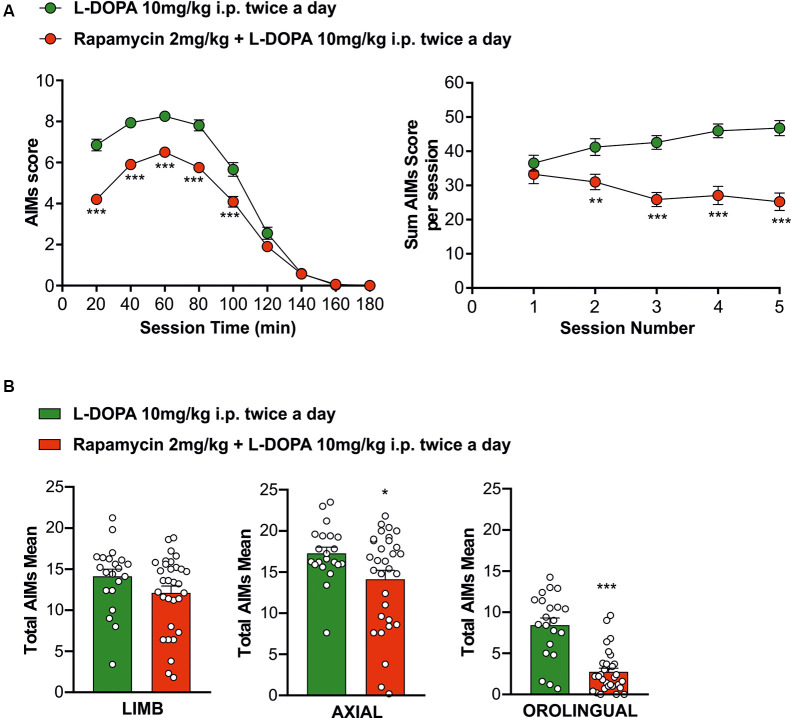
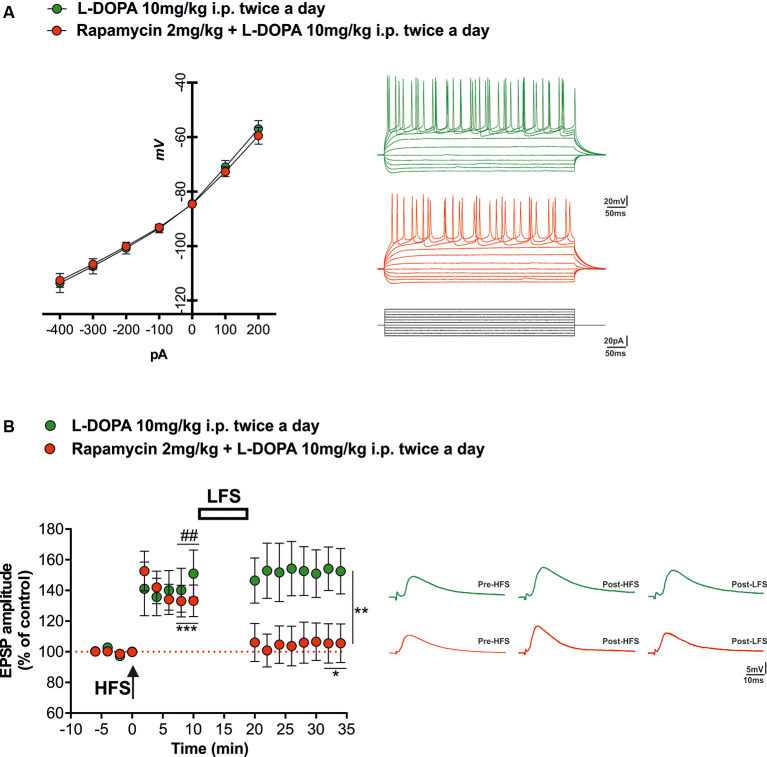
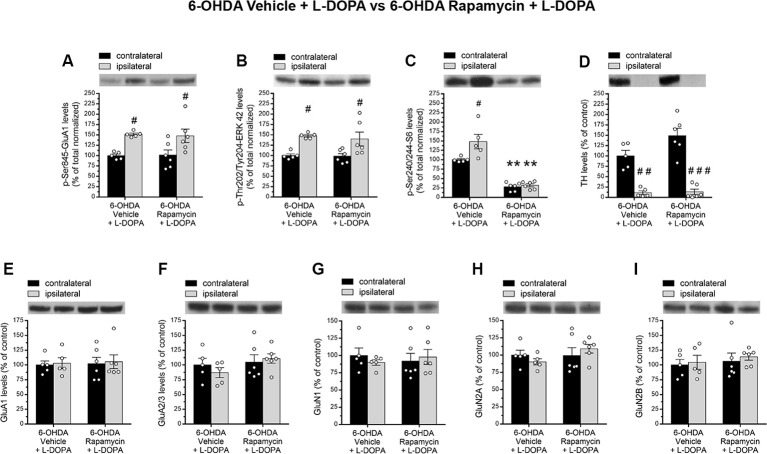
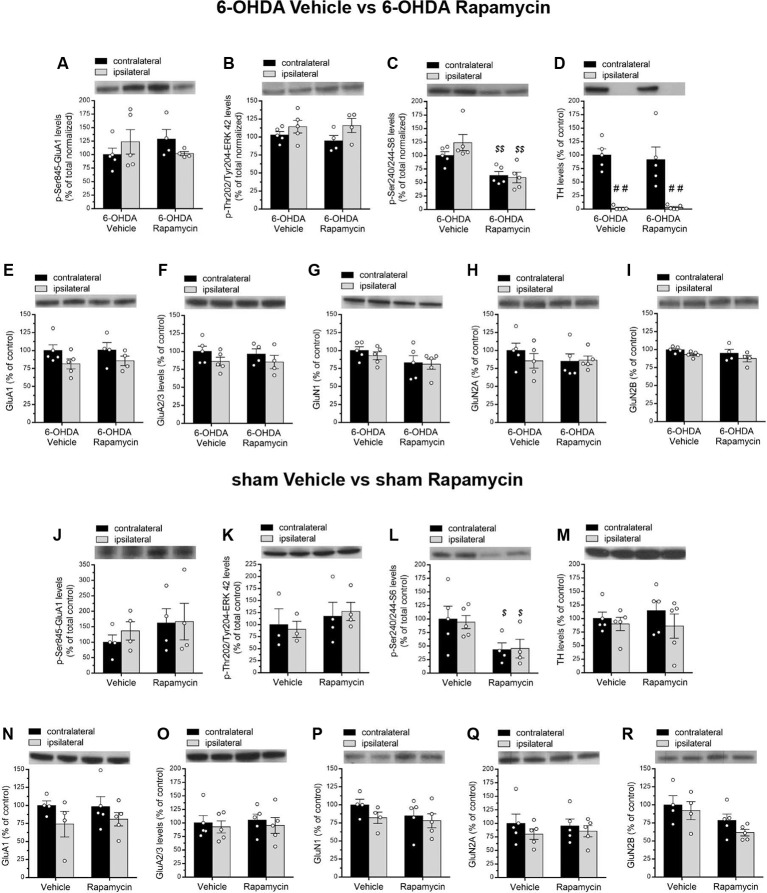
Levodopa (L-DOPA) treatment is the main gold-standard therapy for Parkinson disease (PD). Besides good antiparkinsonian effects, prolonged use of this drug is associated to the development of involuntary movements known as L-DOPA-induced dyskinesia (LID). L-DOPA-induced dyskinesia is linked to a sensitization of dopamine (DA) D1 receptors located on spiny projection neurons (SPNs) of the dorsal striatum. Several evidences have shown that the emergence of LID can be related to striatal D1/cAMP/PKA/DARPP-32 and extracellular signal-regulated kinases (ERK1/2) pathway overactivation associated to aberrant receptor function. In addition, within striatum, ERK1/2 is also able to modulate in a D1 receptor-dependent manner the activity of the mammalian target of rapamycin complex 1 (mTORC1) pathway under DA depletion and L-DOPA therapy. Consistently, increased mTORC1 signaling appears during chronic administration of L-DOPA and shows a high correlation with the severity of dyskinesia. Furthermore, the abnormal activation of the D1/PKA/DARPP-32 cascade is paralleled by increased phosphorylation of the GluA1 subunit of the α-amino-3-hydroxy-5-methyl-4-isoxazolepropionic acid (AMPA) receptor at the PKA Ser845 site. The GluA1 promotes excitatory AMPA receptor-mediated transmission and may be implicated in the alterations found at the corticostriatal synapses of dyskinetic animals. In our study, we investigated the role of mTORC1 pathway activation in modulating bidirectional striatal synaptic plasticity in L-DOPA-treated parkinsonian rats. Inhibition of mTORC1 by coadministration of rapamycin to L-DOPA was able to limit the magnitude of LID expression, accounting for a therapeutic effect of this drug. In particular, behavioral data showed that, in L-DOPA-treated rats, rapamycin administration induced a selective decrease of distinct components of abnormal involuntary movements (i.e., axial and orolingual dyskinesia). Furthermore, patch clamp and intracellular recordings of SPNs revealed that pharmacological inhibition of mTORC1 also resulted associated with a physiological bidirectional plasticity, when compared to dyskinetic rats treated with L-DOPA alone. This study uncovers the important role of mTORC1 inhibition to prevent the loss of striatal bidirectional plasticity under chronic L-DOPA treatment in rodent models of PD.
左旋多巴(L-DOPA)治疗是帕金森病(PD)的主要金标准疗法。除了良好的抗帕金森病作用外,长期使用这种药物会导致出现不自主运动,即L-DOPA诱导的异动症(LID)。L-DOPA诱导的异动症与位于背侧纹状体棘状投射神经元(SPN)上的多巴胺(DA)D1受体的敏化有关。多项证据表明,LID的出现可能与纹状体D1/cAMP/PKA/DARPP-32和细胞外信号调节激酶(ERK1/2)通路的过度激活有关,这与异常的受体功能相关。此外,在纹状体内,ERK1/2还能够在多巴胺耗竭和L-DOPA治疗的情况下,以D1受体依赖的方式调节雷帕霉素复合物1(mTORC1)通路的活性。一致的是,在长期给予L-DOPA期间,mTORC1信号增强,并且与异动症的严重程度高度相关。此外,D1/PKA/DARPP-32级联的异常激活与α-氨基-3-羟基-5-甲基-4-异恶唑丙酸(AMPA)受体的GluA1亚基在PKA Ser845位点的磷酸化增加同时出现。GluA1促进兴奋性AMPA受体介导的传递,并且可能与异动症动物皮质纹状体突触处发现的改变有关。在我们的研究中,我们研究了mTORC1通路激活在调节L-DOPA治疗的帕金森病大鼠双向纹状体突触可塑性中的作用。通过将雷帕霉素与L-DOPA联合给药来抑制mTORC1能够限制LID表达的程度,这说明了这种药物的治疗效果。具体而言,行为数据表明,在L-DOPA治疗的大鼠中,给予雷帕霉素会导致异常不自主运动的不同成分(即轴向和口面部异动症)选择性减少。此外,对SPN的膜片钳和细胞内记录显示,与单独用L-DOPA治疗的异动症大鼠相比,mTORC1的药理抑制也与生理性双向可塑性相关。这项研究揭示了在帕金森病啮齿动物模型中,抑制mTORC1对于防止长期L-DOPA治疗下纹状体双向可塑性丧失的重要作用。