• 文献检索
  • 文档翻译
  • 深度研究
  • 学术资讯
  • Suppr Zotero 插件Zotero 插件
  • 邀请有礼
  • 套餐&价格
  • 历史记录
应用&插件
Suppr Zotero 插件Zotero 插件浏览器插件Mac 客户端Windows 客户端微信小程序
定价
高级版会员购买积分包购买API积分包
服务
文献检索文档翻译深度研究API 文档MCP 服务
关于我们
关于 Suppr公司介绍联系我们用户协议隐私条款
关注我们

Suppr 超能文献

核心技术专利:CN118964589B侵权必究
粤ICP备2023148730 号-1Suppr @ 2026

文献检索

告别复杂PubMed语法,用中文像聊天一样搜索,搜遍4000万医学文献。AI智能推荐,让科研检索更轻松。

立即免费搜索

文件翻译

保留排版,准确专业,支持PDF/Word/PPT等文件格式,支持 12+语言互译。

免费翻译文档

深度研究

AI帮你快速写综述,25分钟生成高质量综述,智能提取关键信息,辅助科研写作。

立即免费体验

具身情绪调节:内隐情绪兼容性对创造性思维的影响。

Embodied Emotion Regulation: The Influence of Implicit Emotional Compatibility on Creative Thinking.

作者信息

Wu Li, Huang Rong, Wang Zhe, Selvaraj Jonathan Nimal, Wei Liuqing, Yang Weiping, Chen Jianxin

机构信息

Department of Psychology, Faculty of Education, Hubei University, Wuhan, China.

College of Life Science, Hubei University, Wuhan, China.

出版信息

Front Psychol. 2020 Aug 6;11:1822. doi: 10.3389/fpsyg.2020.01822. eCollection 2020.

DOI:10.3389/fpsyg.2020.01822
PMID:32849074
原文链接:https://pmc.ncbi.nlm.nih.gov/articles/PMC7424074/
Abstract

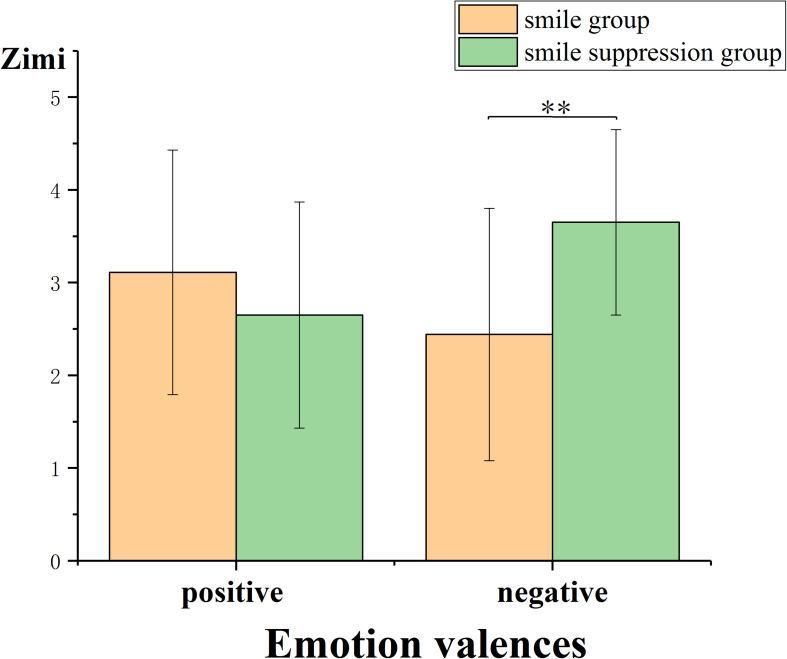
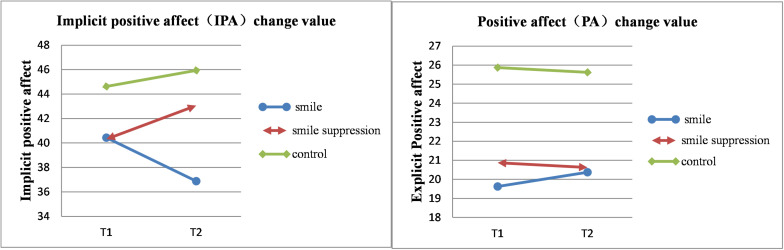
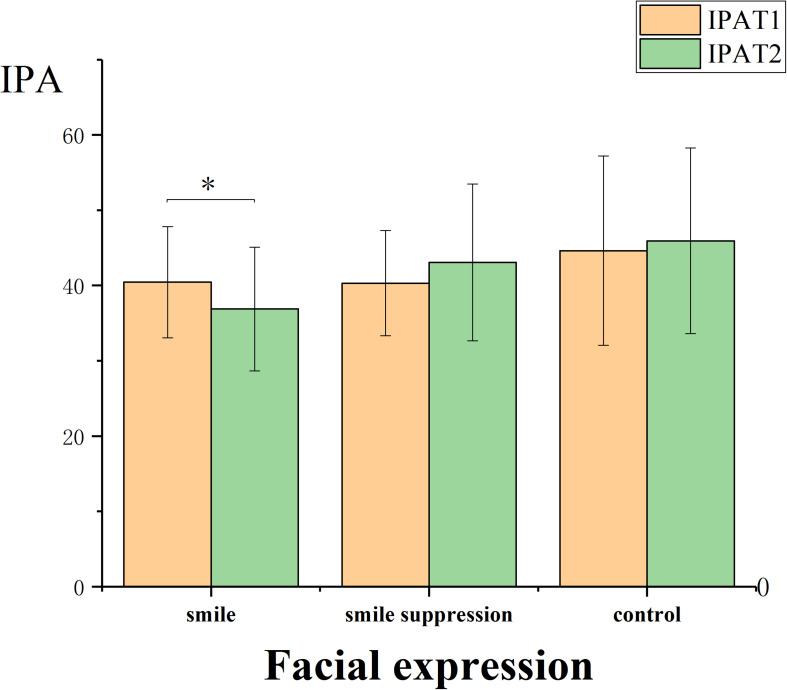
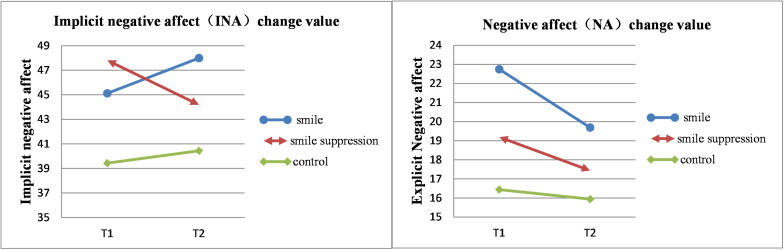
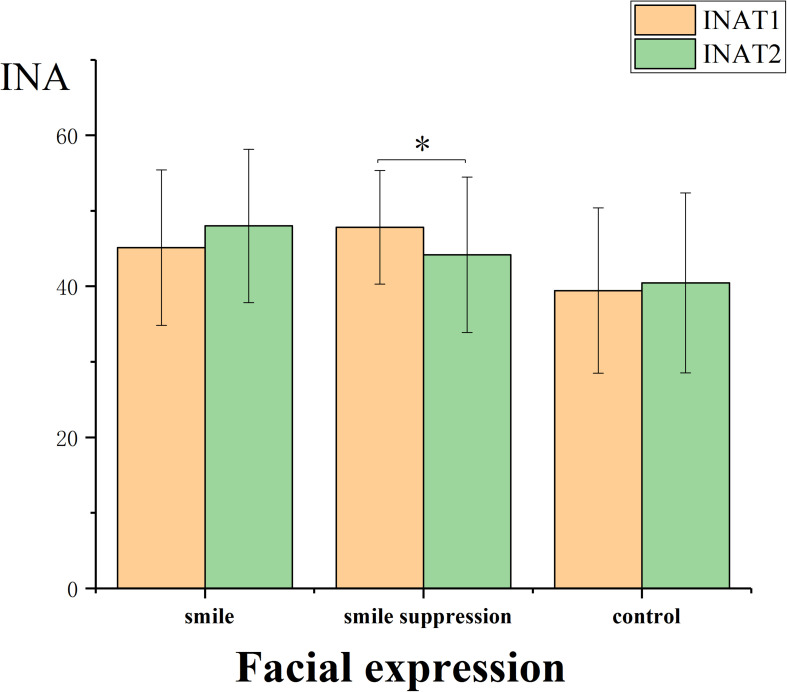
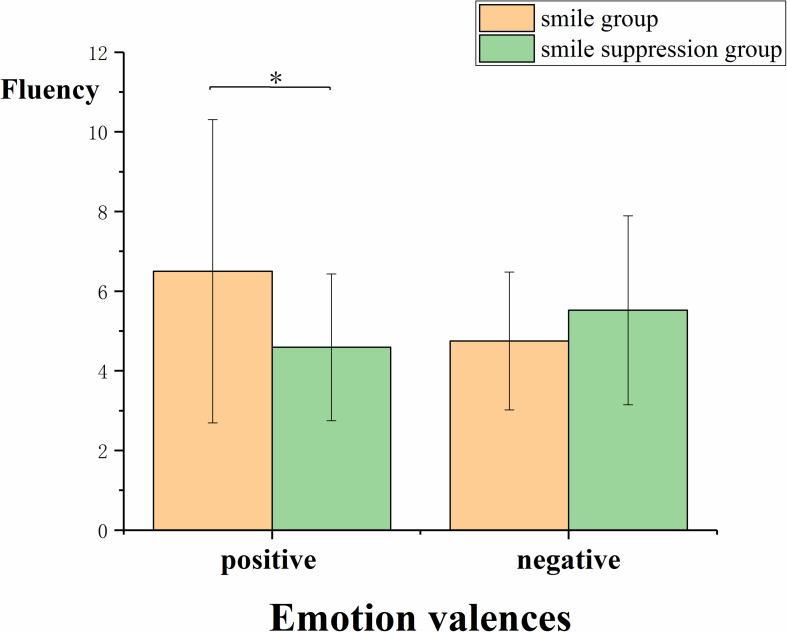
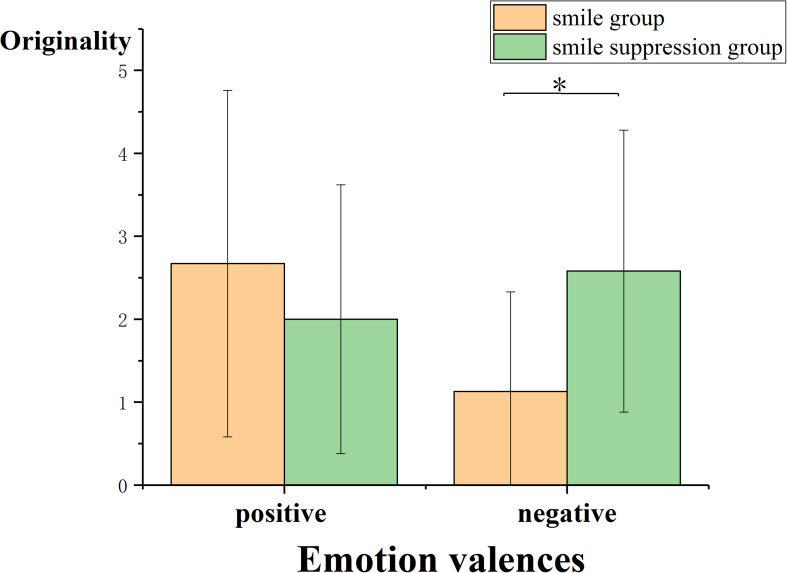
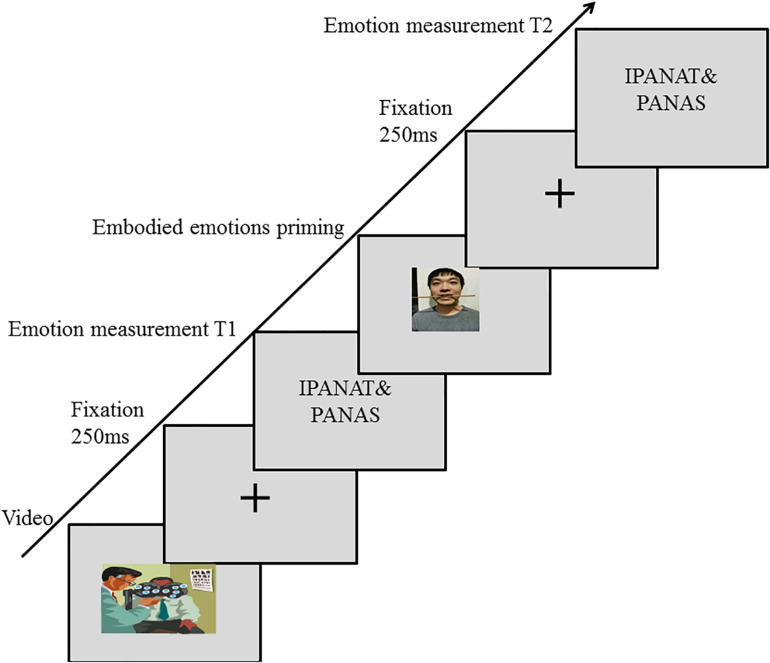
The regulatory effect of embodied emotion on one's general emotion and the impact of the compatibility or incompatibility of the two types of emotion on creative thinking are still debatable. The purpose of this study is to investigate these issues experimentally. In Experiment 1, participants completed an explicit positive and negative emotion test [Positive and Negative Affect Schedule (PANAS)] and an implicit positive and negative emotion test [Implicit Positive and Negative Affect Test (IPANAT)] twice on a computer after emotional video priming was used to induce negative emotions and facial expression manipulation was performed to induce embodied positive or negative emotions. It was found that maintaining the expression of a suppressed smile was helpful in regulating negative emotions ( = 0.047). Specifically, the implicit negative emotions induced by facial expression manipulation had a positive regulating effect on the implicit negative emotions induced by the video (T1, = 47.813; to T2, = 44.188). In Experiment 2, the positive or negative emotions of the participants were induced using emotional videos, and facial expression manipulation was used to induce their embodied positive or negative emotions. Then, the participants completed a creative test by completing alternative use tasks (AUTs) and Chinese character riddles. The AUT fluency score in the emotionally compatible group was significantly higher than that in the emotionally incompatible group ( = 0.032), but while experiencing negative emotions, the emotionally compatible group had a significantly higher originality score and insight in Chinese character riddle score than the emotionally incompatible group ( = 0.017, = 0.004). Therefore, embodied negative emotion has a significant regulating effect on implicit negative emotion. The compatibility of emotion activated by facial expression and viewing a video contributes to creative thinking, whereas the incompatibility of emotion hinders creative thinking. The compatibility of emotion under positive emotions improved thinking fluency, whereas under negative emotions, it activated originality and insight in creative thinking. The influence of such emotional compatibility on creative thinking may be due to the regulating effect of embodied emotions on implicit emotions induced by emotional stimuli.

摘要

具身情绪对个体一般情绪的调节作用以及两种情绪的兼容性或不兼容性对创造性思维的影响仍存在争议。本研究的目的是通过实验来探究这些问题。在实验1中,在使用情绪视频启动来诱发负面情绪并进行面部表情操纵以诱发具身的积极或消极情绪后,参与者在计算机上两次完成了明确的积极和消极情绪测试[积极和消极情绪量表(PANAS)]以及隐含的积极和消极情绪测试[隐含积极和消极情绪测试(IPANAT)]。研究发现,保持抑制性微笑的表情有助于调节负面情绪( = 0.047)。具体而言,面部表情操纵诱发的隐含负面情绪对视频诱发的隐含负面情绪具有积极的调节作用(T1, = 47.813;到T2, = 44.188)。在实验2中,使用情绪视频诱发参与者的积极或消极情绪,并使用面部表情操纵来诱发他们具身的积极或消极情绪。然后,参与者通过完成替代用途任务(AUTs)和汉字谜语来完成创造性测试。情绪兼容组的AUT流畅性得分显著高于情绪不兼容组( = 0.032),但在体验负面情绪时,情绪兼容组在汉字谜语得分上的原创性得分和洞察力显著高于情绪不兼容组( = 0.017, = 0.004)。因此,具身负面情绪对隐含负面情绪具有显著的调节作用。面部表情和观看视频激活的情绪的兼容性有助于创造性思维,而情绪的不兼容性则阻碍创造性思维。积极情绪下情绪的兼容性提高了思维流畅性,而在消极情绪下,它激活了创造性思维中的原创性和洞察力。这种情绪兼容性对创造性思维的影响可能是由于具身情绪对情绪刺激诱发的隐含情绪的调节作用。
https://cdn.ncbi.nlm.nih.gov/pmc/blobs/627c/7424074/d4ee1d278e2b/fpsyg-11-01822-g009.jpg
https://cdn.ncbi.nlm.nih.gov/pmc/blobs/627c/7424074/df81c874fefe/fpsyg-11-01822-g001.jpg
https://cdn.ncbi.nlm.nih.gov/pmc/blobs/627c/7424074/58a6d06e09ad/fpsyg-11-01822-g002.jpg
https://cdn.ncbi.nlm.nih.gov/pmc/blobs/627c/7424074/7c1c9d15f510/fpsyg-11-01822-g003.jpg
https://cdn.ncbi.nlm.nih.gov/pmc/blobs/627c/7424074/a8c7df6b7afb/fpsyg-11-01822-g004.jpg
https://cdn.ncbi.nlm.nih.gov/pmc/blobs/627c/7424074/96a39dff7486/fpsyg-11-01822-g005.jpg
https://cdn.ncbi.nlm.nih.gov/pmc/blobs/627c/7424074/26bb05fbe7af/fpsyg-11-01822-g006.jpg
https://cdn.ncbi.nlm.nih.gov/pmc/blobs/627c/7424074/ac941177f00c/fpsyg-11-01822-g007.jpg
https://cdn.ncbi.nlm.nih.gov/pmc/blobs/627c/7424074/bd3b189e82d0/fpsyg-11-01822-g008.jpg
https://cdn.ncbi.nlm.nih.gov/pmc/blobs/627c/7424074/d4ee1d278e2b/fpsyg-11-01822-g009.jpg
https://cdn.ncbi.nlm.nih.gov/pmc/blobs/627c/7424074/df81c874fefe/fpsyg-11-01822-g001.jpg
https://cdn.ncbi.nlm.nih.gov/pmc/blobs/627c/7424074/58a6d06e09ad/fpsyg-11-01822-g002.jpg
https://cdn.ncbi.nlm.nih.gov/pmc/blobs/627c/7424074/7c1c9d15f510/fpsyg-11-01822-g003.jpg
https://cdn.ncbi.nlm.nih.gov/pmc/blobs/627c/7424074/a8c7df6b7afb/fpsyg-11-01822-g004.jpg
https://cdn.ncbi.nlm.nih.gov/pmc/blobs/627c/7424074/96a39dff7486/fpsyg-11-01822-g005.jpg
https://cdn.ncbi.nlm.nih.gov/pmc/blobs/627c/7424074/26bb05fbe7af/fpsyg-11-01822-g006.jpg
https://cdn.ncbi.nlm.nih.gov/pmc/blobs/627c/7424074/ac941177f00c/fpsyg-11-01822-g007.jpg
https://cdn.ncbi.nlm.nih.gov/pmc/blobs/627c/7424074/bd3b189e82d0/fpsyg-11-01822-g008.jpg
https://cdn.ncbi.nlm.nih.gov/pmc/blobs/627c/7424074/d4ee1d278e2b/fpsyg-11-01822-g009.jpg

相似文献

1
Embodied Emotion Regulation: The Influence of Implicit Emotional Compatibility on Creative Thinking.具身情绪调节:内隐情绪兼容性对创造性思维的影响。
Front Psychol. 2020 Aug 6;11:1822. doi: 10.3389/fpsyg.2020.01822. eCollection 2020.
2
Criterion Validity of the Implicit Positive and Negative Affect Test: Prediction of Facial Affect Perception.内隐积极和消极情绪测试的效标效度:对面部情绪感知的预测
Front Psychol. 2021 Oct 1;12:635368. doi: 10.3389/fpsyg.2021.635368. eCollection 2021.
3
Enhancing creativity: Proper body posture meets proper emotion.增强创造力:合适的身体姿势与合适的情绪相契合。
Acta Psychol (Amst). 2017 Feb;173:32-40. doi: 10.1016/j.actpsy.2016.12.005. Epub 2016 Dec 16.
4
Effects of Creative Thinking and Its Personality Determinants on Negative Emotion Regulation.创造性思维及其人格决定因素对负面情绪调节的影响。
Psychol Rep. 2019 Jun;122(3):916-943. doi: 10.1177/0033294118775973. Epub 2018 Jun 3.
5
How does emotion influence the creativity evaluation of exogenous alternative ideas?情绪如何影响对外源替代想法的创造力评价?
PLoS One. 2019 Jul 5;14(7):e0219298. doi: 10.1371/journal.pone.0219298. eCollection 2019.
6
How does emotion influence different creative performances? The mediating role of cognitive flexibility.情绪如何影响不同的创造性表现?认知灵活性的中介作用。
Cogn Emot. 2014;28(5):834-44. doi: 10.1080/02699931.2013.854195. Epub 2013 Nov 18.
7
Does priming negative emotions really contribute to more positive aesthetic judgments? A comparative study of emotion priming paradigms using emotional faces versus emotional scenes and multiple negative emotions with fEMG.情绪启动真的会促进更积极的审美判断吗?使用情绪面孔与情绪场景以及 fEMG 进行多负性情绪的情绪启动范式的比较研究。
Emotion. 2019 Dec;19(8):1396-1413. doi: 10.1037/emo0000528. Epub 2018 Nov 26.
8
[The influence of reward motivation on emotion regulation].[奖励动机对情绪调节的影响]
Sheng Li Xue Bao. 2019 Aug 25;71(4):562-574.
9
Deep Brain Stimulation of the Subthalamic Nucleus Selectively Modulates Emotion Recognition of Facial Stimuli in Parkinson's Patients.丘脑底核的深部脑刺激选择性调节帕金森病患者对面部刺激的情绪识别。
J Clin Med. 2019 Aug 28;8(9):1335. doi: 10.3390/jcm8091335.
10
Explicit and Implicit Responses of Seeing Own vs. Others' Emotions: An Electromyographic Study on the Neurophysiological and Cognitive Basis of the Self-Mirroring Technique.看到自己与他人情绪时的显性与隐性反应:一项关于自我镜像技术的神经生理和认知基础的肌电图研究
Front Psychol. 2020 Mar 31;11:433. doi: 10.3389/fpsyg.2020.00433. eCollection 2020.

引用本文的文献

1
Effects of Peer and Teacher Support on Students' Creative Thinking: Emotional Intelligence as a Mediator and Emotion Regulation Strategy as a Moderator.同伴和教师支持对学生创造性思维的影响:以情商为中介变量、情绪调节策略为调节变量
J Intell. 2025 Apr 25;13(5):53. doi: 10.3390/jintelligence13050053.
2
Autonomic brain functioning and age-related health concerns.自主神经脑功能与年龄相关的健康问题。
Curr Res Physiol. 2024 Mar 11;7:100123. doi: 10.1016/j.crphys.2024.100123. eCollection 2024.
3
The Impact of Emotional Intelligence on Domain-Specific Creativity: The Mediating Role of Resilience and the Moderating Effects of Gratitude.

本文引用的文献

1
Mind-Body Dissonance: A Catalyst to Creativity.身心失调:创造力的催化剂。
Pers Soc Psychol Bull. 2020 May;46(5):754-768. doi: 10.1177/0146167219875145. Epub 2019 Sep 20.
2
How does emotion influence the creativity evaluation of exogenous alternative ideas?情绪如何影响对外源替代想法的创造力评价?
PLoS One. 2019 Jul 5;14(7):e0219298. doi: 10.1371/journal.pone.0219298. eCollection 2019.
3
Enhancing creativity: Proper body posture meets proper emotion.增强创造力:合适的身体姿势与合适的情绪相契合。
情商对特定领域创造力的影响:心理韧性的中介作用与感恩的调节作用
J Intell. 2022 Nov 27;10(4):115. doi: 10.3390/jintelligence10040115.
Acta Psychol (Amst). 2017 Feb;173:32-40. doi: 10.1016/j.actpsy.2016.12.005. Epub 2016 Dec 16.
4
Embodied mood regulation: the impact of body posture on mood recovery, negative thoughts, and mood-congruent recall.具身情绪调节:身体姿势对情绪恢复、消极思维及情绪一致性回忆的影响
Cogn Emot. 2017 Nov;31(7):1361-1376. doi: 10.1080/02699931.2016.1225003. Epub 2016 Sep 14.
5
From the Revolution to Embodiment: 25 Years of Cognitive Psychology.从革命到体现:认知心理学 25 年。
Perspect Psychol Sci. 2013 Sep;8(5):573-85. doi: 10.1177/1745691613498098.
6
The Unengaged Mind: Defining Boredom in Terms of Attention.未投入的心智:从注意力的角度定义无聊。
Perspect Psychol Sci. 2012 Sep;7(5):482-95. doi: 10.1177/1745691612456044.
7
The role of instrumental emotion regulation in the emotions-creativity link: how worries render individuals with high neuroticism more creative.工具性情绪调节在情绪与创造力联系中的作用:担忧如何使高神经质个体更具创造力。
Emotion. 2014 Oct;14(5):846-56. doi: 10.1037/a0036965. Epub 2014 May 26.
8
What Good Are Positive Emotions?积极情绪有什么好处?
Rev Gen Psychol. 1998 Sep;2(3):300-319. doi: 10.1037/1089-2680.2.3.300.
9
Explicit and implicit emotion regulation: a dual-process framework.显性和隐性情绪调节:双过程框架。
Cogn Emot. 2011 Apr;25(3):400-12. doi: 10.1080/02699931.2010.544160.
10
"I feel better but I don't know why": the psychology of implicit emotion regulation.“我感觉好多了,但不知道为什么”:内隐情绪调节的心理学。
Cogn Emot. 2011 Apr;25(3):389-99. doi: 10.1080/02699931.2010.550505.