Wang Pengcheng, Burley John T, Liu Yang, Chang Jiang, Chen De, Lu Qi, Li Shou-Hsien, Zhou Xuming, Edwards Scott, Zhang Zhengwang
Ministry of Education Key Laboratory for Biodiversity Science and Ecological Engineering, College of Life Sciences, Beijing Normal University, Beijing, China.
Key Laboratory of Animal Ecology and Conservation Biology, Institute of Zoology, Chinese Academy of Sciences, Beijing, China.
Mol Biol Evol. 2021 Jan 4;38(1):263-273. doi: 10.1093/molbev/msaa213.
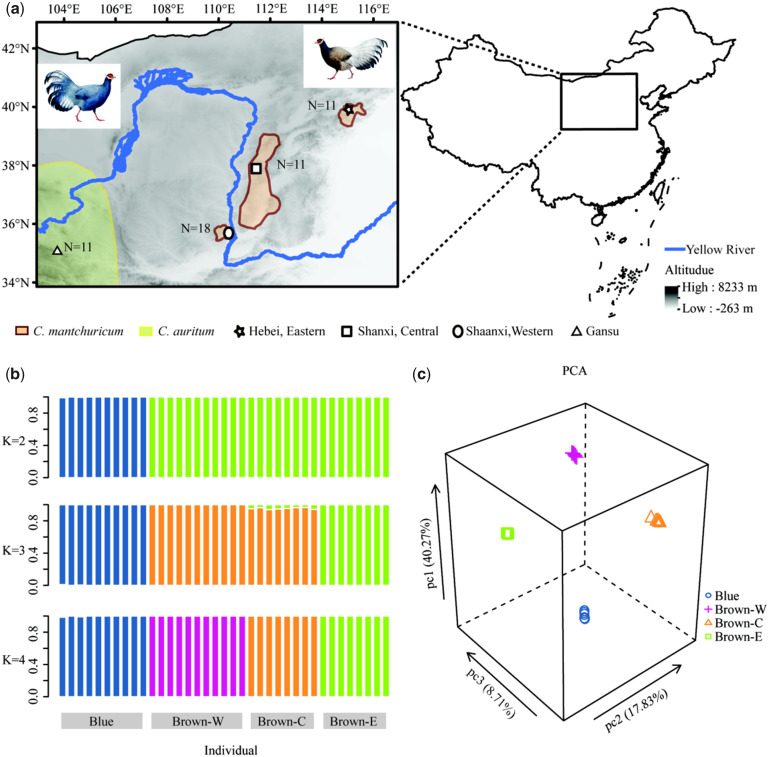
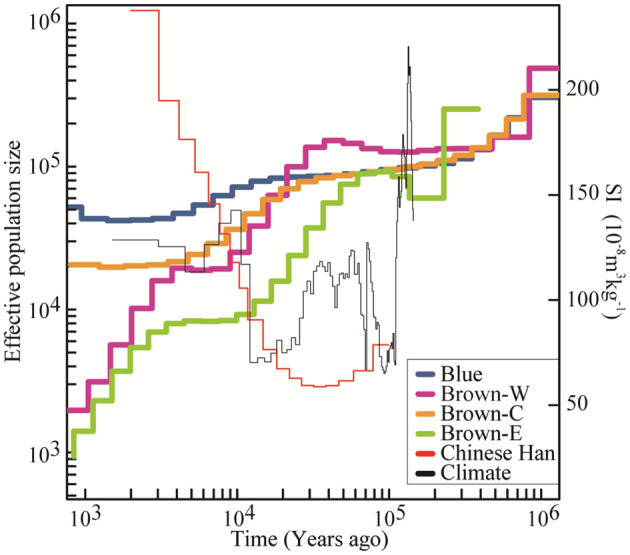
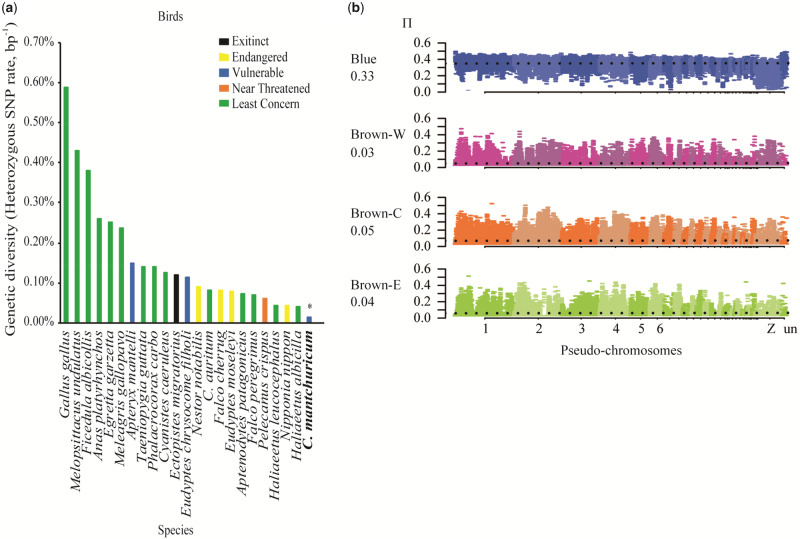
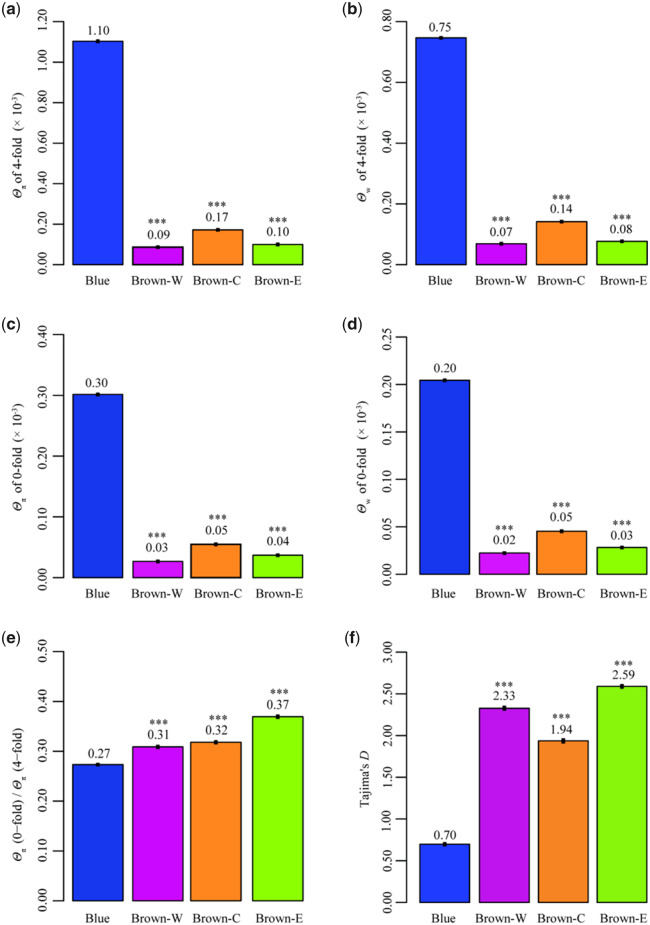
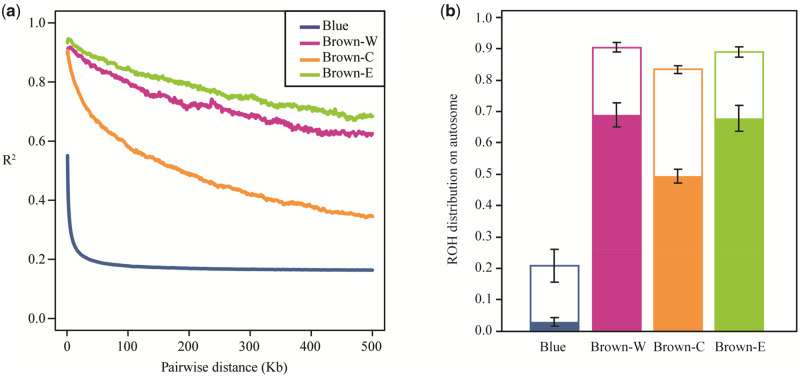
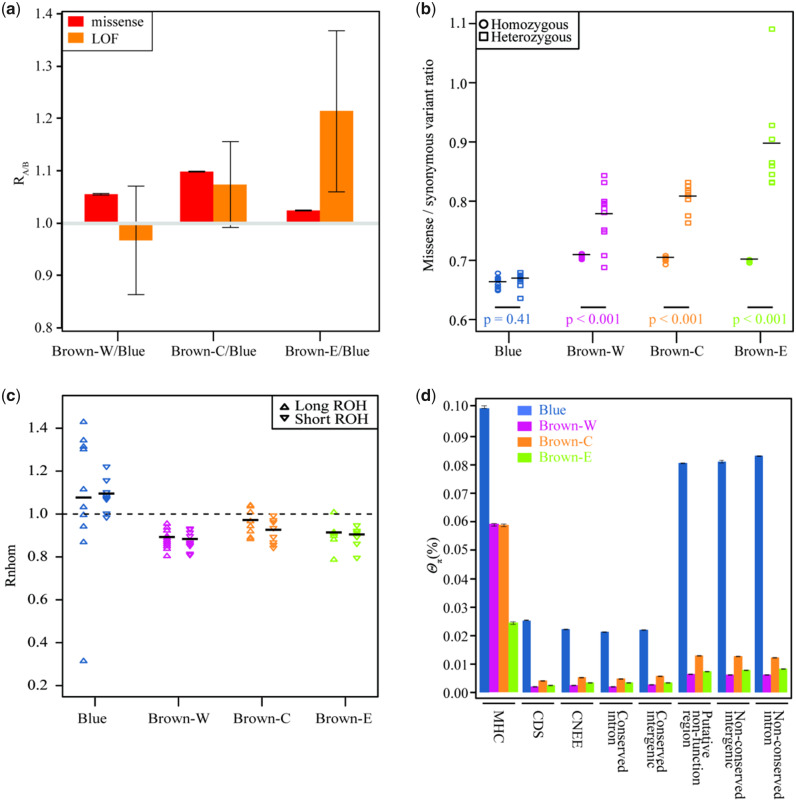
Population genetic theory and empirical evidence indicate that deleterious alleles can be purged in small populations. However, this viewpoint remains controversial. It is unclear whether natural selection is powerful enough to purge deleterious mutations when wild populations continue to decline. Pheasants are terrestrial birds facing a long-term risk of extinction as a result of anthropogenic perturbations and exploitation. Nevertheless, there are scant genomics resources available for conservation management and planning. Here, we analyzed comparative population genomic data for the three extant isolated populations of Brown eared pheasant (Crossoptilon mantchuricum) in China. We showed that C. mantchuricum has low genome-wide diversity and a contracting effective population size because of persistent declines over the past 100,000 years. We compared genome-wide variation in C. mantchuricum with that of its closely related sister species, the Blue eared pheasant (C. auritum) for which the conservation concern is low. There were detrimental genetic consequences across all C. mantchuricum genomes including extended runs of homozygous sequences, slow rates of linkage disequilibrium decay, excessive loss-of-function mutations, and loss of adaptive genetic diversity at the major histocompatibility complex region. To the best of our knowledge, this study is the first to perform a comprehensive conservation genomic analysis on this threatened pheasant species. Moreover, we demonstrated that natural selection may not suffice to purge deleterious mutations in wild populations undergoing long-term decline. The findings of this study could facilitate conservation planning for threatened species and help recover their population size.
群体遗传学理论和实证证据表明,有害等位基因在小群体中可能会被清除。然而,这一观点仍存在争议。当野生种群持续减少时,自然选择是否强大到足以清除有害突变尚不清楚。雉鸡是一种陆栖鸟类,由于人为干扰和捕猎,面临着长期的灭绝风险。尽管如此,可用于保护管理和规划的基因组学资源却很少。在此,我们分析了中国现存的三个隔离的褐马鸡种群的比较群体基因组数据。我们发现,由于在过去10万年中持续减少,褐马鸡的全基因组多样性较低,有效种群数量在收缩。我们将褐马鸡的全基因组变异与其亲缘关系密切的姊妹物种蓝马鸡(保护关注度较低)进行了比较。在所有褐马鸡基因组中都存在有害的遗传后果,包括纯合序列的延伸、连锁不平衡衰退速度缓慢、功能丧失突变过多以及主要组织相容性复合体区域适应性遗传多样性的丧失。据我们所知,本研究是首次对这种受威胁的雉鸡物种进行全面的保护基因组分析。此外,我们证明了自然选择可能不足以清除长期衰退的野生种群中的有害突变。本研究结果有助于为受威胁物种制定保护计划,并帮助恢复其种群数量。