Department of Thoracic Surgery, National Cancer Center/National Clinical Research Center for Cancer/Cancer Hospital, Chinese Academy of Medical Sciences and Peking Union Medical College, Beijing 100021, China.
Biotherapy Center, the First Affiliated Hospital of Zhengzhou University, Zhengzhou, Henan 450052, China.
EBioMedicine. 2020 Sep;59:102959. doi: 10.1016/j.ebiom.2020.102959. Epub 2020 Aug 25.
Tumour Necrosis Factor (TNF) family members play important roles in mounting anti-tumour immune responses, and clinical trials targeting these molecules are ongoing. However, the expression patterns and clinical significance of TNF members in lung adenocarcinoma (LUAD) remain unrevealed. This study aimed to explore the gene expression profiles of TNF family members in LUAD and constructed a TNF family-based prognosis signature.
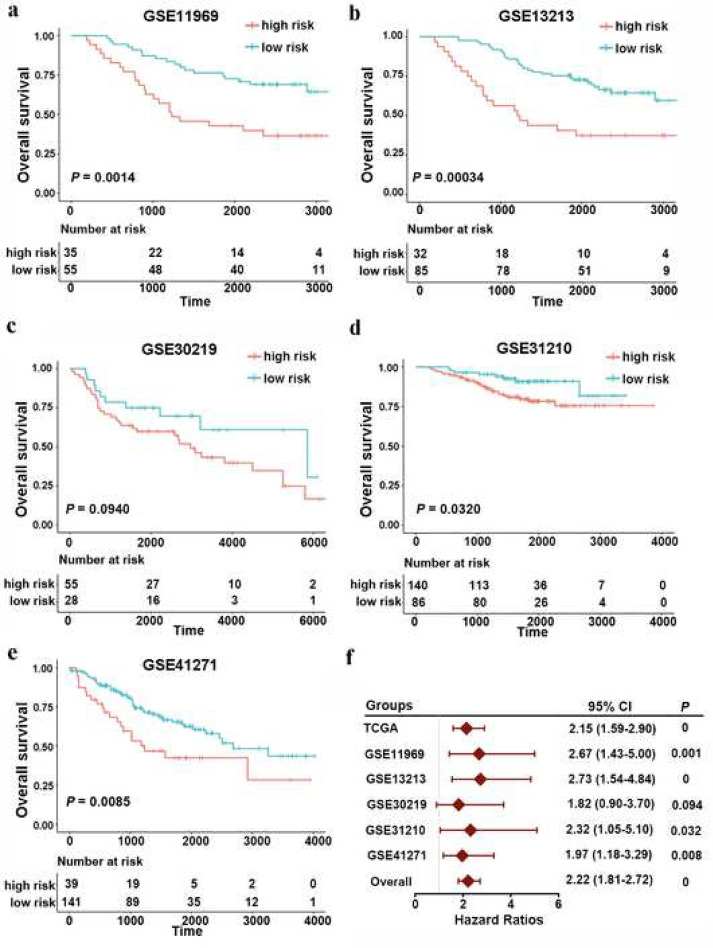
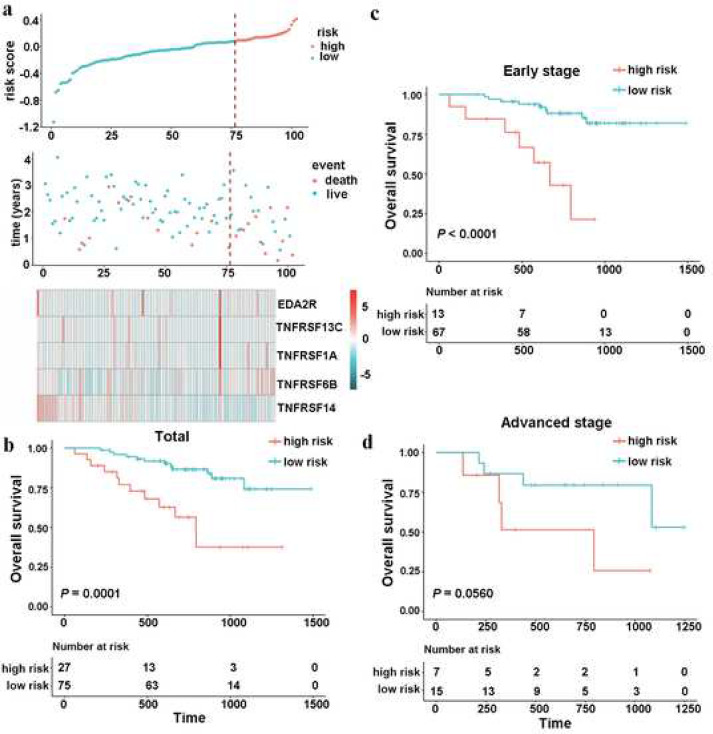
In total, 1300 LUAD cases from seven different cohorts were collected. Samples from The Cancer Genome Atlas (TCGA) were used as the training set, and the RNA data from five Gene Expression Omnibus (GEO) datasets and qPCR data from 102 samples were used for validation. The immune profiles and potential immunotherapy response prediction value of the signature were also explored.
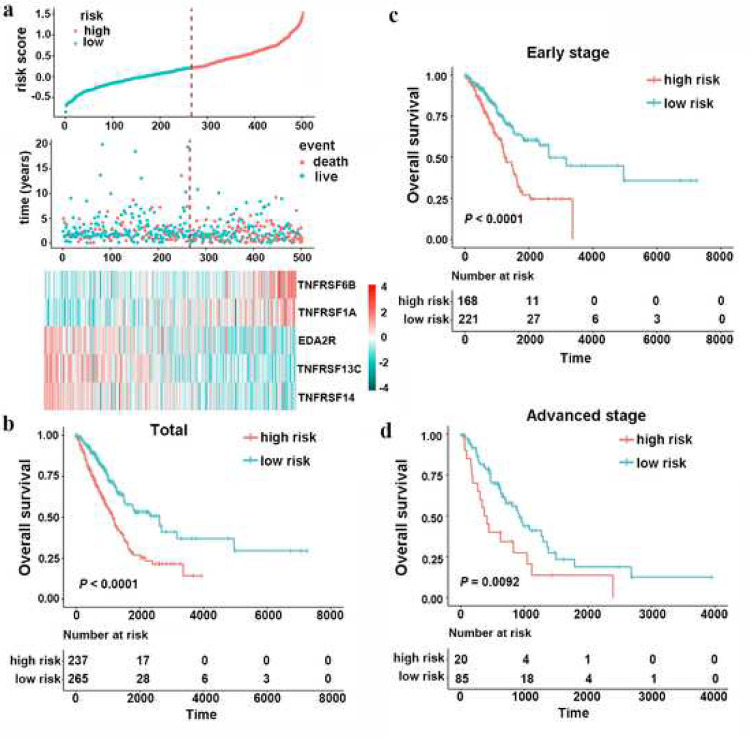
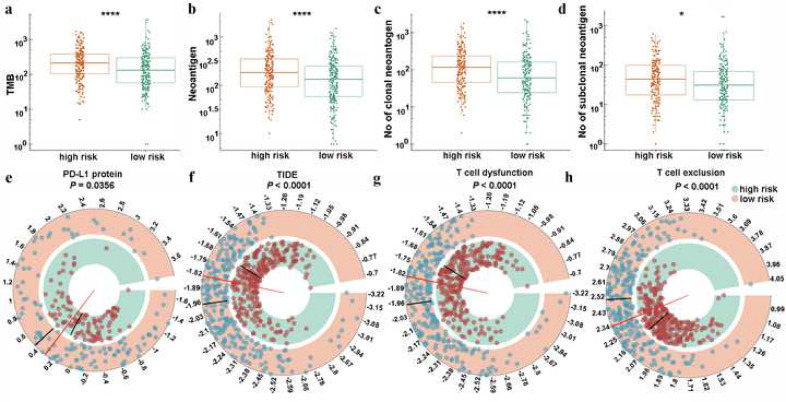
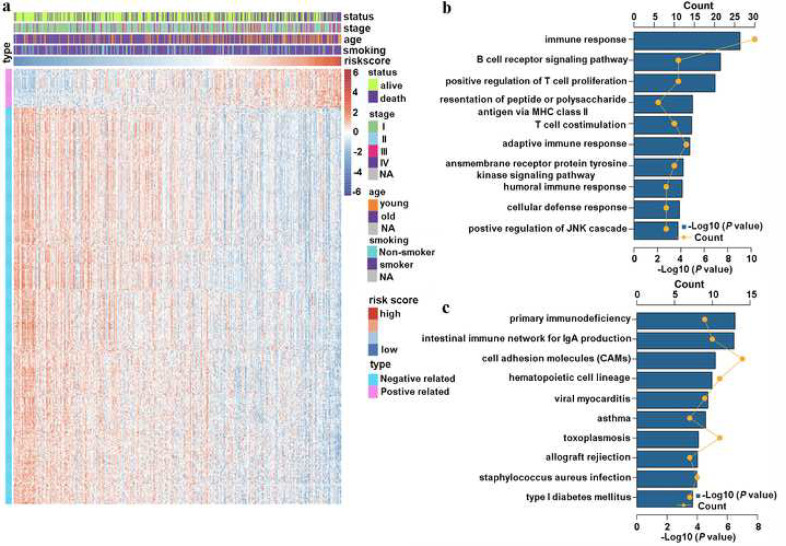
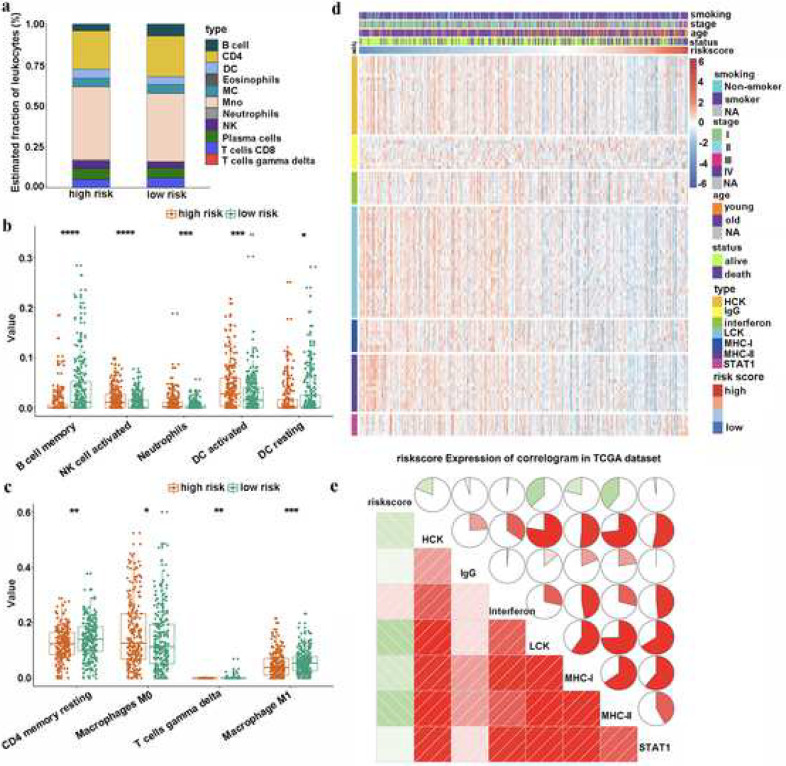
After univariate Cox proportional hazards regression and stepwise multivariable Cox analysis, a TNF family-based signature was constructed in the TCGA dataset that significantly stratified cases into high- and low-risk groups in terms of OS. This signature remained an independent prognostic factor in multivariate analyses. Moreover, the clinical significance of the signature was well validated in different clinical subgroups and independent validation cohorts. Further analysis revealed that signature high-risk patients were characterized by distinctive immune cell proportions and immune-suppressive states. Additionally, signature scores were positively related to multiple immunotherapy biomarkers.
This was the first TNF family-based model for predicting outcomes and immune landscapes for patients with LUAD. The capability of this signature for predicting immunotherapy response needs further validation.
肿瘤坏死因子(TNF)家族成员在引发抗肿瘤免疫反应方面发挥着重要作用,针对这些分子的临床试验正在进行中。然而,TNF 家族成员在肺腺癌(LUAD)中的表达模式和临床意义仍未被揭示。本研究旨在探索 LUAD 中 TNF 家族成员的基因表达谱,并构建基于 TNF 家族的预后签名。
共收集了来自七个不同队列的 1300 例 LUAD 病例。来自癌症基因组图谱(TCGA)的样本被用作训练集,五个基因表达综合数据库(GEO)数据集的 RNA 数据和 102 个样本的 qPCR 数据用于验证。还探讨了签名的免疫特征和潜在免疫治疗反应预测价值。
经过单因素 Cox 比例风险回归和逐步多因素 Cox 分析,在 TCGA 数据集构建了一个基于 TNF 家族的签名,可以根据 OS 将病例显著分为高风险和低风险组。该签名在多变量分析中仍然是一个独立的预后因素。此外,该签名在不同的临床亚组和独立验证队列中得到了很好的验证。进一步分析表明,签名高风险患者的免疫细胞比例和免疫抑制状态具有独特特征。此外,签名评分与多种免疫治疗生物标志物呈正相关。
这是第一个用于预测 LUAD 患者结局和免疫景观的基于 TNF 家族的模型。该签名预测免疫治疗反应的能力需要进一步验证。