Kishimoto Keishi, Furukawa Kana T, Luz-Madrigal Agustin, Yamaoka Akira, Matsuoka Chisa, Habu Masanobu, Alev Cantas, Zorn Aaron M, Morimoto Mitsuru
Laboratory for Lung Development and Regeneration, Riken Center for Biosystems Dynamics Research (BDR), Kobe, 650-0047, Japan.
RIKEN BDR-CuSTOM Joint Laboratory, Cincinnati Children's Hospital Medical Center, Cincinnati, OH, 45229, USA.
Nat Commun. 2020 Aug 27;11(1):4159. doi: 10.1038/s41467-020-17969-w.
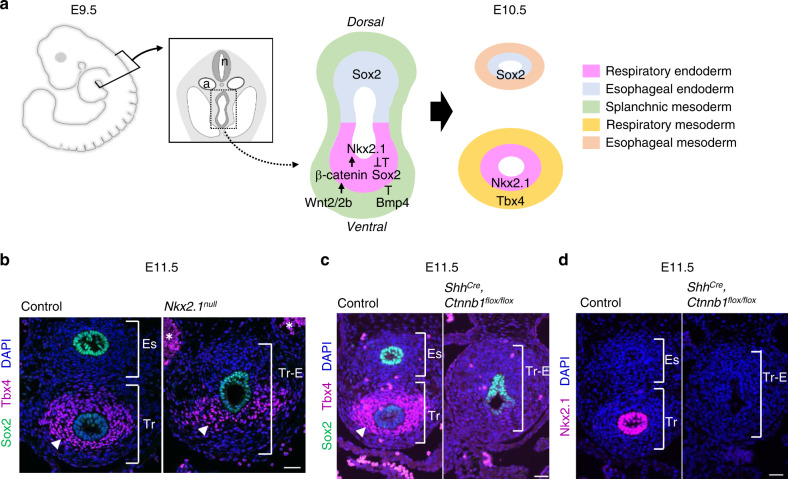
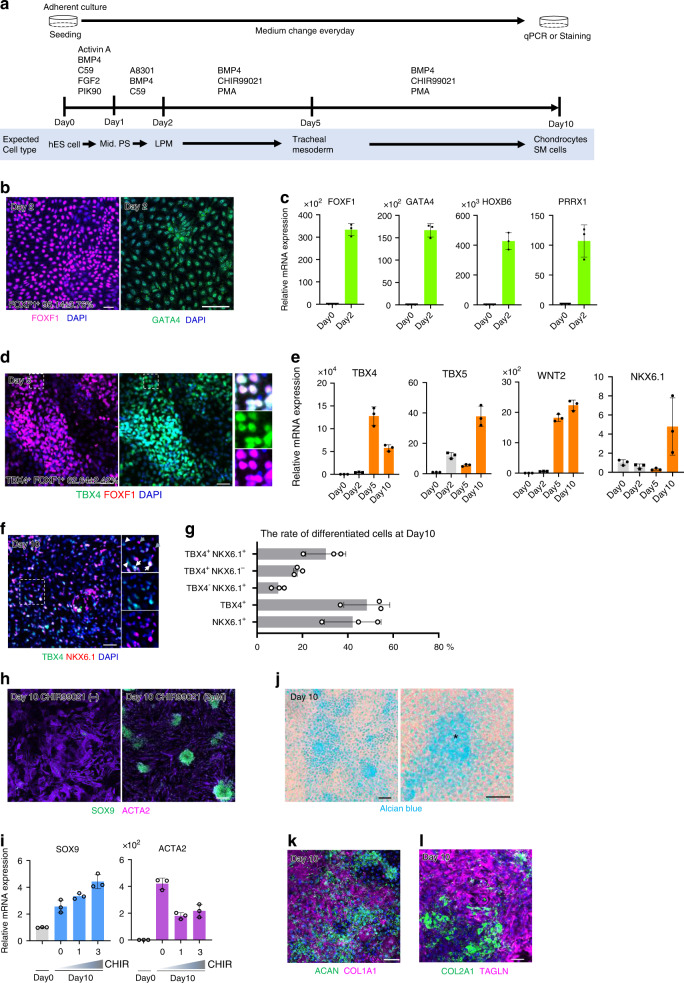
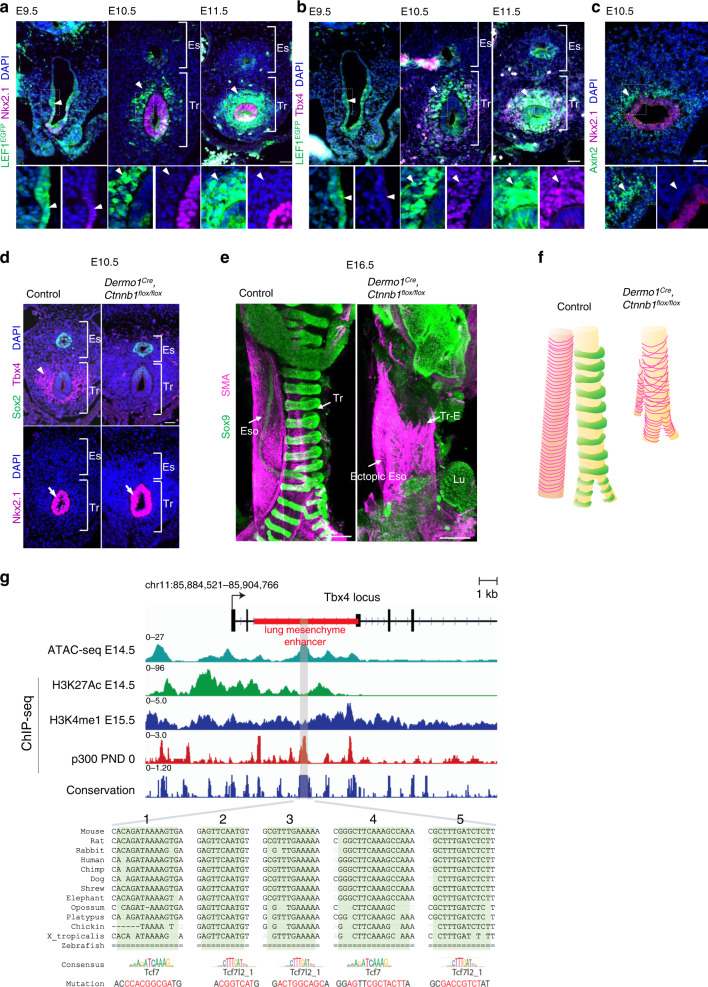
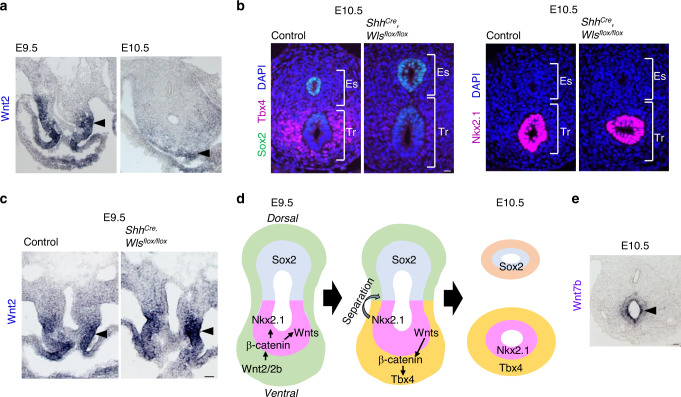
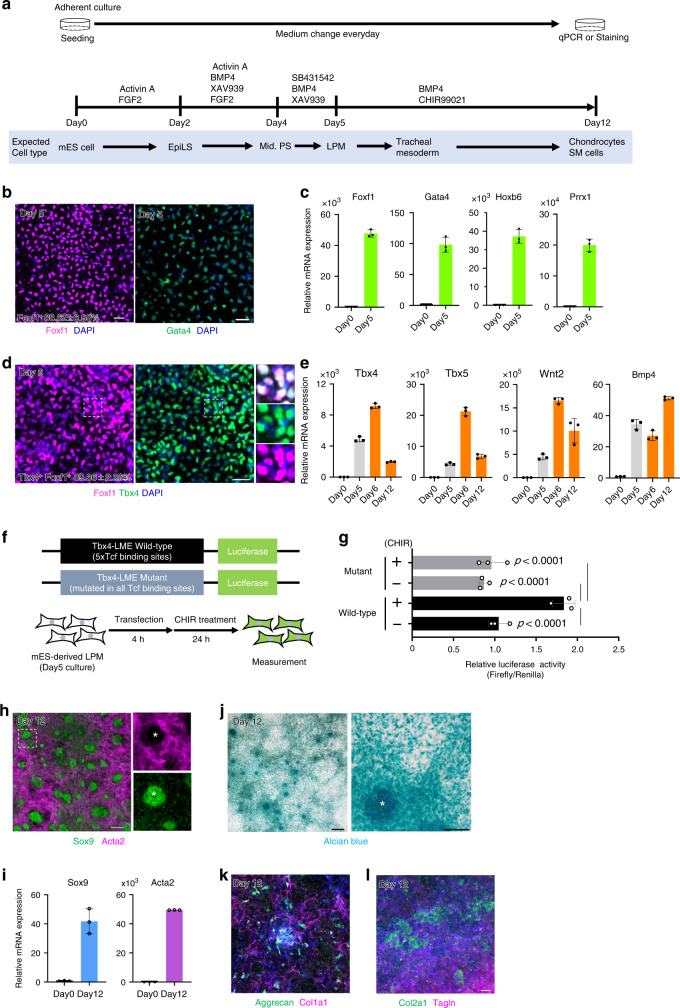
The periodic cartilage and smooth muscle structures in mammalian trachea are derived from tracheal mesoderm, and tracheal malformations result in serious respiratory defects in neonates. Here we show that canonical Wnt signaling in mesoderm is critical to confer trachea mesenchymal identity in human and mouse. At the initiation of tracheal development, endoderm begins to express Nkx2.1, and then mesoderm expresses the Tbx4 gene. Loss of β-catenin in fetal mouse mesoderm causes loss of Tbx4 tracheal mesoderm and tracheal cartilage agenesis. The mesenchymal Tbx4 expression relies on endodermal Wnt activation and Wnt ligand secretion but is independent of known Nkx2.1-mediated respiratory development, suggesting that bidirectional Wnt signaling between endoderm and mesoderm promotes trachea development. Activating Wnt, Bmp signaling in mouse embryonic stem cell (ESC)-derived lateral plate mesoderm (LPM) generates tracheal mesoderm containing chondrocytes and smooth muscle cells. For human ESC-derived LPM, SHH activation is required along with WNT to generate proper tracheal mesoderm. Together, these findings may contribute to developing applications for human tracheal tissue repair.
哺乳动物气管中的周期性软骨和平滑肌结构源自气管中胚层,气管畸形会导致新生儿出现严重的呼吸缺陷。在此,我们表明中胚层中的经典Wnt信号对于赋予人和小鼠气管间充质特性至关重要。在气管发育起始时,内胚层开始表达Nkx2.1,随后中胚层表达Tbx4基因。胎儿小鼠中胚层中β-连环蛋白的缺失会导致Tbx4气管中胚层丧失以及气管软骨发育不全。间充质Tbx4的表达依赖于内胚层Wnt激活和Wnt配体分泌,但独立于已知的Nkx2.1介导的呼吸发育,这表明内胚层与中胚层之间的双向Wnt信号促进气管发育。在小鼠胚胎干细胞(ESC)来源的侧板中胚层(LPM)中激活Wnt、Bmp信号会产生含有软骨细胞和平滑肌细胞的气管中胚层。对于人ESC来源的LPM,需要与WNT一起激活SHH才能产生合适的气管中胚层。总之,这些发现可能有助于开发用于人类气管组织修复的应用。