Departments of Medicine and Endocrinology, University of California San Francisco and Veterans Affairs Medical Center San Francisco, San Francisco, CA, United States of America.
Cardiovascular Research Institute, University of California, San Francisco, CA, United States of America.
PLoS One. 2020 Aug 28;15(8):e0238076. doi: 10.1371/journal.pone.0238076. eCollection 2020.
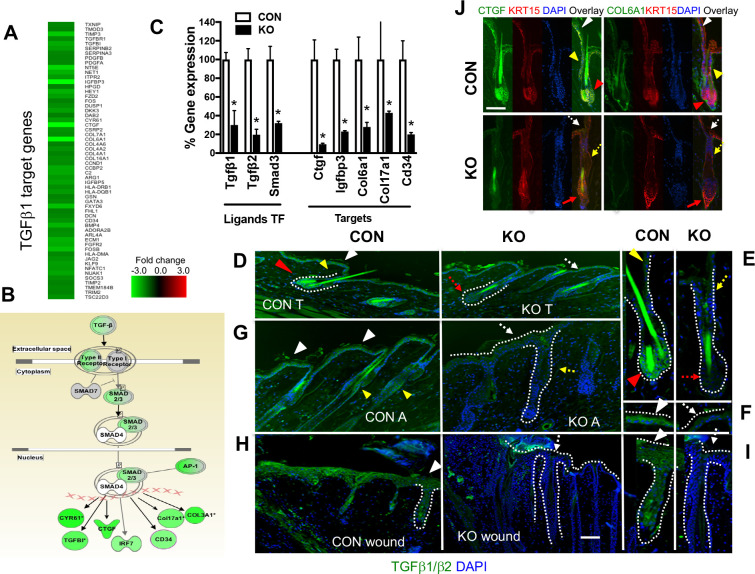
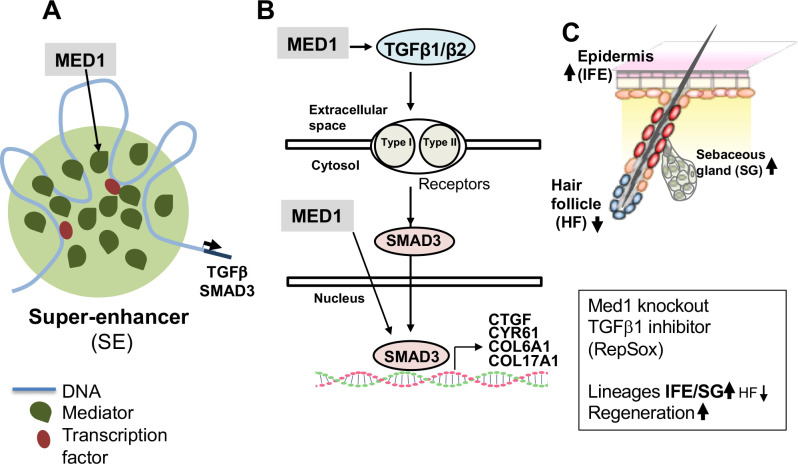
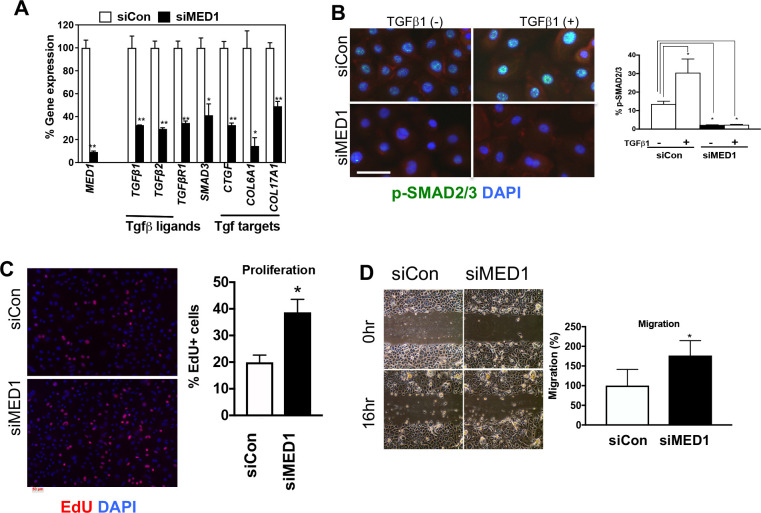
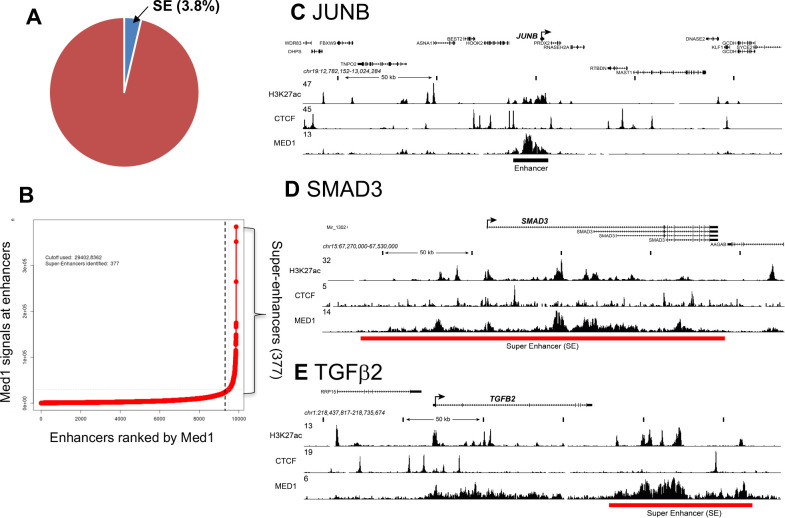
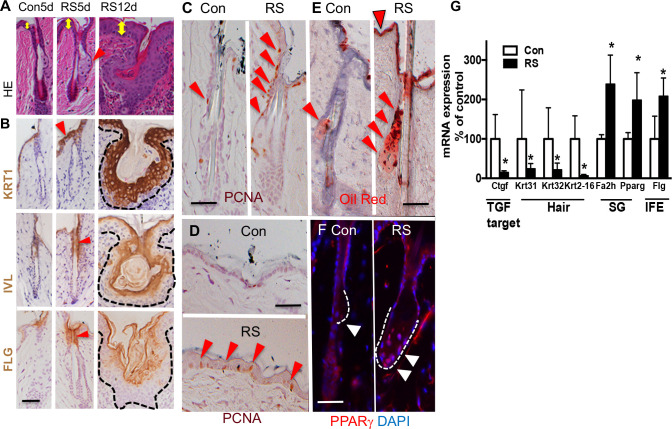
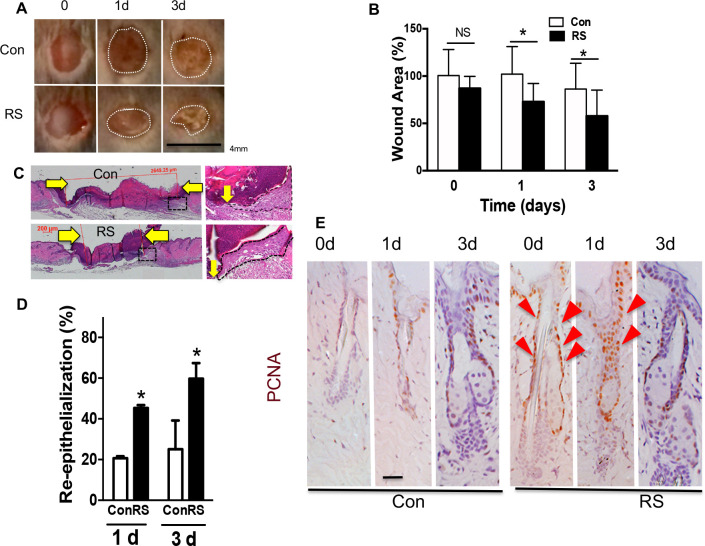
Epidermal lineages and injury induced regeneration are controlled by transcriptional programs coordinating cellular signaling and epigenetic regulators, but the mechanism remains unclear. Previous studies showed that conditional deletion of the transcriptional coactivator Mediator 1 (Med1) changes epidermal lineages and accelerates wound re-epithelialization. Here, we studied a molecular mechanism by which Med1 facilitates these processes, in particular, by focusing on TGFβ signaling through genome wide transcriptome analysis. The expression of the TGF ligands (Tgfβ1/β2) and their downstream target genes is decreased in both normal and wounded Med1 null skin. Med1 silencing in cultured keratinocytes likewise reduces the expression of the ligands (TGFβ1/β2) and diminishes activity of TGFβ signaling as shown by decreased p-Smad2/3. Silencing Med1 increases keratinocyte proliferation and migration in vitro. Epigenetic studies using chromatin immuno-precipitation and next generation DNA sequencing reveals that Med1 regulates transcription of TGFβ components by forming large clusters of enhancers called super-enhancers at the regulatory regions of the TGFβ ligand and SMAD3 genes. These results demonstrate that Med1 is required for the maintenance of the TGFβ signaling pathway. Finally, we show that pharmacological inhibition of TGFβ signaling enhances epidermal lineages and accelerates wound re-epithelialization in skin similar to that seen in the Med1 null mice, providing new insights into epidermal regeneration.
表皮谱系和损伤诱导的再生受协调细胞信号和表观遗传调节剂的转录程序控制,但机制尚不清楚。先前的研究表明,转录共激活因子 Mediator 1(Med1)的条件性缺失会改变表皮谱系并加速伤口再上皮化。在这里,我们研究了 Med1 促进这些过程的分子机制,特别是通过全基因组转录组分析聚焦于 TGFβ 信号。在正常和受伤的 Med1 缺失皮肤中,TGF 配体(Tgfβ1/β2)及其下游靶基因的表达均降低。在培养的角质形成细胞中沉默 Med1 同样会降低配体(TGFβ1/β2)的表达,并降低 TGFβ 信号的活性,如 p-Smad2/3 减少所示。沉默 Med1 会增加体外角质形成细胞的增殖和迁移。使用染色质免疫沉淀和下一代 DNA 测序的表观遗传学研究表明,Med1 通过在 TGFβ 配体和 SMAD3 基因的调控区域形成称为超级增强子的大型增强子簇来调节 TGFβ 成分的转录。这些结果表明 Med1 是维持 TGFβ 信号通路所必需的。最后,我们表明,TGFβ 信号的药理学抑制可增强表皮谱系并加速皮肤的伤口再上皮化,类似于 Med1 缺失小鼠中观察到的情况,为表皮再生提供了新的见解。