Dao Tram N, Utturkar Sagar, Atallah Lanman Nadia, Matosevic Sandro
Department of Industrial and Physical Pharmacy, Purdue University, West Lafayette, IN 47907, USA.
Center for Cancer Research, Purdue University, West Lafayette, IN 47907, USA.
Cancers (Basel). 2020 Aug 26;12(9):2417. doi: 10.3390/cancers12092417.
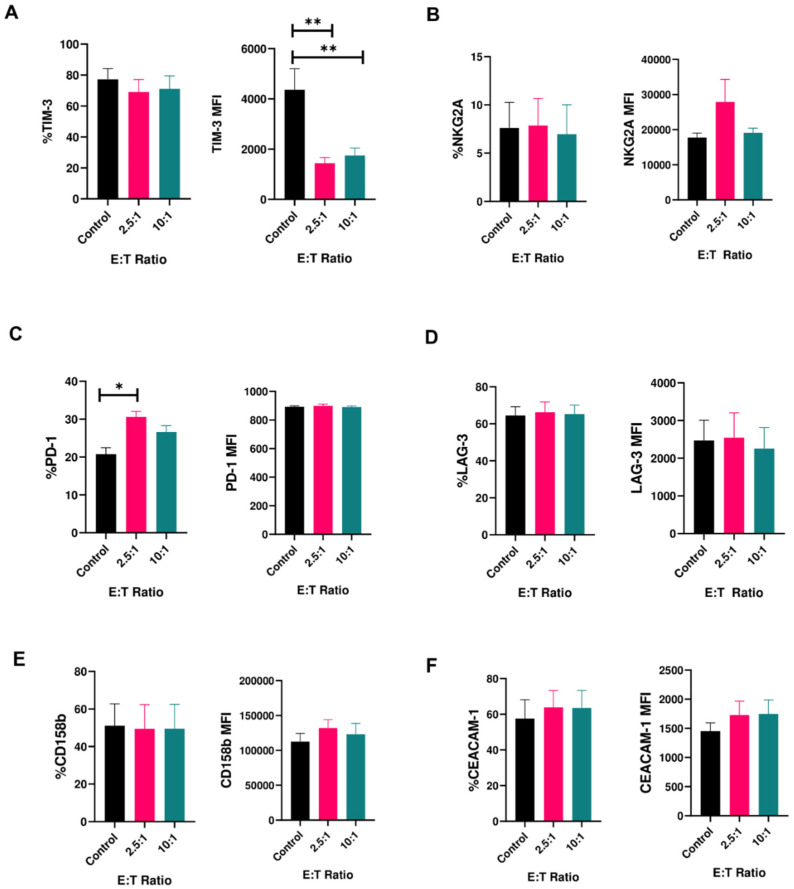
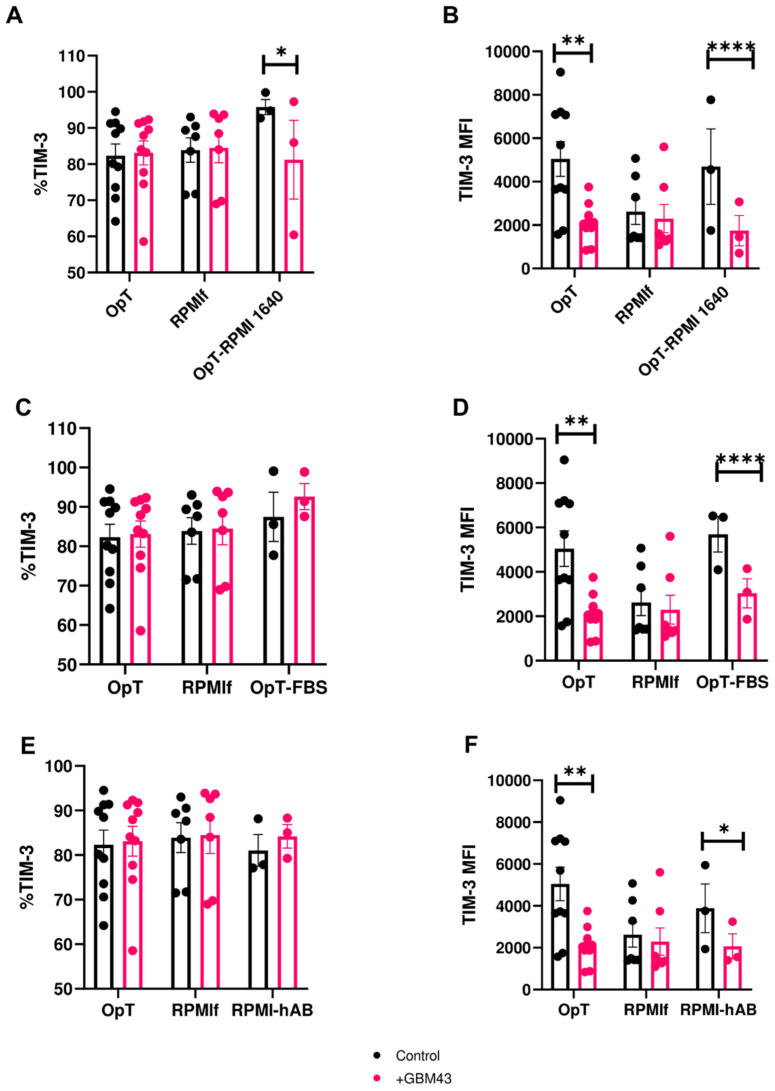
Among natural killer (NK) cell receptors, the T-cell immunoglobulin and mucin-containing domain (TIM-3) has been associated with both inhibitory and activating functions, depending on context and activation pathway. Ex vivo and in vitro, expression of TIM-3 is inducible and depends on activation stimulus. Here, we report that TIM-3 expression can be downregulated on NK cells under specific conditions. When NK cells are exposed to cancer targets, they synergize with stimulation conditions to induce a substantial decrease in TIM-3 expression on their surface. We found that such downregulation occurs following prior NK activation. Downregulated TIM-3 expression correlated to lower cytotoxicity and lower interferon gamma (IFN-γ) expression, fueling the notion that TIM-3 might function as a benchmark for human NK cell dysfunction.
在自然杀伤(NK)细胞受体中,T细胞免疫球蛋白和含粘蛋白结构域(TIM-3)根据具体情况和激活途径,既与抑制性功能相关,也与激活性功能相关。在体外和体内,TIM-3的表达是可诱导的,并且取决于激活刺激。在此,我们报告在特定条件下,TIM-3在NK细胞上的表达可被下调。当NK细胞暴露于癌症靶标时,它们与刺激条件协同作用,导致其表面TIM-3表达大幅下降。我们发现这种下调发生在NK细胞预先激活之后。TIM-3表达下调与较低的细胞毒性和较低的干扰素γ(IFN-γ)表达相关,这进一步支持了TIM-3可能作为人类NK细胞功能障碍基准的观点。