Molecular Inflammation Research Center for Ageing Intervention (MRCA), Pusan National University, Busan, Republic of Korea; College of Pharmacy and Research Institute of Pharmaceutical Sciences, Gyeongsang National University, Jinju, Republic of Korea.
Department of Food Science and Nutrition, Pukyong National University, Daeyeon-dong, Busan, Republic of Korea.
Redox Biol. 2020 Sep;36:101624. doi: 10.1016/j.redox.2020.101624. Epub 2020 Jun 27.
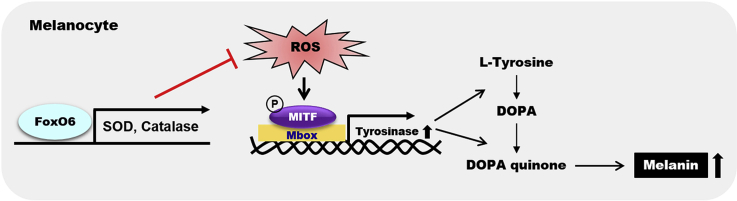
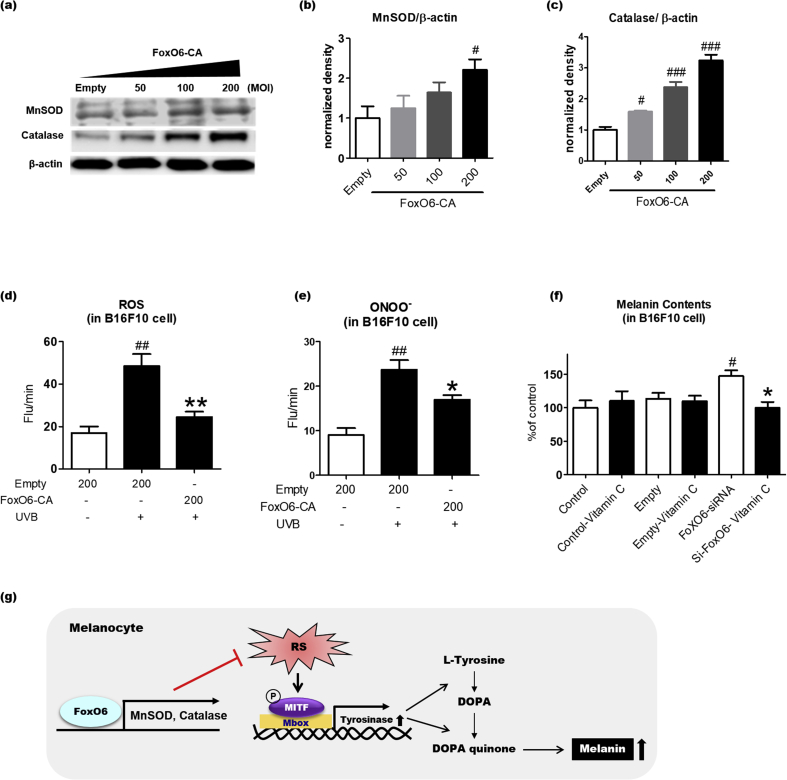
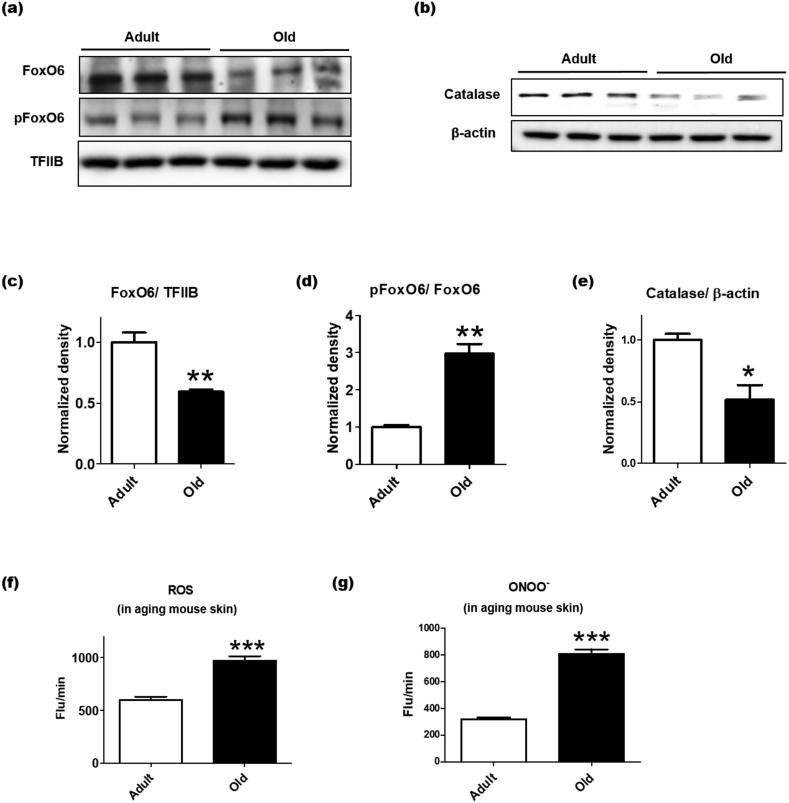
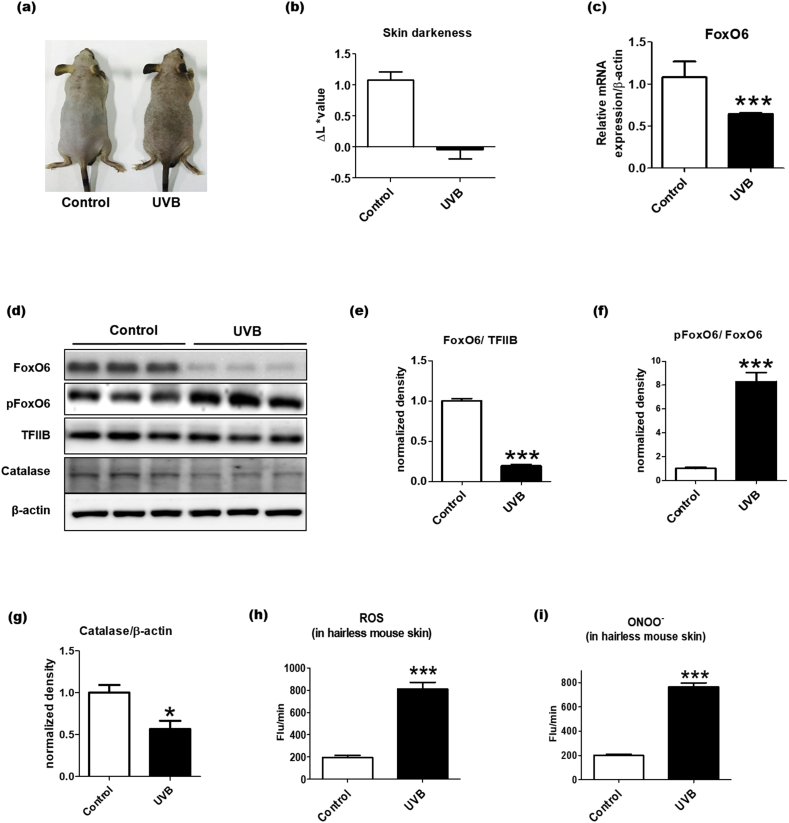
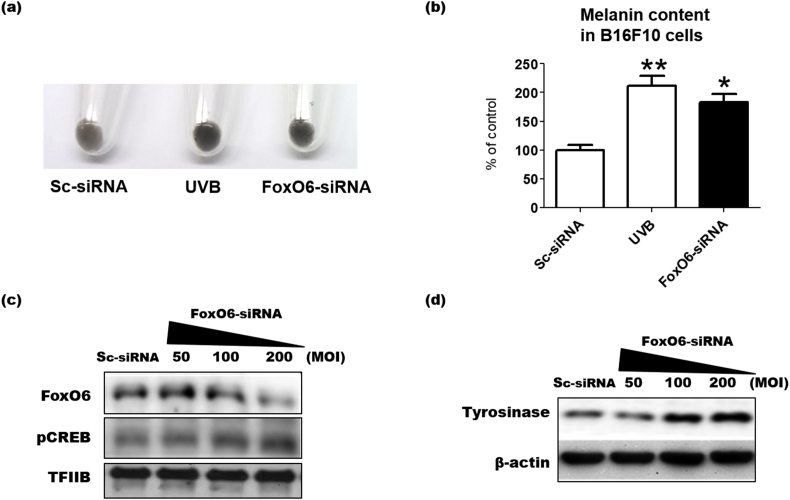
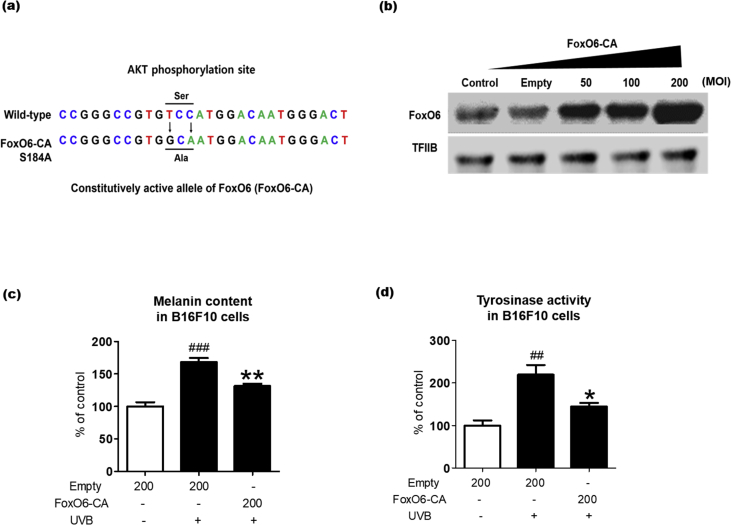
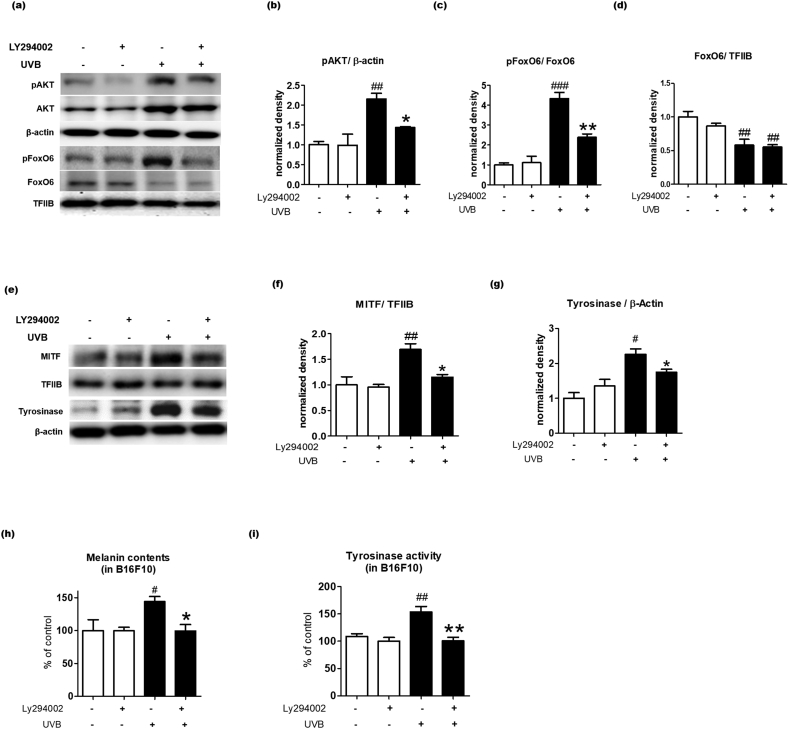
Of the various transcription factors that play a role in controlling oxidative stress, the role of FoxO proteins in skin aging has recently become of interest. Unlike other FoxOs, FoxO6 remains in the nucleus due to the lack of nuclear export signal, so that it may respond sensitively to intracellular stimuli for the induction of target genes. However, the role of FoxO6 in melanogenesis and its related signaling pathways are unclear. We used UV exposed and intrinsically aged mice that exhibited skin aging. Our data showed that FoxO6 activation was markedly decreased in the skin of aging mice and UVB-exposed hairless mice that exhibited an increase in melanogenesis. The reduced FoxO6 activity was closely associated with the elevation of oxidative stress in the skin of these animal models. To our interest, siRNA-mediated FoxO6 knockdown markedly increased melanin content and related signaling pathways in B16F10 cells even without any stimulation. On the contrary, adenovirus-mediated FoxO6 activation significantly reduced melanin content in UVB-exposed B16F10 cells, which is closely associated with the induction of antioxidant genes including MnSOD and catalase, leading to a decrease in oxidative stress. Furthermore, vitamin C treatment reversed the elevated melanogenesis by the FoxO6 knockdown, indicating that the decreased antioxidant capacity greatly contributes to increased melanogenesis in the FoxO6 knockdown condition. For the upstream of a FoxO6 signaling pathway in melanocytes, FoxO6 phosphorylation by Akt appears to be essential evidenced by the reduction of FoxO6 activity and the increase in melanogenesis by PI3K/AKT inhibitor treatment. Our study suggests that FoxO6 is an antioxidant gene that prevents oxidative stress-induced melanogenesis.
在参与调控氧化应激的各种转录因子中,FoxO 蛋白在皮肤衰老中的作用最近受到关注。不同于其他 FoxO 蛋白,由于缺乏核输出信号,FoxO6 滞留在细胞核内,因此它可能对细胞内刺激敏感,从而诱导靶基因表达。然而,FoxO6 在黑色素生成及其相关信号通路中的作用尚不清楚。我们利用紫外线照射和内源性衰老的小鼠模型来模拟皮肤衰老。我们的数据显示,FoxO6 的激活在衰老小鼠和紫外线照射无毛小鼠的皮肤中显著降低,而这些小鼠的皮肤表现出黑色素生成增加。FoxO6 活性的降低与这些动物模型皮肤中氧化应激的升高密切相关。令我们感兴趣的是,siRNA 介导的 FoxO6 敲低在 B16F10 细胞中显著增加了黑色素含量和相关信号通路,即使没有任何刺激。相反,腺病毒介导的 FoxO6 激活显著降低了紫外线照射的 B16F10 细胞中的黑色素含量,这与抗氧化基因(包括 MnSOD 和过氧化氢酶)的诱导密切相关,从而降低了氧化应激。此外,维生素 C 处理逆转了 FoxO6 敲低引起的黑色素生成增加,表明 FoxO6 敲低时抗氧化能力的降低极大地促进了黑色素生成。对于黑色素细胞中 FoxO6 信号通路的上游,FoxO6 被 Akt 磷酸化似乎是必需的,这可由 FoxO6 活性的降低和 PI3K/AKT 抑制剂处理引起的黑色素生成增加得到证明。我们的研究表明,FoxO6 是一种抗氧化基因,可防止氧化应激诱导的黑色素生成。