Medical Cosmetic Center, The Affiliated Traditional Chinese Medicine Hospital, Southwest Medical University, Luzhou, China.
Medicine (Baltimore). 2024 Feb 23;103(8):e37178. doi: 10.1097/MD.0000000000037178.
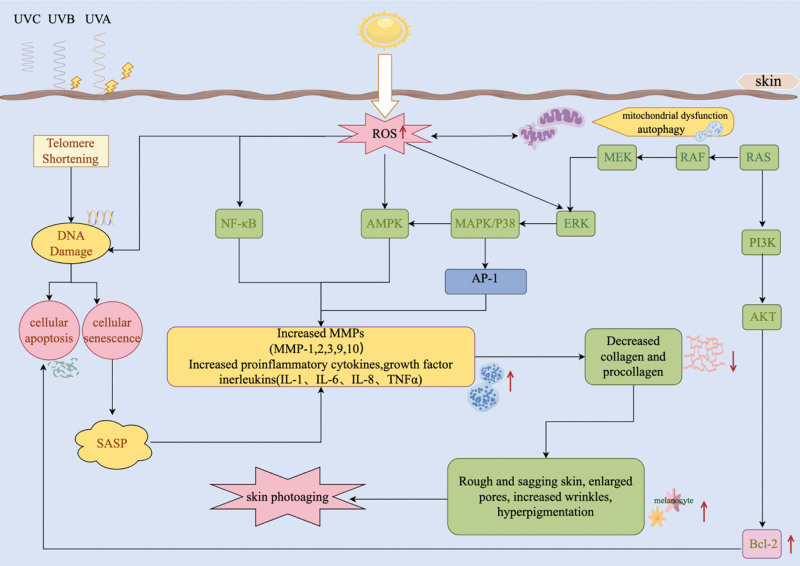
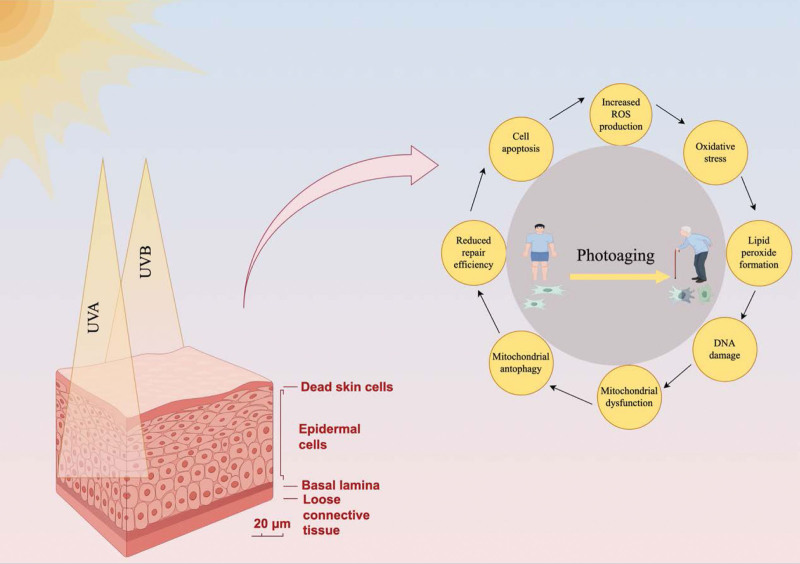
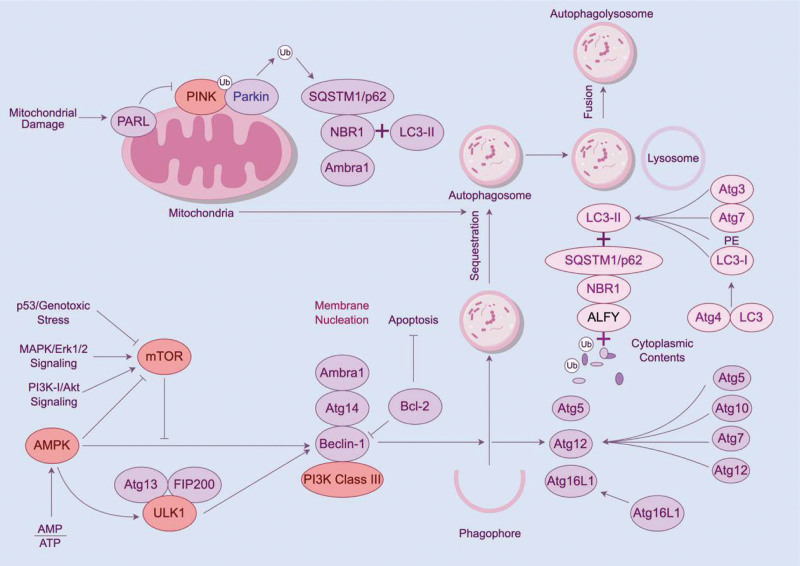
As the largest organ of the human body, the skin serves as the primary barrier against external damage. The continuous increase in human activities and environmental pollution has resulted in the ongoing depletion of the ozone layer. Excessive exposure to ultraviolet (UV) radiation enhances the impact of external factors on the skin, leading to photoaging. Photoaging causes physical and psychological damage to the human body. The prevention and management of photoaging have attracted increased attention in recent years. Despite significant progress in understanding and mitigating UV-induced photoaging, the precise mechanisms through which autophagy contributes to the prevention of photoaging remain unclear. Given the important role of autophagy in repairing UV-induced DNA damage and scavenging oxidized lipids, autophagy is considered a novel strategy for preventing the occurrence of photoaging and other UV light-induced skin diseases. This review aims to elucidate the biochemical and clinical features of photoaging, the relationship of skin photoaging and chronological aging, the mechanisms underlying skin photoaging and autophagy, and the role of autophagy in skin photoaging.
皮肤作为人体最大的器官,是抵御外界伤害的主要屏障。人类活动的不断增加和环境污染的持续加剧,导致臭氧层不断消耗。过度暴露在紫外(UV)辐射下会增强外部因素对皮肤的影响,导致光老化。光老化会对人体造成身体和心理上的伤害。近年来,光老化的预防和管理受到了越来越多的关注。尽管人们在理解和减轻 UV 诱导的光老化方面取得了重大进展,但自噬在预防光老化中的作用的精确机制仍不清楚。鉴于自噬在修复 UV 诱导的 DNA 损伤和清除氧化脂质方面的重要作用,自噬被认为是预防光老化和其他 UV 光诱导的皮肤疾病的一种新策略。本综述旨在阐明光老化的生化和临床特征、皮肤光老化与时间老化的关系、皮肤光老化和自噬的机制,以及自噬在皮肤光老化中的作用。