Department of Work Systems and Health, Institute of Industrial Ecological Sciences, University of Occupational and Environmental Health, Japan.
Ind Health. 2020 Dec 4;58(6):573-580. doi: 10.2486/indhealth.2020-0056. Epub 2020 Aug 29.
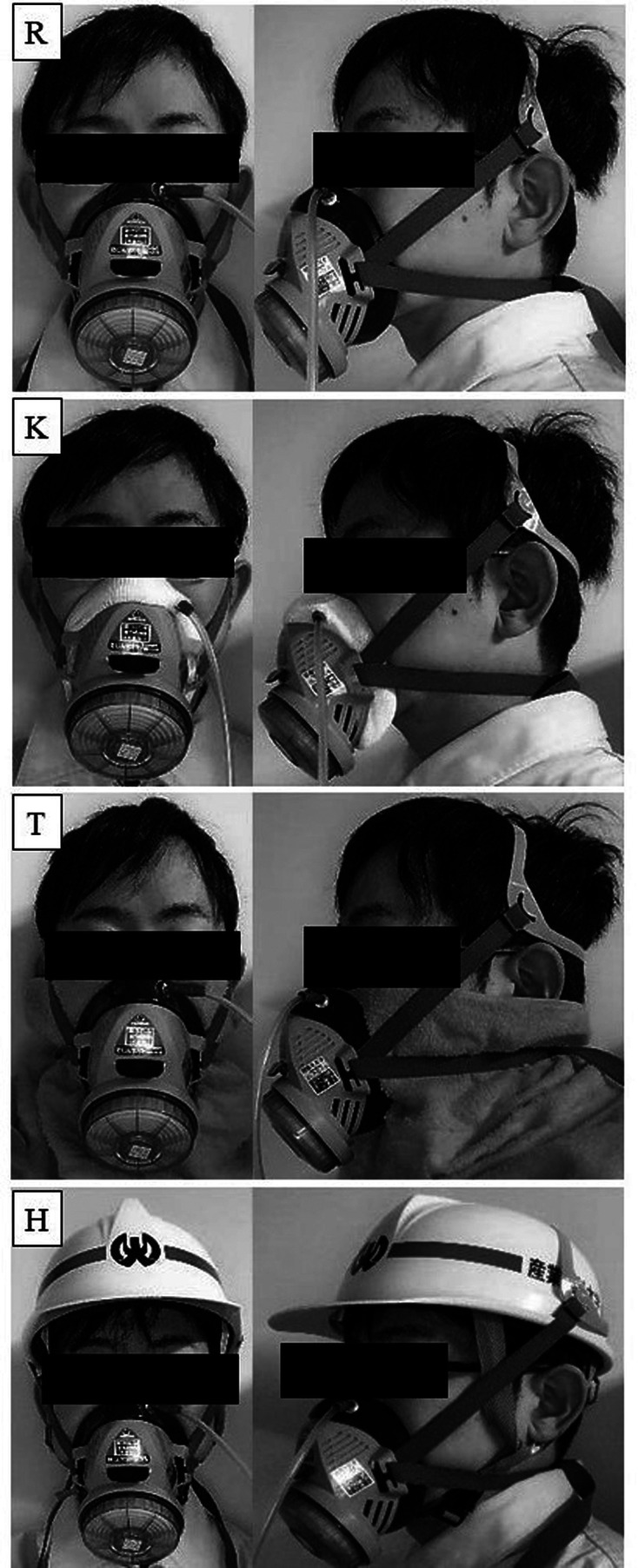
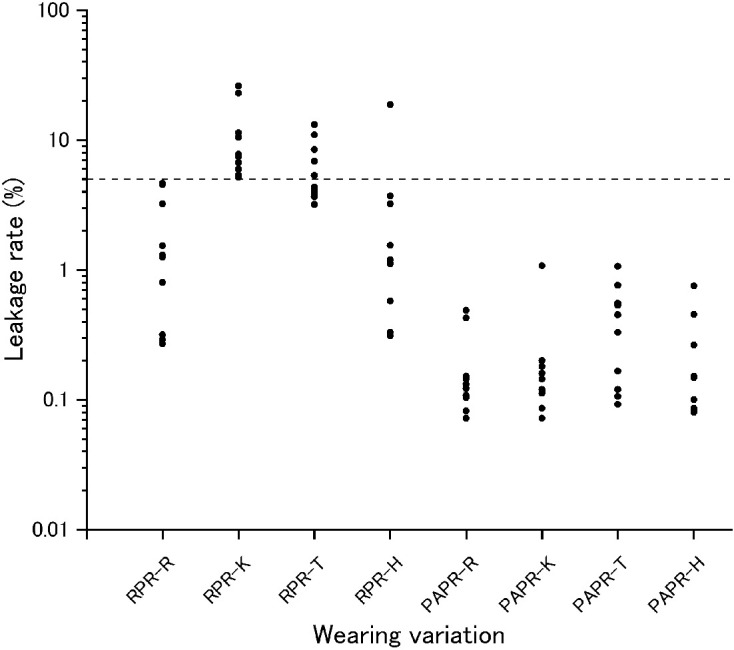
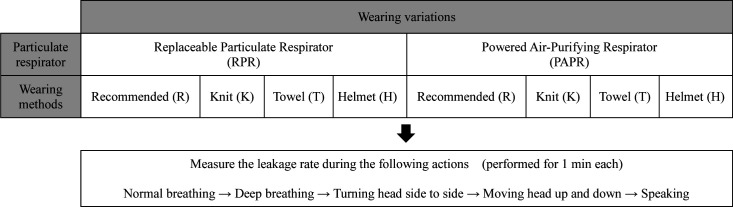
This study evaluated the performance of two respirators, a replaceable particulate respirator (RPR) and a powered air-purifying respirator (PAPR), worn according to non-recommended methods. Ten subjects wore either an RPR or PAPR according to the recommended method, or according to a non-recommended method, with a knit cover placed between the facepiece cushion and face, with a towel placed between the facepiece cushion and face, or with the headband on a helmet. The leakage rate of each wearing variation was then measured, according to the procedure for determining the protection factor of respiratory protective equipment, using atmospheric dust as required by JIS T8150. The average leakage rate for the RPR was 1.82-10.92%, whereas that of the PAPR was 0.18-0.42%. The performance of the RPR decreased when worn in methods outside of recommendations; however, there was no significant decrease in the performance of PAPR under any method of wear. Therefore, a PAPR is recommended for work in which a replaceable or disposable particulate respirator fails to provide sufficient protection against hazardous dust substances, or for workers who are unable to use a particulate respirator according to the recommended method owing to the work environment or health conditions.
本研究评估了两种呼吸器(可更换式颗粒物呼吸器(RPR)和动力空气净化呼吸器(PAPR))在不符合推荐方法下的使用性能。十位受试者按照推荐方法或不推荐的方法佩戴 RPR 或 PAPR,在面罩垫和面部之间放置针织罩、在面罩垫和面部之间放置毛巾或在头盔上佩戴头带。然后,根据 JIS T8150 的要求,使用大气粉尘,按照确定呼吸防护设备保护系数的程序测量每种佩戴方式的泄漏率。RPR 的平均泄漏率为 1.82-10.92%,而 PAPR 的泄漏率为 0.18-0.42%。RPR 在不符合推荐方法的情况下佩戴时性能会下降;然而,在任何佩戴方式下,PAPR 的性能都没有明显下降。因此,建议在危险粉尘物质无法通过可更换或一次性颗粒物呼吸器充分保护的工作场所,或由于工作环境或健康状况无法按照推荐方法使用颗粒物呼吸器的工人使用 PAPR。