Cazorla María, Herrera Edgar, Palomeque Emilia, Saud Nicolás
Universidad San Francisco de Quito, Instituto de Investigaciones Atmosféricas, Diego de Robles y Av. Interoceánica, Quito, Ecuador.
Atmos Pollut Res. 2021 Jan;12(1):124-133. doi: 10.1016/j.apr.2020.08.028. Epub 2020 Aug 25.
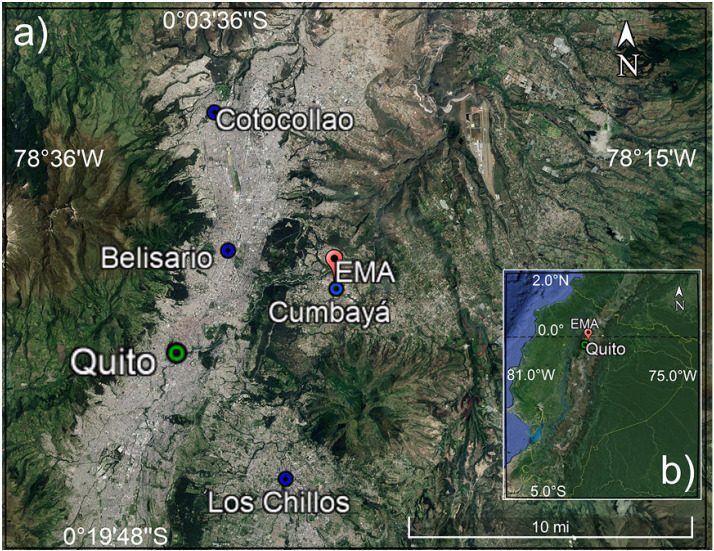
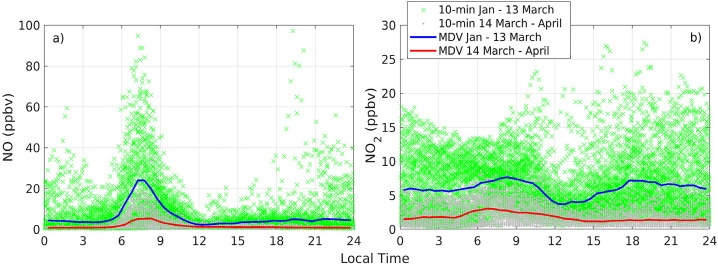
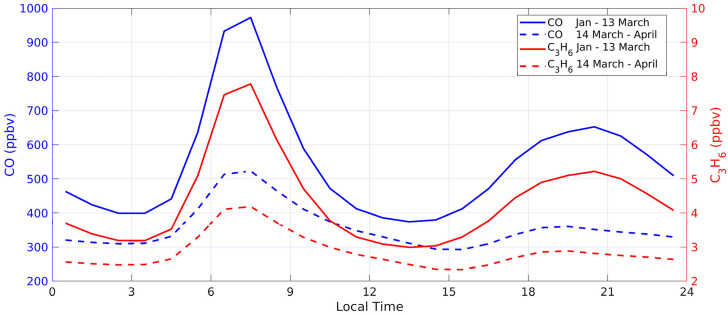
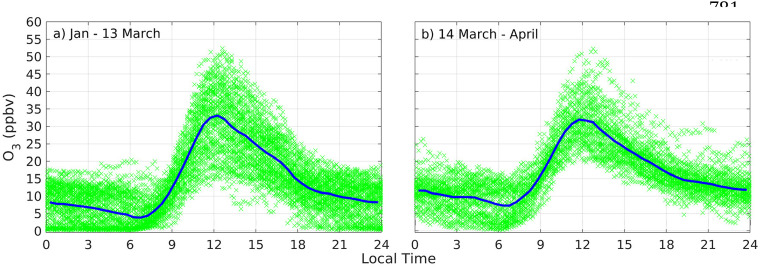
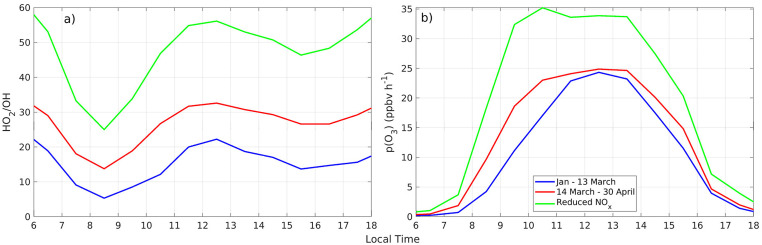
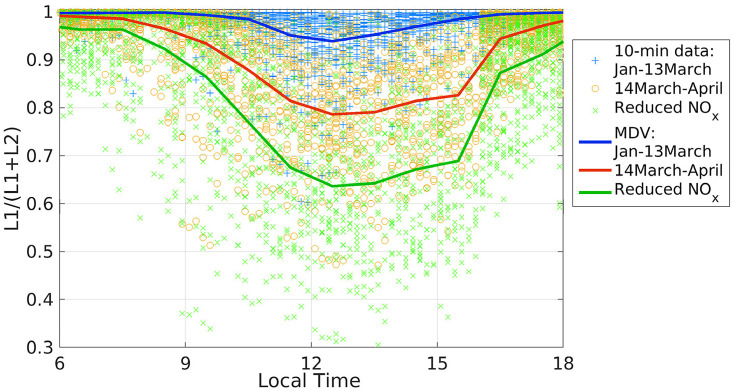
The COVID-19 lockdown presented a peculiar opportunity to study a shift in the photochemical regime of ozone production in Quito (Ecuador) before and after mobility restrictions. Primary precursors such as NO and CO dropped dramatically as early as 13 March 2020, due to school closures, but ambient ozone did not change. In this work we use a chemical box model in order to estimate regimes of ozone production before and after the lockdown. We constrain the model with observations in Quito (ozone, NO, CO, and meteorology) and with estimations of traffic-associated VOCs that are tightly linked to CO. To this end, we use the closest observational data of VOC/CO ratios at an urban area that shares with Quito conditions of high altitude and is located in the tropics, namely Mexico City. A shift in the chemical regime after mobility restrictions was evaluated in light of the magnitude of radical losses to nitric acid and to hydrogen peroxide. With reduced NO in the morning rush hour (lockdown conditions), ozone production rates at 08:30-10:30 increased from 4.2-17 to 9.7-23 ppbv h, respectively. To test further the observed shift in chemical regime, ozone production was recalculated with post-lockdown NO levels, but setting VOCs to pre-lockdown conditions. This change tripled ozone production rates in the mid-morning and stayed higher throughout the day. In light of these findings, practical scenarios that present the potential for ozone accumulation in the ambient air are discussed.
2019年冠状病毒病封锁为研究厄瓜多尔基多市出行限制前后臭氧生成光化学机制的转变提供了一个特殊机会。早在2020年3月13日,由于学校关闭,一氧化氮和一氧化碳等主要前体物质大幅下降,但环境臭氧并未改变。在这项工作中,我们使用一个化学箱模型来估计封锁前后的臭氧生成机制。我们用基多的观测数据(臭氧、一氧化氮、一氧化碳和气象数据)以及与一氧化碳紧密相关的交通相关挥发性有机化合物的估计值来约束该模型。为此,我们使用了与基多具有高海拔和热带条件的城市地区(即墨西哥城)挥发性有机化合物/一氧化碳比率的最接近观测数据。根据自由基向硝酸和过氧化氢损失的程度,评估了出行限制后化学机制的转变。在早高峰时段(封锁条件下)一氧化氮减少的情况下,08:30至10:30的臭氧生成率分别从4.2 - 17 ppbv/h增加到9.7 - 23 ppbv/h。为了进一步测试观测到的化学机制转变,用封锁后的一氧化氮水平重新计算臭氧生成量,但将挥发性有机化合物设定为封锁前的条件。这一变化使上午中段的臭氧生成率增加了两倍,并且全天保持较高水平。根据这些发现,讨论了在环境空气中存在臭氧积累可能性的实际情景。