Department of Civil Engineering, Embry-Riddle Aeronautical University, Daytona Beach, 32114, USA.
College of Arts & Sciences, University of South Florida, St. Petersburg, FL, 33701, USA.
Environ Pollut. 2021 Sep 15;285:117451. doi: 10.1016/j.envpol.2021.117451. Epub 2021 May 22.
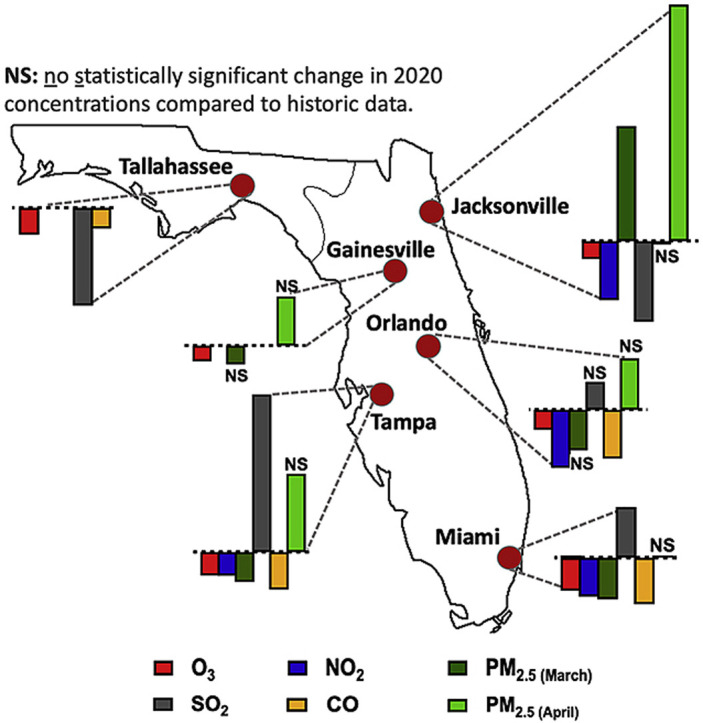
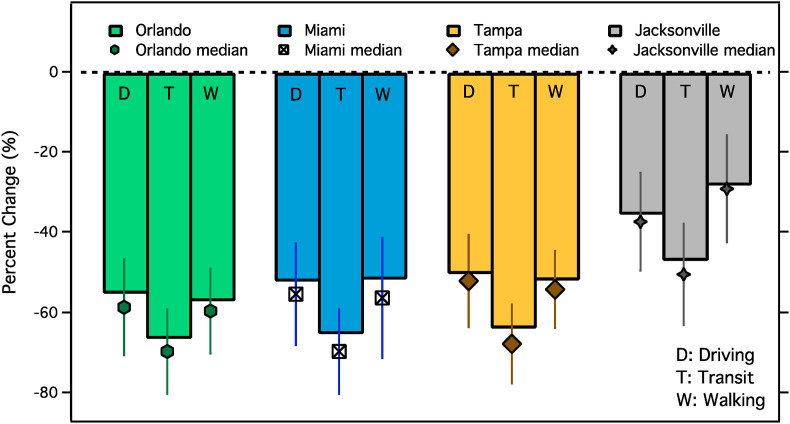
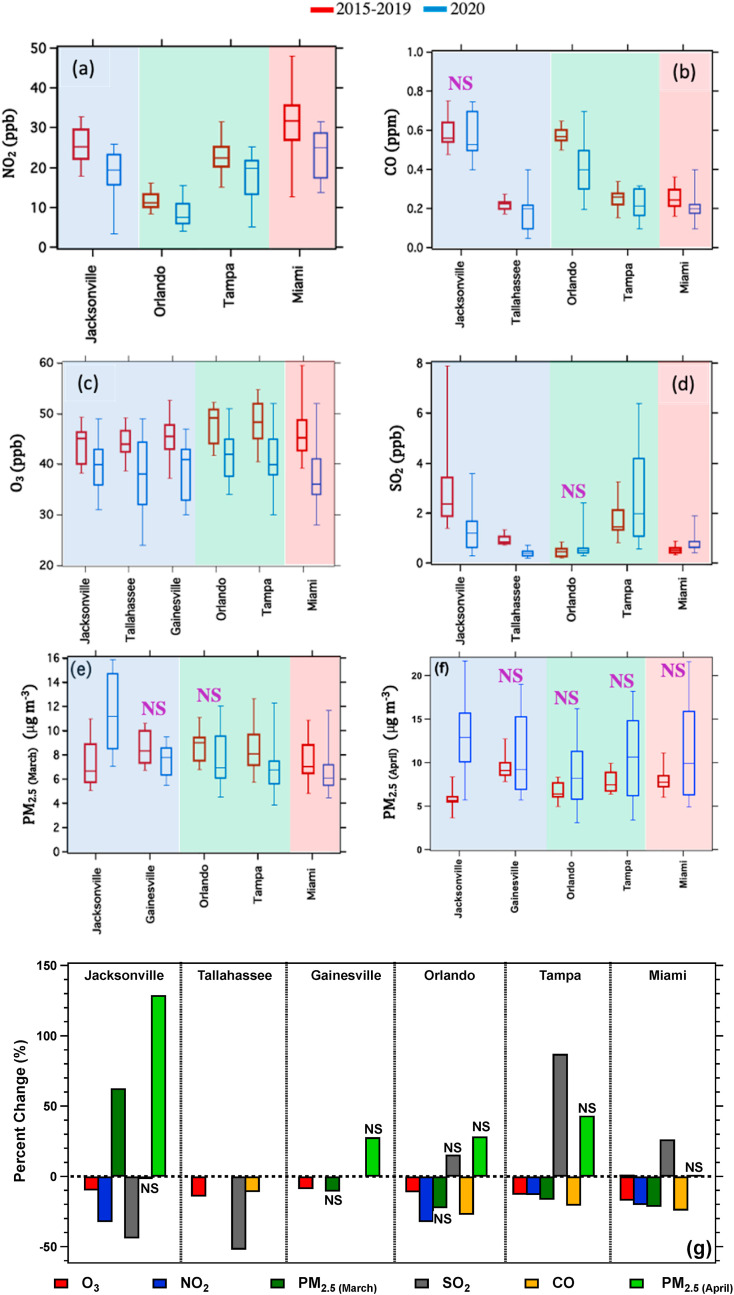
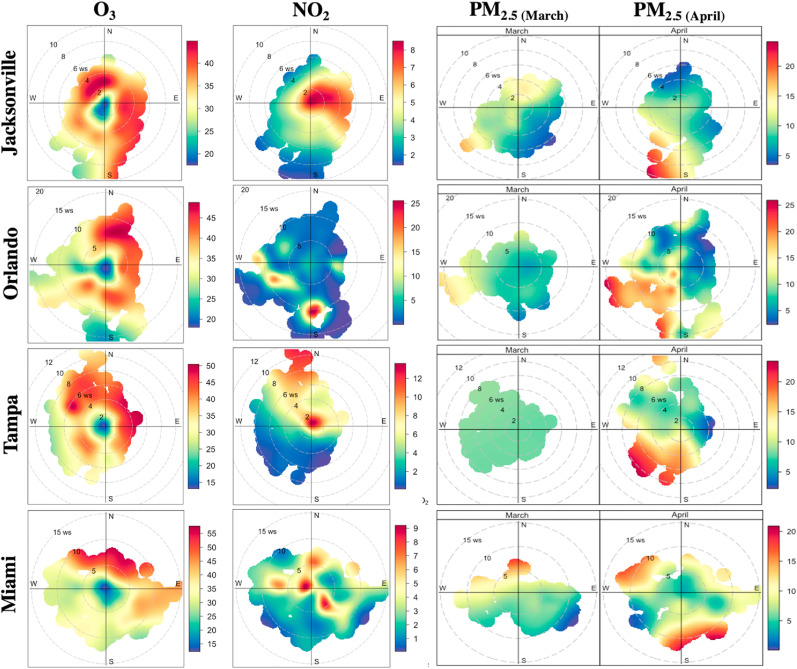
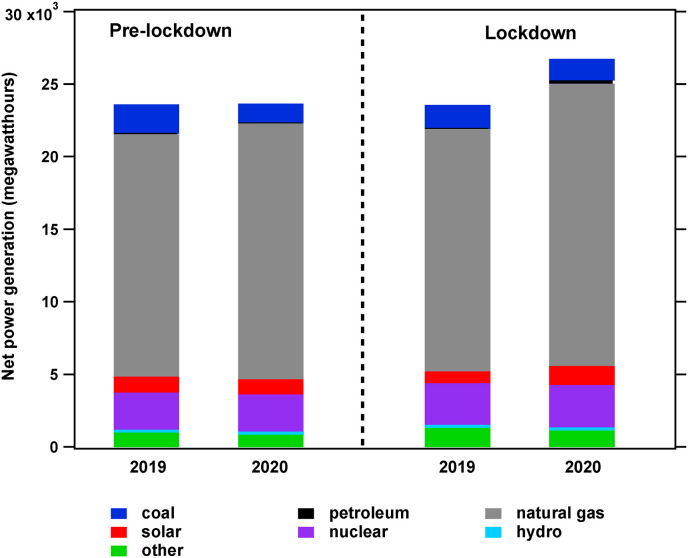
Since early 2020, the world has faced an unprecedented pandemic caused by the novel COVID-19 virus. In this study, we characterize the impact of the lockdown associated with the pandemic on air quality in six major cities across the state of Florida, namely: Jacksonville, Tallahassee, Gainesville, Orlando, Tampa, and Miami. Hourly measurements of PM, ozone, NO, SO, and CO were provided by the US EPA at thirty sites operated by the Florida Department of Environmental Protection during mid-February to mid-April from 2015 through 2020. To analyze the effect of the pandemic, atmospheric pollutant concentrations in 2020 were compared to historic data at these cities during the same period from 2015 to 2019. Reductions in NO and CO levels were observed across the state in most cities and were attributed to restrictions in mobility and the decrease in vehicle usage amid the lockdown. Likewise, decreases in O concentrations were observed and were related to the prevailing NO-limited regime during this time period. Changes in concentrations of SO exhibited spatial variations, concentrations decreased in northern cities, however an increase was observed in central and southern cities, likely due to increased power generation at facilities primarily in the central and southern regions of the state. PM levels varied temporally during the study and were positively correlated with SO concentrations during the lockdown. In March, reductions in PM levels were observed, however elevations in PM concentrations in April were attributed to long-range transport of pollutants rather than local emissions. This study provides further insight into the impacts of the COVID-19 pandemic on anthropogenic sources from vehicular emissions and power generation in Florida. This work has implications for policies and regulations of vehicular emissions as well as consequences on the use of sustainable energy sources in the state.
自 2020 年初以来,全球面临着由新型 COVID-19 病毒引起的前所未有的大流行。在本研究中,我们描述了与大流行相关的封锁对佛罗里达州六个主要城市(杰克逊维尔、塔拉哈西、盖恩斯维尔、奥兰多、坦帕和迈阿密)空气质量的影响。美国环保署在佛罗里达州环境保护部运营的 30 个站点提供了 2015 年至 2020 年 2 月中旬至 4 月中旬每小时的 PM、臭氧、NO、SO 和 CO 测量值。为了分析大流行的影响,将 2020 年的大气污染物浓度与这些城市同期(2015 年至 2019 年)的历史数据进行了比较。在大多数城市,NO 和 CO 水平的降低是由于封锁期间流动性限制和车辆使用减少所致。同样,观察到 O 浓度的降低,这与该时间段内普遍存在的 NO 限制制度有关。SO 浓度的变化表现出空间变化,北部城市的浓度降低,然而,中部和南部城市的浓度增加,这可能是由于该州中部和南部地区的设施增加了发电量。在研究期间,PM 水平随时间变化,在封锁期间与 SO 浓度呈正相关。3 月,观察到 PM 水平降低,但 4 月 PM 浓度升高归因于污染物的长距离传输而不是本地排放。本研究进一步深入了解了 COVID-19 大流行对佛罗里达州车辆排放和发电等人为来源的影响。这项工作对车辆排放政策和法规以及该州对可持续能源使用的影响具有重要意义。