Dong Zhouhuan, Wang Yun, Ding Vivianne, Yan Xiang, Lv Yali, Zhong Mei, Zhu Fengwei, Zhao Po, He Charlotte, Ding Feng, Shi Huaiyin
Department of Pathology, Chinese People's Liberation Army General Hospital, Beijing 100853, P.R. China.
Thoracic Oncology Program, Department of Surgery, Helen Diller Family Comprehensive Cancer Center, University of California, San Francisco, San Francisco, CA 94115, USA.
Oncol Lett. 2020 Oct;20(4):76. doi: 10.3892/ol.2020.11937. Epub 2020 Jul 31.
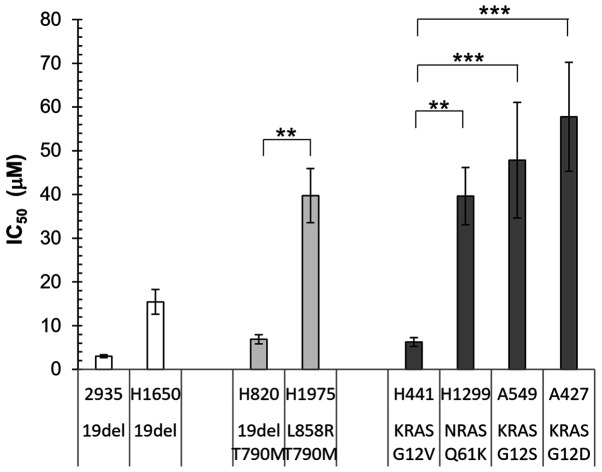
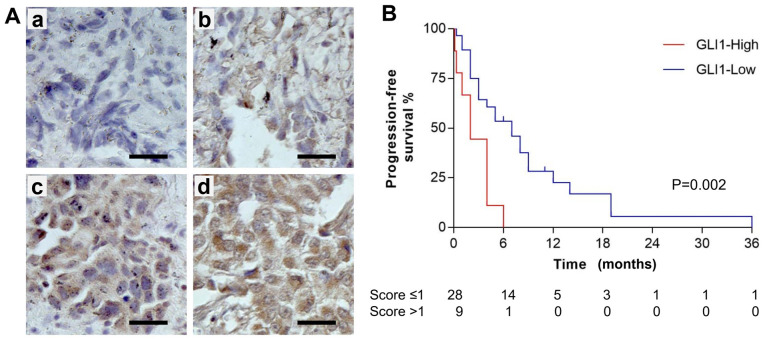
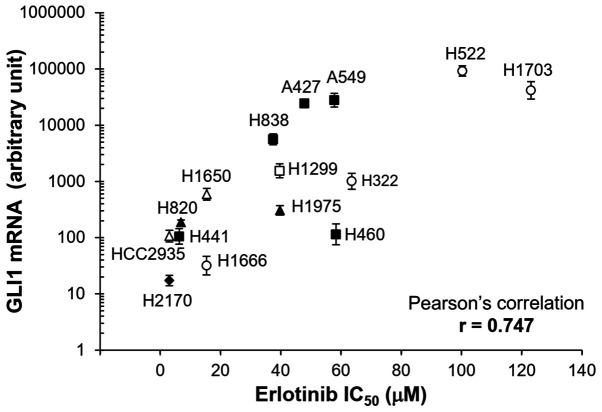
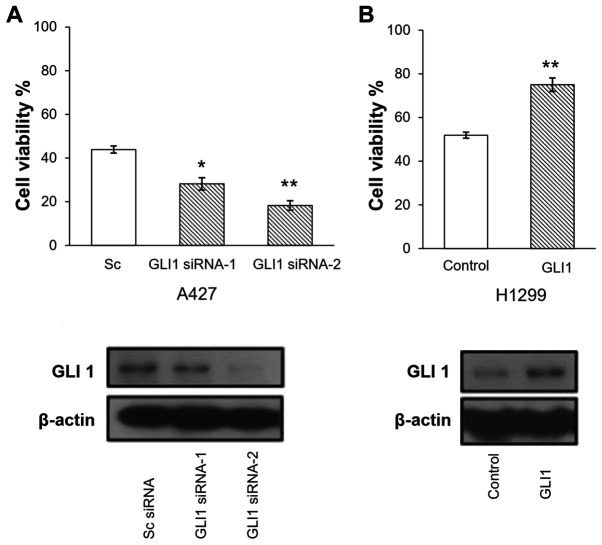
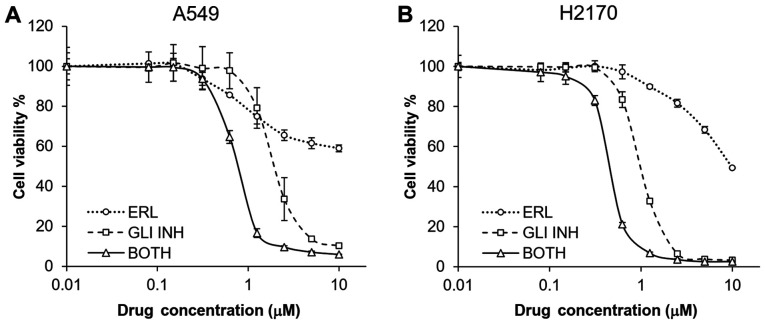
Lung cancer is the leading cause of cancer-associated death worldwide. In recent years, the advancement of epidermal growth factor receptor-tyrosine kinase inhibitor (EGFR-TKI) targeted therapies has provided clinical benefits for lung cancer patients with EGFR mutations. The response to EGFR-TKI varies in patients with lung cancer, and resistance typically develops during the course of the treatment. Therefore, understanding biomarkers which can predict resistance to EGFR-TKI is important. Overexpression of GLI causes activation of the Hedgehog (Hh) signaling pathway and plays a critical role in oncogenesis in numerous types of cancer. In the present study, the role of GLI1 in erlotinib resistance was investigated. GLI1 mRNA and protein expression levels were determined using reverse transcription-quantitative PCR and immunohistochemistry (IHC) in lung cancer cell lines and tumor specimens, respectively. GLI1 mRNA expression levels were found to be positively correlated with the IC of erlotinib in 15 non-small cell lung cancer (NSCLC) cell lines. The downregulation of GLI1 using siRNA sensitized lung cancer cells to the erlotinib treatment, whereas the overexpression of GLI1 increased the survival of lung cancer cells in the presence of erlotinib, indicating that Hh/GLI activation may play a critical role in the development of TKI resistance in lung cancer. Combined treatment with erlotinib and a GLI1 inhibitor reduced the cell viability synergistically. A retrospective study of patients with NSCLC treated with erlotinib revealed that those with a high IHC score for GLI1 protein expression had a poorer prognosis. These results indicated that GLI1 is a key regulator for TKI sensitivity, and patients with lung cancer may benefit from the combined treatment of TKI and GLI1 inhibitor.
肺癌是全球癌症相关死亡的主要原因。近年来,表皮生长因子受体 - 酪氨酸激酶抑制剂(EGFR - TKI)靶向治疗的进展为患有EGFR突变的肺癌患者带来了临床益处。肺癌患者对EGFR - TKI的反应各不相同,并且在治疗过程中通常会产生耐药性。因此,了解能够预测对EGFR - TKI耐药性的生物标志物非常重要。GLI的过表达会导致Hedgehog(Hh)信号通路的激活,并在多种类型癌症的肿瘤发生中起关键作用。在本研究中,研究了GLI1在厄洛替尼耐药中的作用。分别使用逆转录定量PCR和免疫组织化学(IHC)在肺癌细胞系和肿瘤标本中测定GLI1 mRNA和蛋白表达水平。发现在15种非小细胞肺癌(NSCLC)细胞系中,GLI1 mRNA表达水平与厄洛替尼的IC呈正相关。使用siRNA下调GLI1可使肺癌细胞对厄洛替尼治疗敏感,而GLI1的过表达则增加了在存在厄洛替尼的情况下肺癌细胞的存活率,表明Hh/GLI激活可能在肺癌TKI耐药的发生中起关键作用。厄洛替尼与GLI1抑制剂联合治疗可协同降低细胞活力。一项对接受厄洛替尼治疗的NSCLC患者的回顾性研究表明,GLI1蛋白表达免疫组化评分高的患者预后较差。这些结果表明GLI1是TKI敏感性的关键调节因子,肺癌患者可能从TKI与GLI1抑制剂的联合治疗中获益。