Cancer Research Unit, Veterans Affairs Medical Center, Kansas City, MO 64128, USA.
Department of Pathology and Laboratory Medicine, University of Kansas Medical Center, Kansas City, KS 66160, USA.
Int J Mol Sci. 2020 Dec 6;21(23):9307. doi: 10.3390/ijms21239307.
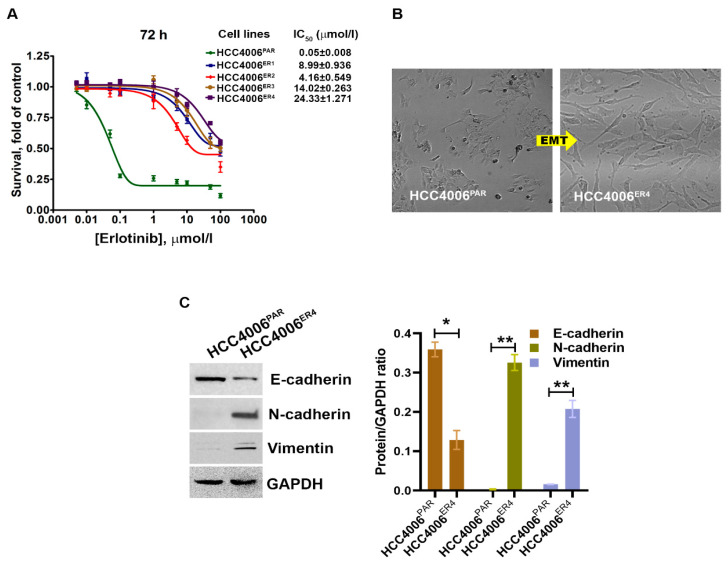
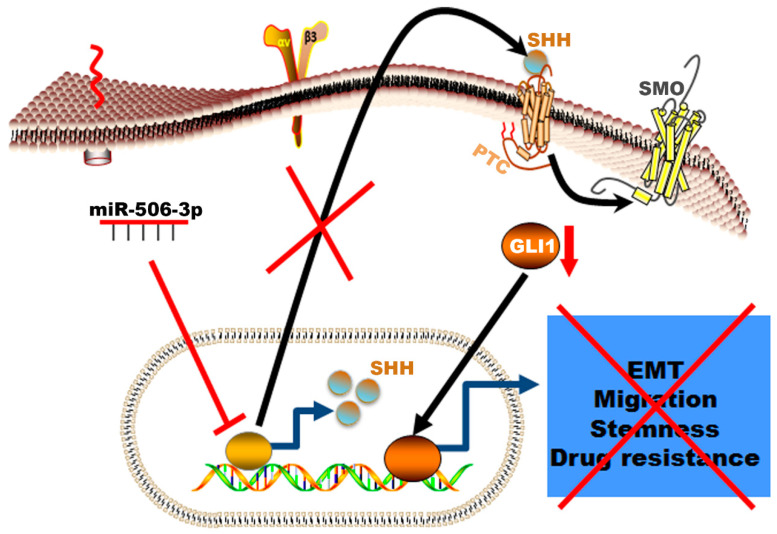
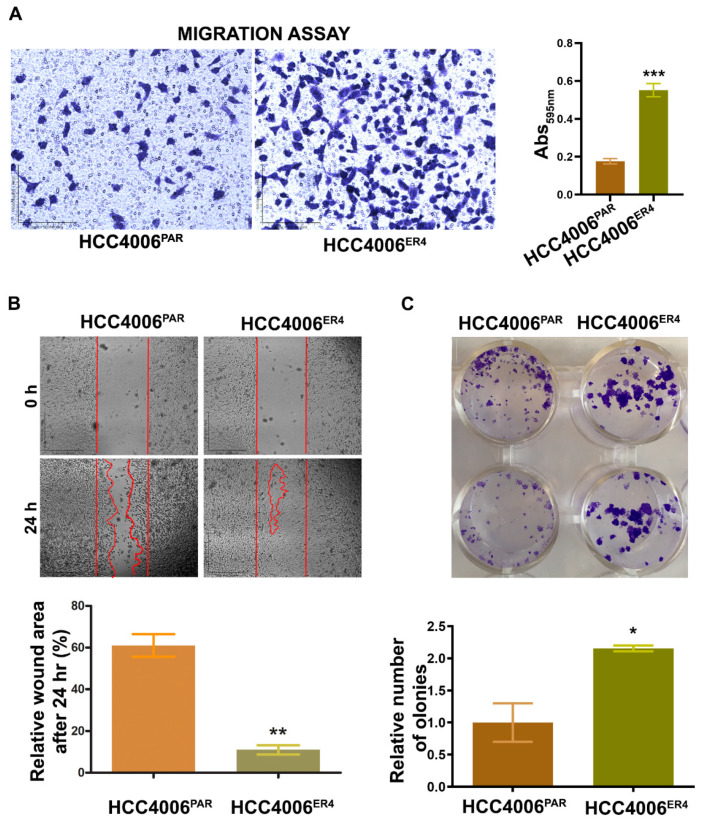
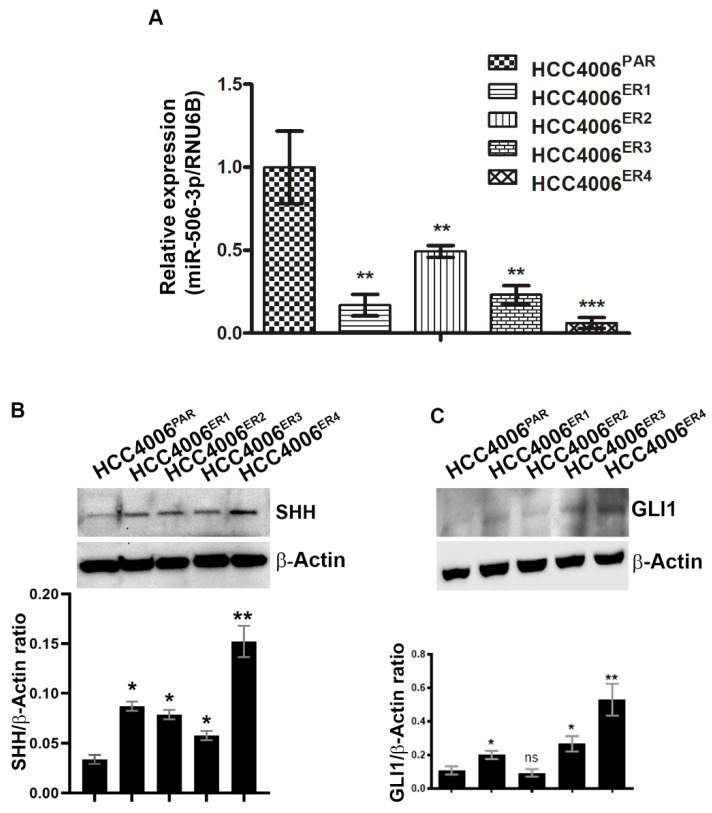
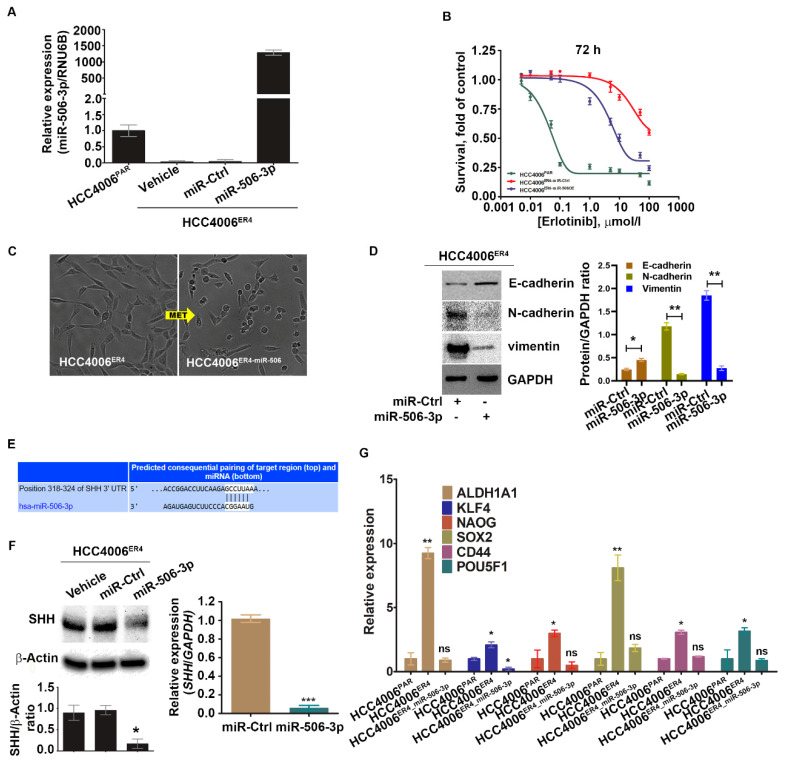
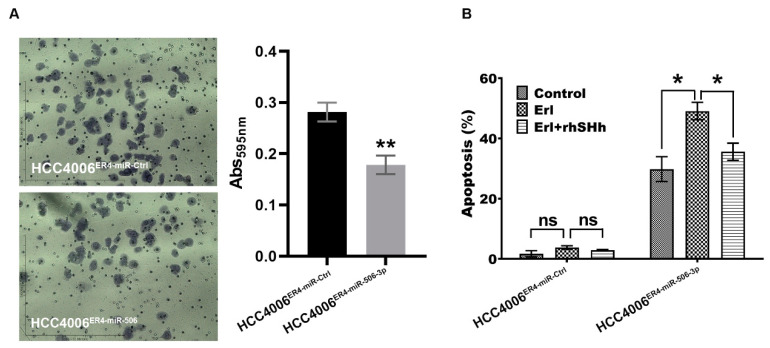
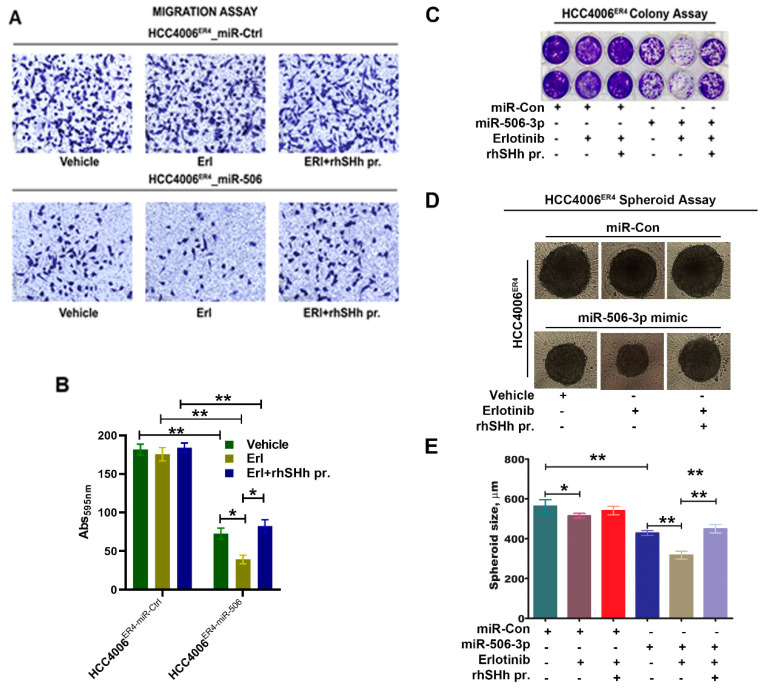
Non-small-cell lung cancer (NSCLC) patients with epidermal growth factor receptor (EGFR) mutation eventually develop resistance to EGFR-targeted tyrosine kinase inhibitors (TKIs). Treatment resistance remains the primary obstacle to the successful treatment of NSCLC. Although drug resistance mechanisms have been studied extensively in NSCLC, the regulation of these mechanisms has not been completely understood. Recently, increasing numbers of microRNAs (miRNAs) are implicated in EGFR-TKI resistance, indicating that miRNAs may serve as novel targets and may hold promise as predictive biomarkers for anti-EGFR therapy. MicroRNA-506 (miR-506) has been identified as a tumor suppressor in many cancers, including lung cancer; however, the role of miR-506 in lung cancer chemoresistance has not yet been addressed. Here we report that miR-506-3p expression was markedly reduced in erlotinib-resistant (ER) cells. We identified Sonic Hedgehog (SHH) as a novel target of miR-506-3p, aberrantly activated in ER cells. The ectopic overexpression of miR-506-3p in ER cells downregulates SHH signaling, increases E-cadherin expression, and inhibits the expression of vimentin, thus counteracting the epithelial-mesenchymal transition (EMT)-mediated chemoresistance. Our results advanced our understanding of the molecular mechanisms underlying EGFR-TKI resistance and indicated that the miR-506/SHH axis might represent a novel therapeutic target for future EGFR mutated lung cancer treatment.
非小细胞肺癌 (NSCLC) 患者的表皮生长因子受体 (EGFR) 突变最终会对 EGFR 靶向酪氨酸激酶抑制剂 (TKI) 产生耐药性。治疗耐药性仍然是 NSCLC 成功治疗的主要障碍。尽管 NSCLC 中已经广泛研究了耐药机制,但这些机制的调节仍未完全理解。最近,越来越多的 microRNAs (miRNAs) 被认为与 EGFR-TKI 耐药有关,表明 miRNAs 可能作为新的靶点,并可能作为抗 EGFR 治疗的预测生物标志物。MicroRNA-506 (miR-506) 已被确定为许多癌症(包括肺癌)中的肿瘤抑制因子;然而,miR-506 在肺癌化疗耐药中的作用尚未得到解决。在这里,我们报告 miR-506-3p 的表达在厄洛替尼耐药 (ER) 细胞中明显降低。我们确定 Sonic Hedgehog (SHH) 是 miR-506-3p 的一个新靶点,在 ER 细胞中异常激活。在 ER 细胞中过表达 miR-506-3p 可下调 SHH 信号通路,增加 E-钙黏蛋白的表达,并抑制波形蛋白的表达,从而抵抗上皮-间充质转化 (EMT) 介导的化疗耐药性。我们的研究结果加深了对 EGFR-TKI 耐药分子机制的理解,并表明 miR-506/SHH 轴可能代表未来 EGFR 突变型肺癌治疗的一个新的治疗靶点。