Division of Experimental Cardiology Department of Cardiology Erasmus MCUniversity Medical Center Rotterdam Rotterdam the Netherlands.
INSERM UMR_S 999Hôpital Marie Lannelongue Le Plessis-Robinson France.
J Am Heart Assoc. 2020 Sep 15;9(18):e017404. doi: 10.1161/JAHA.120.017404. Epub 2020 Sep 1.
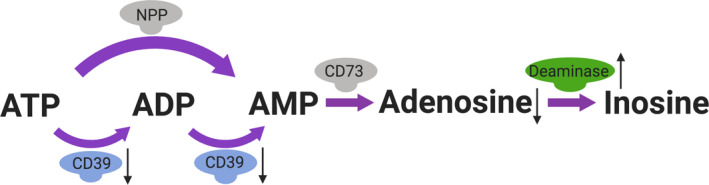
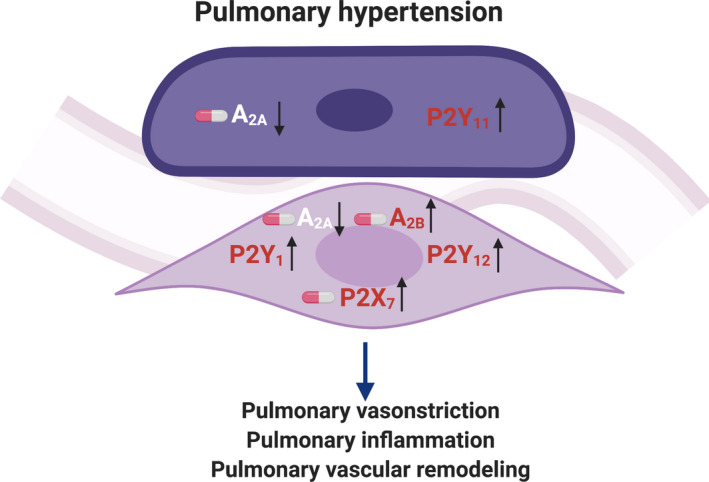
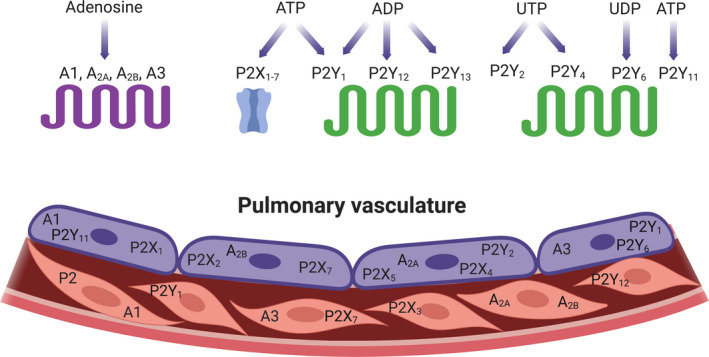
Pulmonary arterial hypertension (PAH) is a life-threatening disease characterized by increased pulmonary arterial pressure and pulmonary vascular resistance, which result in an increase in afterload imposed onto the right ventricle, leading to right heart failure. Current therapies are incapable of reversing the disease progression. Thus, the identification of novel and potential therapeutic targets is urgently needed. An alteration of nucleotide- and nucleoside-activated purinergic signaling has been proposed as a potential contributor in the pathogenesis of PAH. Adenosine-mediated purinergic 1 receptor activation, particularly AR activation, reduces pulmonary vascular resistance and attenuates pulmonary vascular remodeling and right ventricle hypertrophy, thereby exerting a protective effect. Conversely, AR activation induces pulmonary vascular remodeling, and is therefore deleterious. ATP-mediated P2XR activation and ADP-mediated activation of P2YR and P2YR play a role in pulmonary vascular tone, vascular remodeling, and inflammation in PAH. Recent studies have revealed a role of ectonucleotidase nucleoside triphosphate diphosphohydrolase, that degrades ATP/ADP, in regulation of pulmonary vascular remodeling. Interestingly, existing evidence that adenosine activates erythrocyte AR signaling, counteracting hypoxia-induced pulmonary injury, and that ATP release is impaired in erythrocyte in PAH implies erythrocyte dysfunction as an important trigger to affect purinergic signaling for pathogenesis of PAH. The present review focuses on current knowledge on alteration of nucleot(s)ide-mediated purinergic signaling as a potential disease mechanism underlying the development of PAH.
肺动脉高压(PAH)是一种危及生命的疾病,其特征是肺动脉压和肺血管阻力增加,导致右心室后负荷增加,从而导致右心衰竭。目前的治疗方法无法逆转疾病的进展。因此,迫切需要寻找新的潜在治疗靶点。核苷酸和核苷激活的嘌呤能信号的改变被认为是 PAH 发病机制中的一个潜在因素。腺苷介导的嘌呤能 1 型受体激活,特别是 AR 激活,可降低肺血管阻力,减轻肺血管重塑和右心室肥厚,从而发挥保护作用。相反,AR 激活诱导肺血管重塑,因此是有害的。ATP 介导的 P2XR 激活和 ADP 介导的 P2YR 和 P2YR 激活在 PAH 中的肺血管张力、血管重塑和炎症中发挥作用。最近的研究揭示了核苷酸三磷酸二磷酸水解酶(ectonucleotidase nucleoside triphosphate diphosphohydrolase)在调节肺血管重塑中的作用,该酶可降解 ATP/ADP。有趣的是,现有的证据表明,腺苷激活红细胞 AR 信号,抵消低氧诱导的肺损伤,并且在 PAH 中的红细胞中 ATP 释放受损,这意味着红细胞功能障碍是影响嘌呤能信号以影响 PAH 发病机制的重要触发因素。本文综述了目前关于核苷酸介导的嘌呤能信号改变作为 PAH 发展潜在疾病机制的研究进展。