Department of Poultry Science, University of Georgia, Athens, GA, USA.
Department of Poultry Science, University of Georgia, Athens, GA, USA.
Poult Sci. 2020 Sep;99(9):4203-4216. doi: 10.1016/j.psj.2020.04.031. Epub 2020 Jun 17.
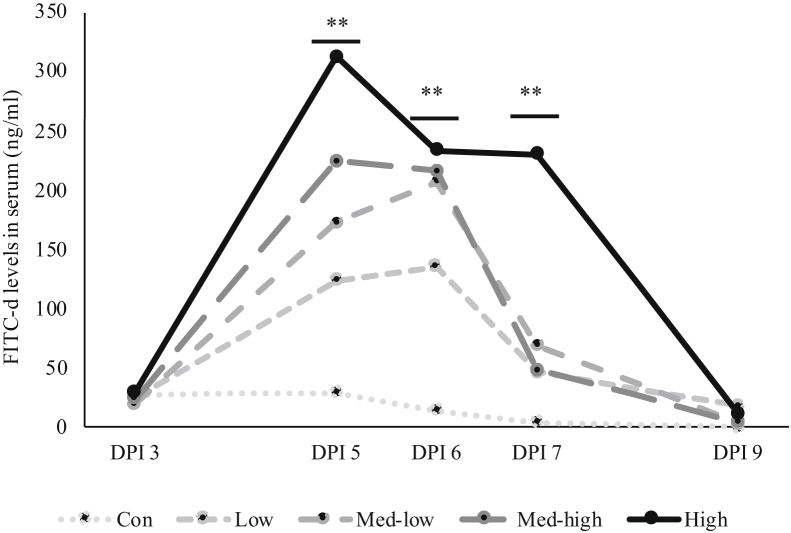
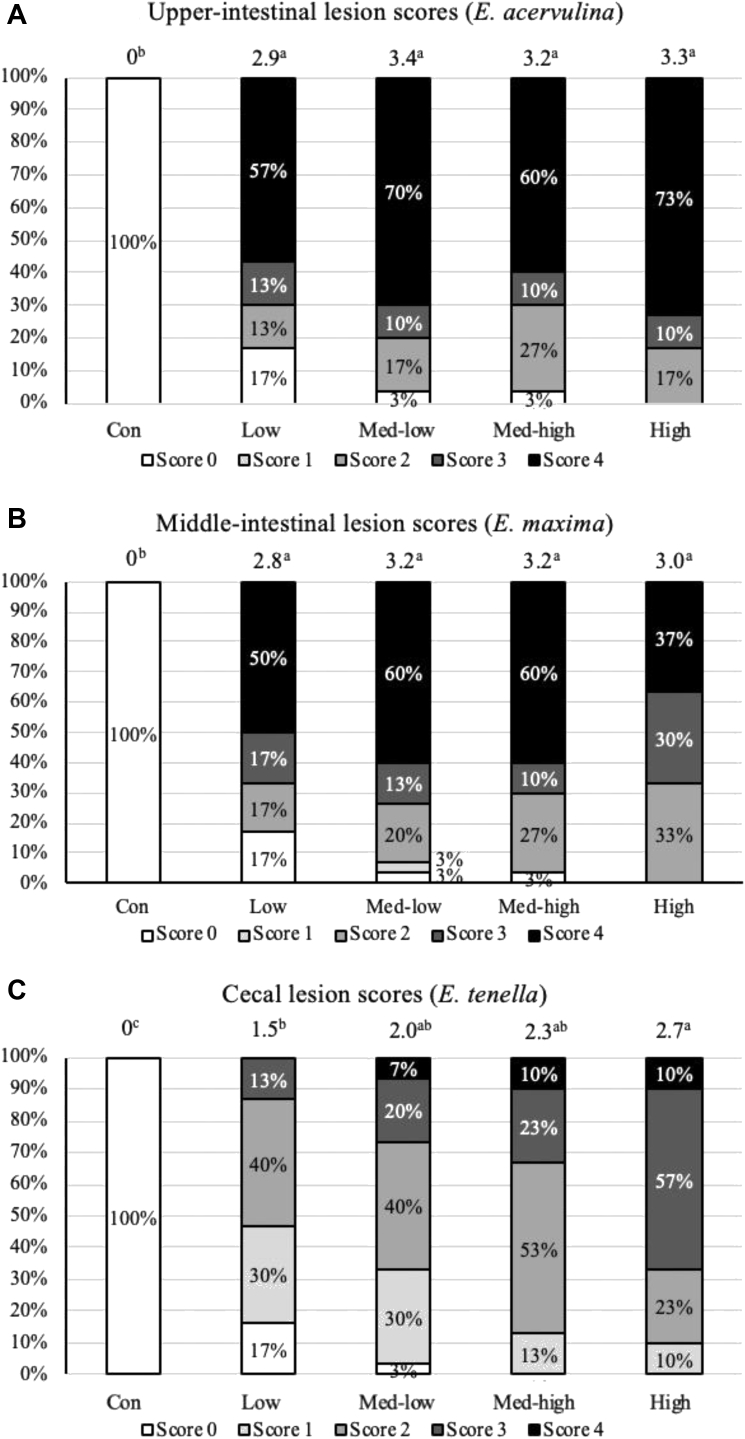
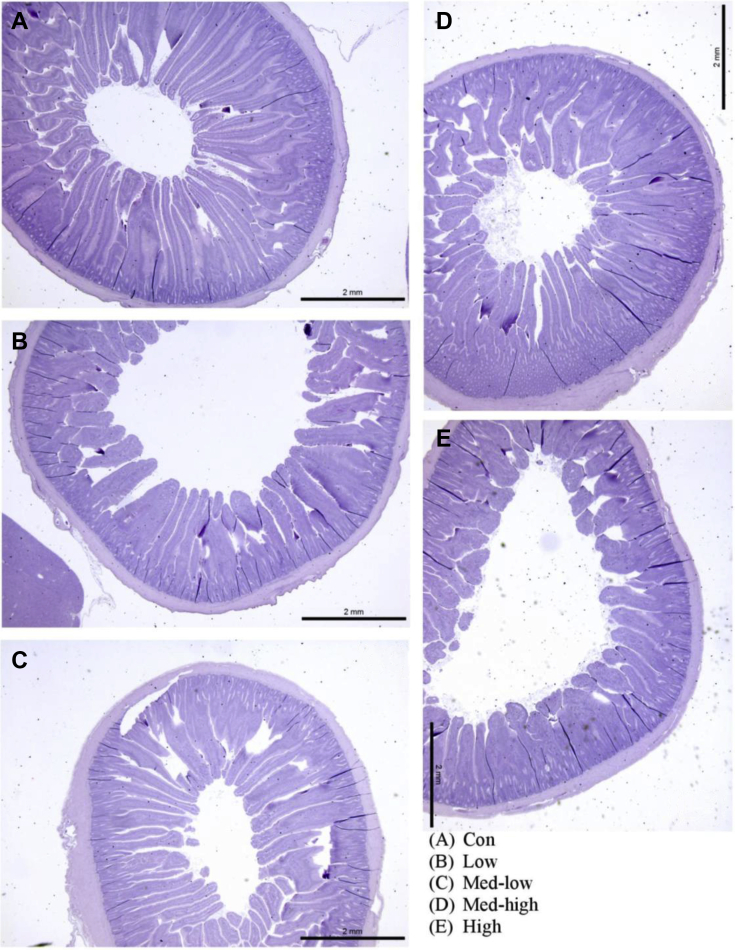
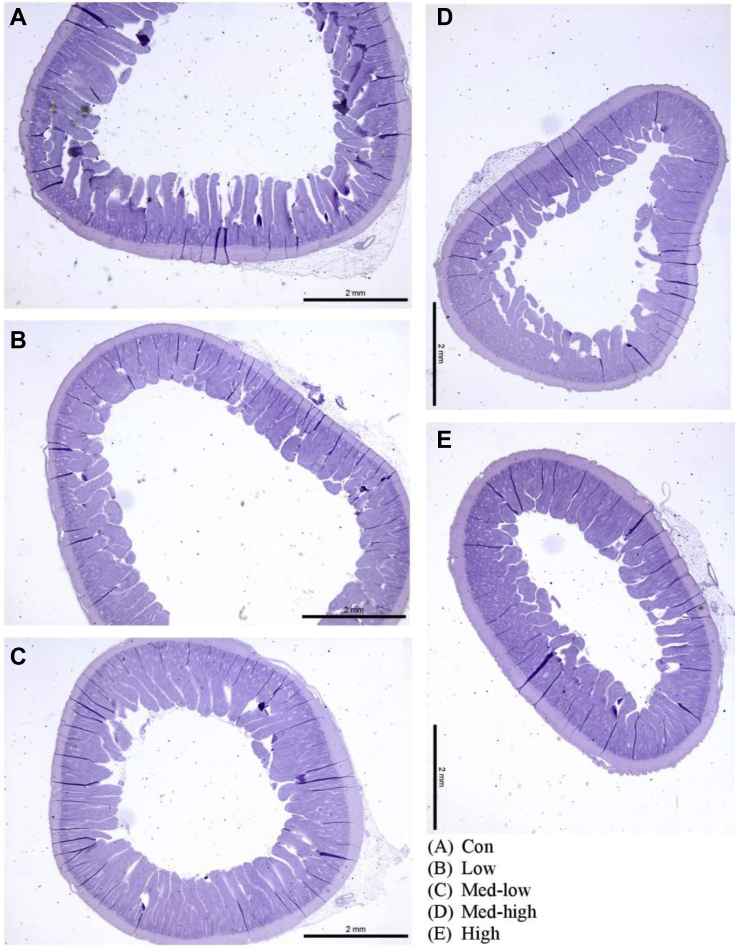
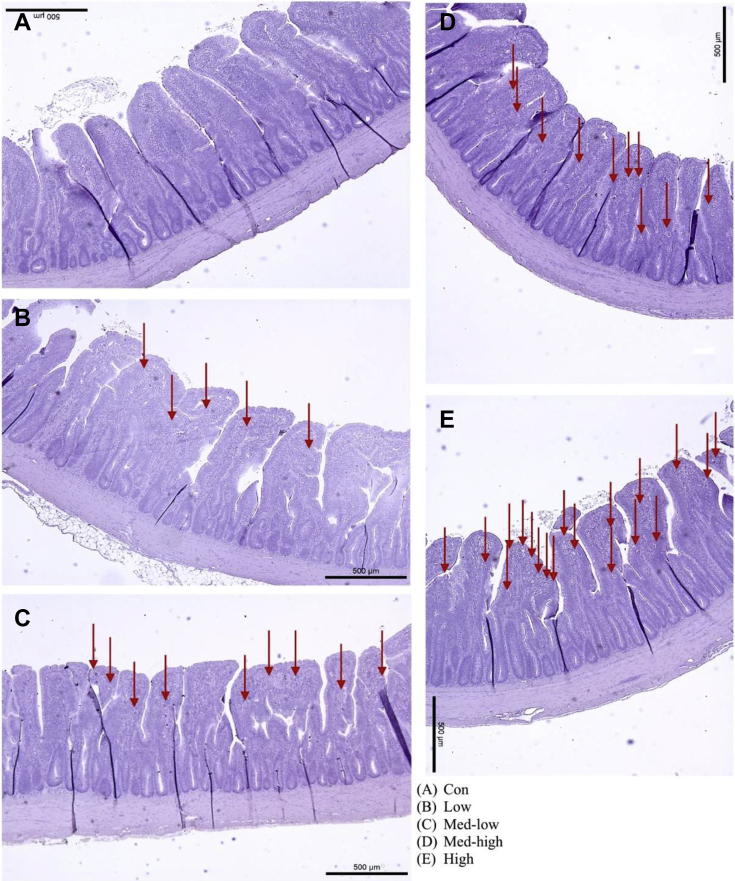
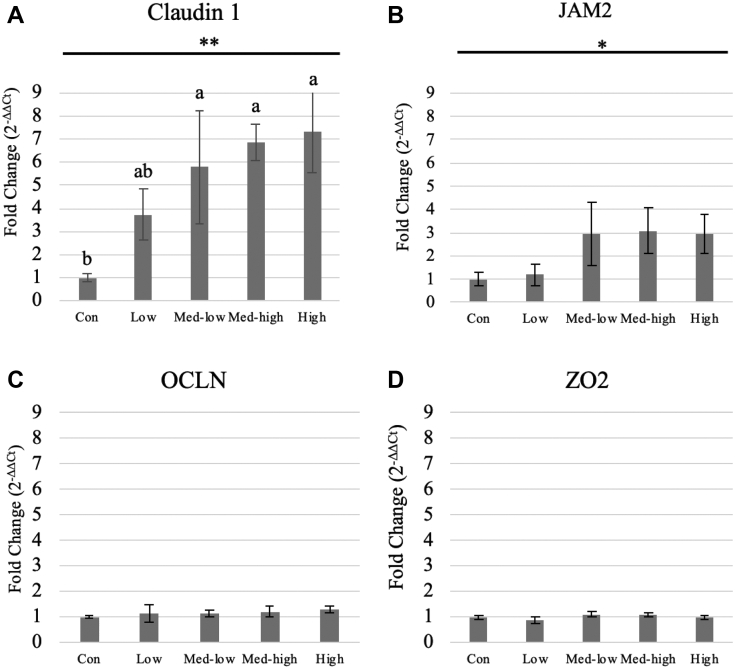
This study was conducted to evaluate graded Eimeria challenge on growth performance, apparent ileal digestibility, gastrointestinal permeability, intestinal morphology, gene expression of tight junction protein, and intestinal lesion scores in broiler chickens. There were 5 groups in this study, including a control and 4 different Eimeria treatment doses. A mixed Eimeria spp. solution with 50,000 Eimeria maxima, 50,000 Eimeria tenella, and 250,000 Eimeria acervulina per milliliter was prepared for the high-dose challenge treatment. The 2-fold serial dilution was used to make the medium-high (25,000 E. maxima; 25,000 E. tenella; 125,000 E. acervulina), the medium-low (12,500 E. maxima; 12,500 E. tenella; 62,500 E. acervulina), and the low challenge dose (6,250 E. maxima; 6,250 E. tenella; 31,250 E. acervulina). A total of three hundred sixty 13-day-old male broiler chickens were randomly allocated into 5 treatments with 6 replicated cages. Growth performance was calculated from 0 to 6 D postinfection (DPI). Intestine lesion was scored on 6 DPI. Gastrointestinal permeability was measured on 3, 5, 6, 7, and 9 DPI. The results indicated significant linear reduction in growth performance, intestinal villi height, and ileal nutrient digestibility in response to the increase of Eimeria challenge dose. Furthermore, gene expression of tight junction protein was linearly upregulated by the increasing challenge doses. Significant linear increases of gastrointestinal permeability were found on 5, 6, and 7 DPI (P < 0.01). On 9 DPI, the gastrointestinal permeability was recovered back to normal level in the challenge groups. In conclusion, the higher Eimeria doses birds received, the more severe intestine damage was observed in several gastrointestinal health parameters. The medium-low or medium-high levels of mixed Eimeria oocysts is suggested as an optimum Eimeria-challenge dose to establish a subclinical challenge model for future studies evaluating nutritional strategies. Moreover, it is recommended to measure gastrointestinal permeability on 5 DPI with higher oocysts doses and 6 DPI when using the lower oocysts doses.
本研究旨在评估递增的艾美耳球虫攻毒对肉鸡生长性能、表观回肠消化率、肠道通透性、肠道形态、紧密连接蛋白基因表达和肠道病变评分的影响。本研究设 5 个处理组,包括对照组和 4 个不同的艾美耳球虫攻毒剂量。用每毫升含 50,000 个巨型艾美耳球虫、50,000 个柔嫩艾美耳球虫和 250,000 个堆型艾美耳球虫的混合艾美耳球虫溶液制备高剂量攻毒处理。采用 2 倍连续稀释法制备中高剂量(25,000 个巨型艾美耳球虫、25,000 个柔嫩艾美耳球虫、125,000 个堆型艾美耳球虫)、中低剂量(12,500 个巨型艾美耳球虫、12,500 个柔嫩艾美耳球虫、62,500 个堆型艾美耳球虫)和低剂量(6,250 个巨型艾美耳球虫、6,250 个柔嫩艾美耳球虫、31,250 个堆型艾美耳球虫)攻毒处理。将 360 只 13 日龄雄性肉鸡随机分为 5 个处理组,每组 6 个重复笼。从攻毒后 0 到 6 天(DPI)计算生长性能。在 6 DPI 时对肠道病变进行评分。在 3、5、6、7 和 9 DPI 时测量肠道通透性。结果表明,随着艾美耳球虫攻毒剂量的增加,生长性能、肠道绒毛高度和回肠养分消化率呈显著线性下降。此外,随着攻毒剂量的增加,紧密连接蛋白基因的表达呈线性上调。在 5、6 和 7 DPI 时,肠道通透性呈显著线性增加(P < 0.01)。在 9 DPI 时,攻毒组的肠道通透性恢复到正常水平。综上所述,鸡接受的艾美耳球虫剂量越高,在几个胃肠道健康参数中观察到的肠道损伤越严重。建议使用中低或中高剂量的混合艾美耳球虫卵囊作为最佳艾美耳球虫攻毒剂量,为未来评估营养策略的研究建立亚临床攻毒模型。此外,建议在使用较低卵囊剂量时,在较高卵囊剂量的 5 DPI 和较低卵囊剂量的 6 DPI 时测量肠道通透性。