Thuillier Philippe, Bourhis David, Karakatsanis Nicolas, Schick Ulrike, Metges Jean Philippe, Salaun Pierre-Yves, Kerlan Véronique, Abgral Ronan
Department of Endocrinology.
EA GETBO 3878.
Medicine (Baltimore). 2020 Aug 14;99(33):e20021. doi: 10.1097/MD.0000000000020021.
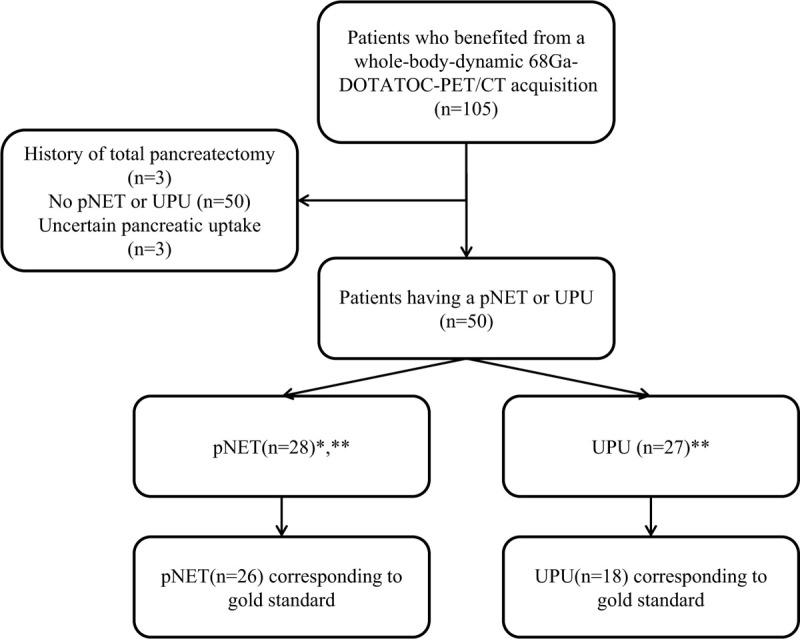
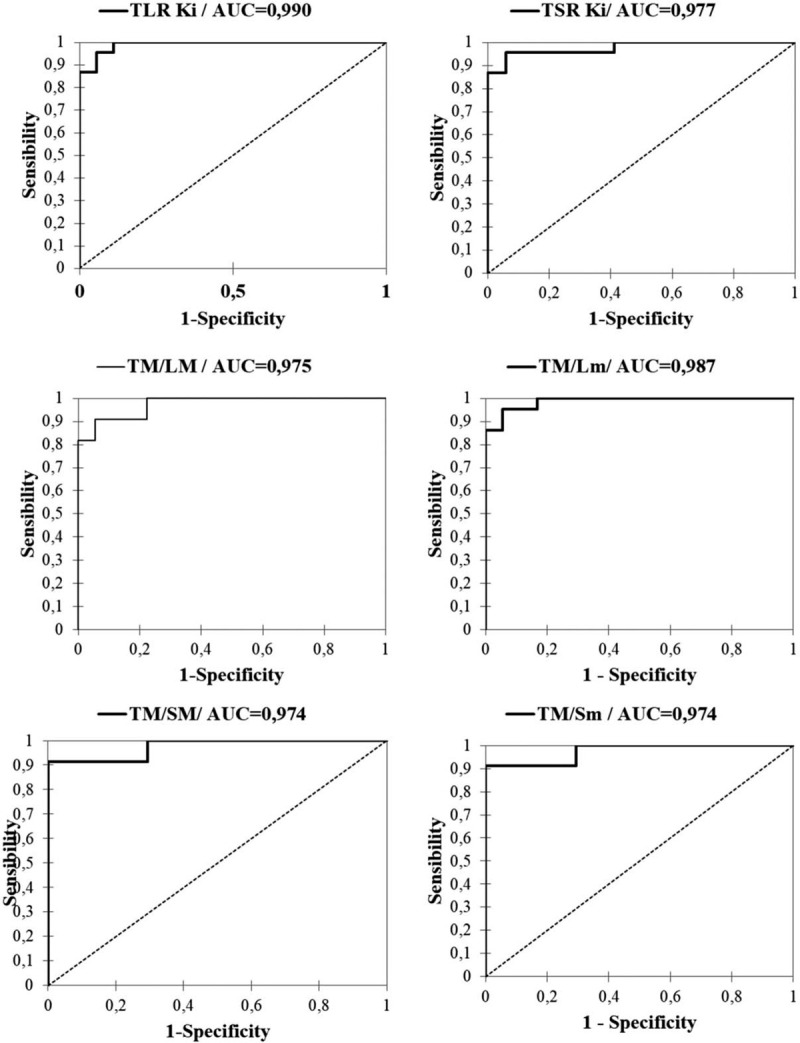
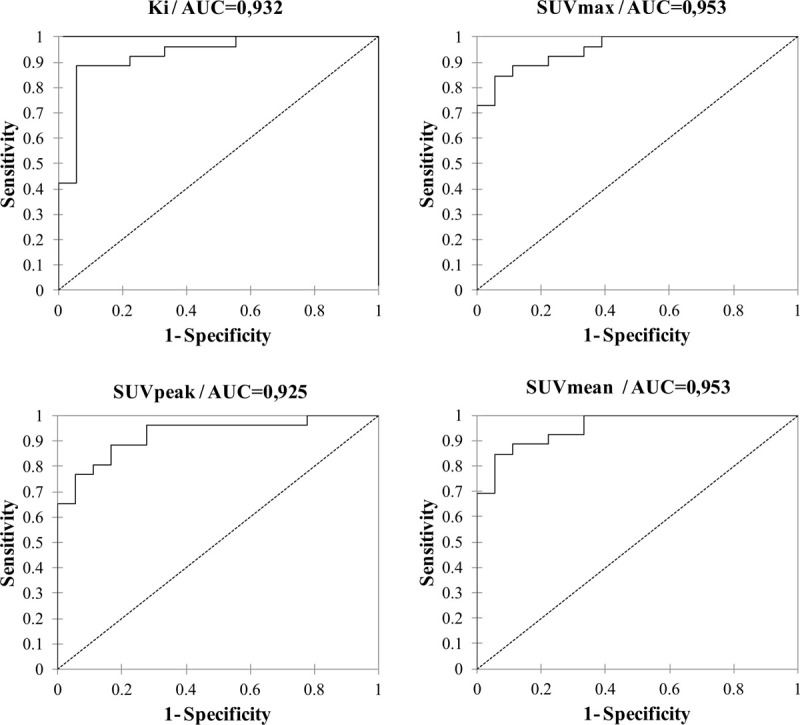
To evaluate the diagnostic performance of net influx rate (Ki) values from a whole-body dynamic (WBD) Ga-DOTATOC-PET/CT acquisition to differentiate pancreatic neuroendocrine tumors (pNETs) from physiological uptake of pancreatic uncinate process (UP).Patients who were benefited from a WBD acquisition for the assessment of a known well-differentiated neuroendocrine tumor (NET)/suspicion of disease in the prospective GAPET-NET cohort were screened. Only patients with a confirmed pNET/UP as our gold standard were included. The positron emission tomography (PET) procedure consisted in a single-bed dynamic acquisition centered on the heart, followed by a whole-body dynamic acquisition and then a static acquisition. Dynamic (Ki calculated according to Patlak method), static (SUVmax, SUVmean, SUVpeak) parameters, and tumor-to-liver and tumor-to-spleen ratio (TLRKi and TSRKi (according to hepatic/splenic Ki)), tumor SUVmax to liver SUVmax (TM/LM), tumor SUVmax to liver SUVmean (TM/Lm), tumor SUVmax to spleen SUVmax (TM/SM), and tumor SUVmax to spleen SUVmean (TM/Sm) (according to hepatic/splenic SUVmax and SUVmean respectively) were calculated. A Receiver Operating Characteristic (ROC) analysis was performed to evaluate their diagnostic performance to distinguish UP from pNET.One hundred five patients benefited from a WBD between July 2018 and July 2019. Eighteen (17.1%) had an UP and 26 (24.8%) a pNET. For parameters alone, the Ki and SUVpeak had the best sensitivity (88.5%) while the Ki, SUVmax, and SUVmean had the best specificity (94.4%). The best diagnostic accuracy was obtained with Ki (90.9%). For ratios, the TLRKi and the TSRKi had the best sensitivity (95.7%) while the TM/SM and TM/Sm the best specificity (100%). TLRKi had the best diagnostic accuracy (95.1%) and the best area under the curve (AUC) (0.990).Our study is the first one to evaluate the interest of a WBD acquisition to differentiate UP from pNETs and shows excellent diagnostic performances of the Ki approach.
评估全身动态(WBD)Ga-DOTATOC-PET/CT采集所得的净流入率(Ki)值在区分胰腺神经内分泌肿瘤(pNETs)与胰腺钩突(UP)的生理性摄取方面的诊断性能。对前瞻性GAPET-NET队列中因评估已知高分化神经内分泌肿瘤(NET)/疑似疾病而受益于WBD采集的患者进行筛选。仅纳入以确诊的pNET/UP作为金标准的患者。正电子发射断层扫描(PET)程序包括以心脏为中心的单床位动态采集,随后是全身动态采集,然后是静态采集。计算动态参数(根据Patlak方法计算的Ki)、静态参数(SUVmax、SUVmean、SUVpeak)以及肿瘤与肝脏和肿瘤与脾脏的比值(TLRKi和TSRKi(根据肝脏/脾脏Ki))、肿瘤SUVmax与肝脏SUVmax(TM/LM)、肿瘤SUVmax与肝脏SUVmean(TM/Lm)、肿瘤SUVmax与脾脏SUVmax(TM/SM)以及肿瘤SUVmax与脾脏SUVmean(TM/Sm)(分别根据肝脏/脾脏SUVmax和SUVmean)。进行受试者操作特征(ROC)分析以评估它们区分UP与pNET的诊断性能。2018年7月至2019年7月期间,105例患者受益于WBD采集。18例(17.1%)有UP,26例(24.8%)有pNET。就单独参数而言,Ki和SUVpeak具有最佳敏感性(88.5%),而Ki、SUVmax和SUVmean具有最佳特异性(94.4%)。Ki的诊断准确性最佳(90.9%)。就比值而言,TLRKi和TSRKi具有最佳敏感性(95.7%),而TM/SM和TM/Sm具有最佳特异性(100%)。TLRKi的诊断准确性最佳(95.1%)且曲线下面积(AUC)最佳(0.990)。我们的研究是首个评估WBD采集在区分UP与pNETs方面价值的研究,并显示Ki方法具有出色的诊断性能。