Department of Respiratory Medicine, the First Affiliated Hospital of Soochow University, Suzhou, 215006, China.
Suzhou Key Laboratory for Respiratory Diseases, Suzhou, 215006, China.
Respir Res. 2020 Sep 1;21(1):227. doi: 10.1186/s12931-020-01491-0.
AKT2 is highly expressed in many human cancers, including non-small cell lung cancer (NSCLC). Accumulating evidence has also revealed that AKT2 can promote NSCLC cell proliferation and metastasis. However, the involved mechanism remains unclear. Herein, our study mainly explored the function of AKT2 during cancer progression and uncovered a new post-transcriptional mechanism of AKT2 expression in lung adenocarcinoma (LUAD).
Quantitative real-time (qRT-PCR), western blot and immunohistochemistry (IHC) assays were performed to detect the expression of AKT2 and other proteins. Cell counting kit-8 (CCK-8), colony formation and EdU assays were performed to assess cell proliferation. Flow cytometry analysis was used to detect changes in the cell cycle and apoptosis. Transwell assays were used to evaluate cell migration and invasion. Additionally, a luciferase reporter assay and western blotting were employed to assess miR-124 targeting of AKT2. Xenograft mouse model was used to observe the role of miR-124/AKT2 axis on the occurrence and development of LUAD.
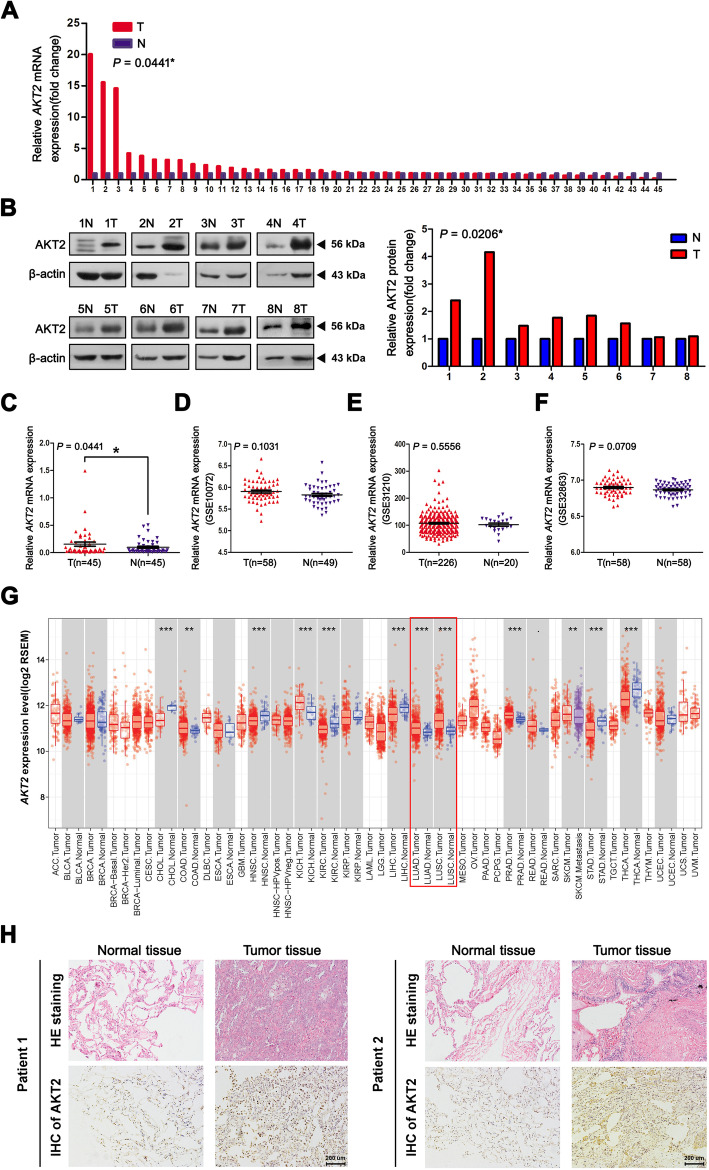
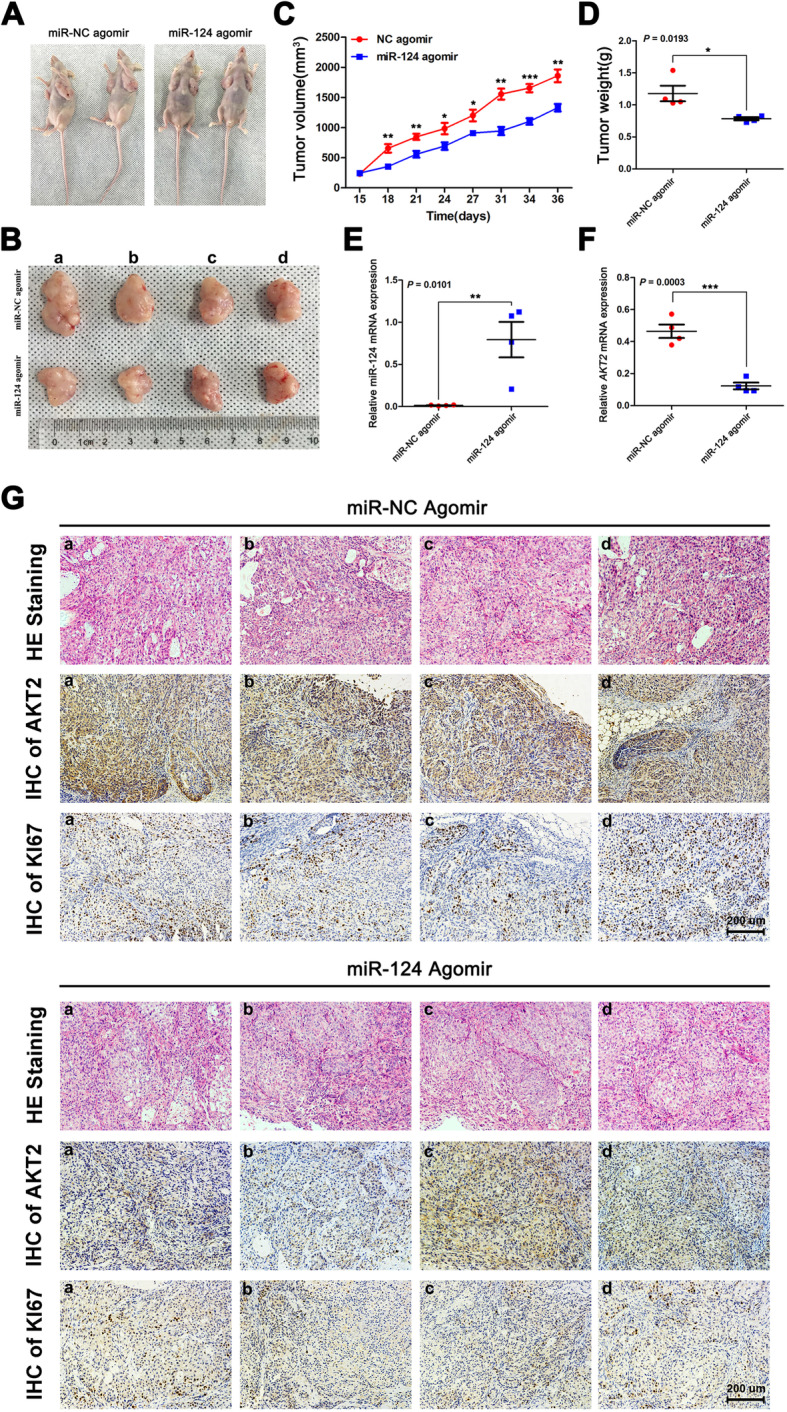
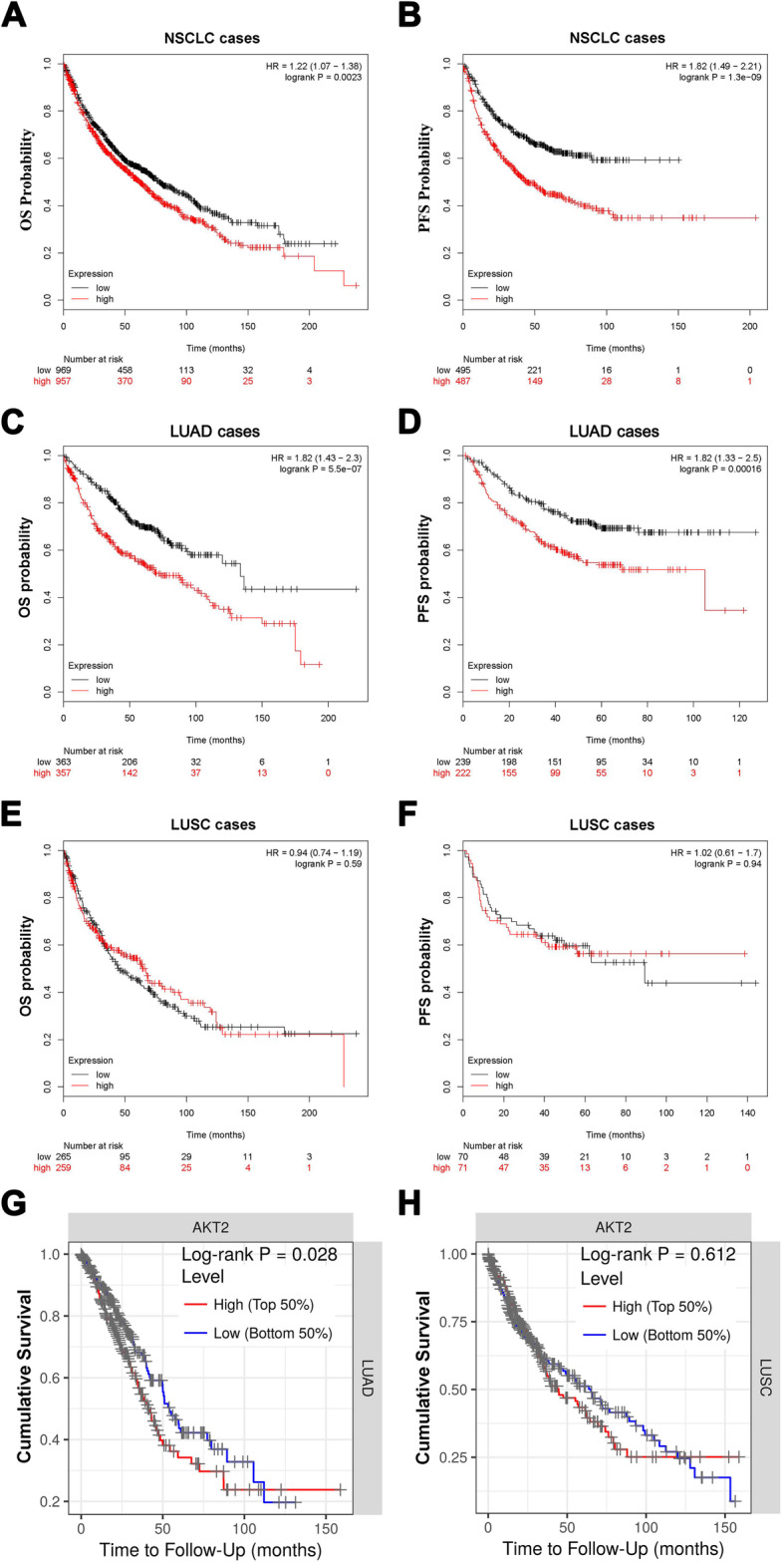
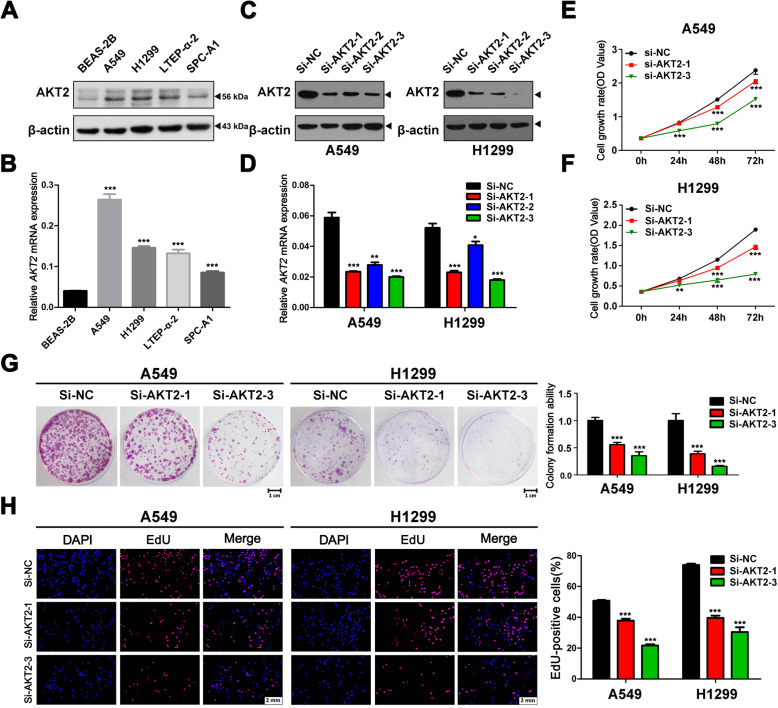
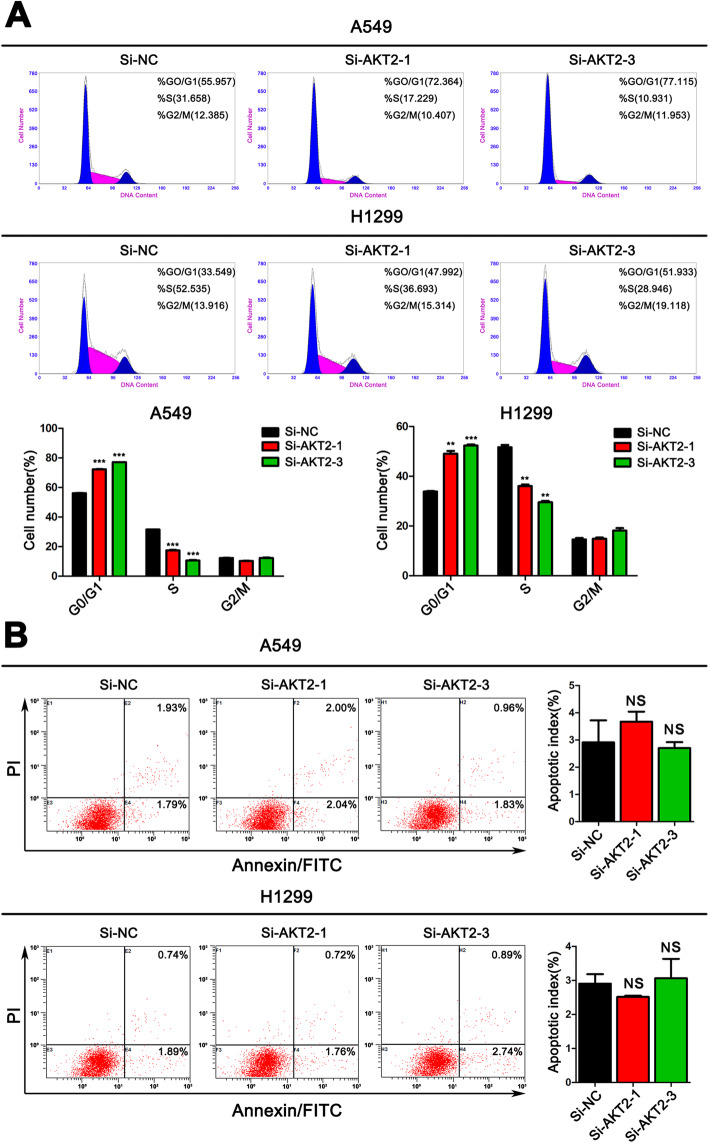
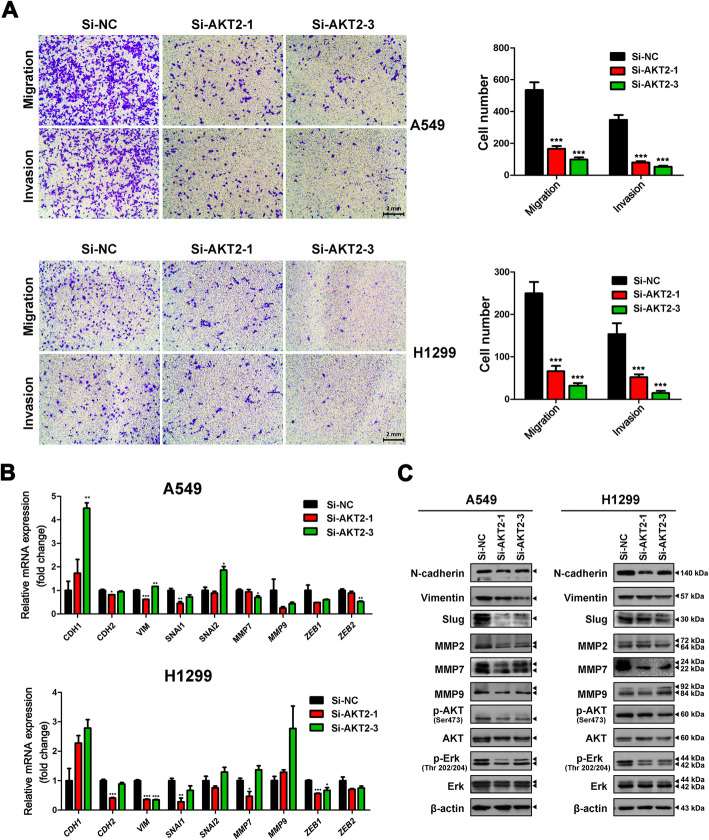
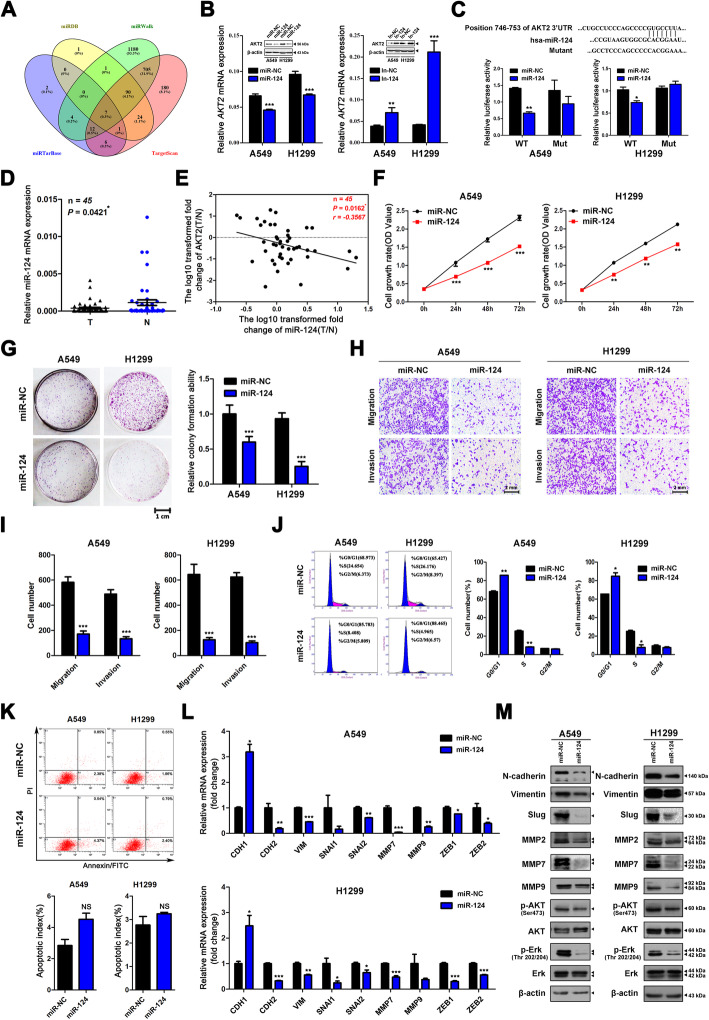
We showed that AKT2 was highly expressed in NSCLC tissues and closely related to the poor prognosis of LUAD patients. Moreover, AKT2 affected LUAD cell proliferation, migration and invasion by regulating the cell cycle and promoting the occurrence of epithelial-mesenchymal transition (EMT) and the expression of matrix metalloproteinases (MMPs). In addition, we demonstrated that miR-124 overexpression downregulated AKT2 expression by binding to the 3'-untranslated region (3'- UTR) of AKT2 and thus inhibited the occurrence and development of LUAD in vivo and in vitro.
Our results suggest that miR-124 overexpression can negatively regulate AKT2 and thus inhibit the progression of LUAD. Therefore, the miR-124/AKT2 axis may serve as a potential target for novel therapies for LUAD.
AKT2 在许多人类癌症中高度表达,包括非小细胞肺癌(NSCLC)。越来越多的证据表明,AKT2 可以促进 NSCLC 细胞的增殖和转移。然而,其涉及的机制尚不清楚。在此,我们的研究主要探讨了 AKT2 在癌症进展过程中的作用,并揭示了肺腺癌(LUAD)中 AKT2 表达的一种新的转录后机制。
采用定量实时(qRT-PCR)、western blot 和免疫组织化学(IHC)检测 AKT2 和其他蛋白的表达。细胞计数试剂盒-8(CCK-8)、集落形成和 EdU 检测评估细胞增殖。流式细胞术分析用于检测细胞周期和凋亡的变化。Transwell 检测用于评估细胞迁移和侵袭。此外,采用荧光素酶报告基因检测和 western blot 检测评估 AKT2 对 miR-124 的靶向作用。采用异种移植小鼠模型观察 miR-124/AKT2 轴对 LUAD 发生和发展的作用。
我们表明,AKT2 在 NSCLC 组织中高表达,与 LUAD 患者的不良预后密切相关。此外,AKT2 通过调节细胞周期、促进上皮-间质转化(EMT)和基质金属蛋白酶(MMPs)的表达,影响 LUAD 细胞的增殖、迁移和侵袭。此外,我们证明,miR-124 通过结合 AKT2 的 3'-非翻译区(3'-UTR)下调 AKT2 表达,从而抑制体内和体外 LUAD 的发生和发展。
我们的研究结果表明,miR-124 的过表达可以负调控 AKT2,从而抑制 LUAD 的进展。因此,miR-124/AKT2 轴可能成为 LUAD 新治疗方法的潜在靶点。