Department of Surgery, Amsterdam UMC, University of Amsterdam, Amsterdam Gastroenterology Endocrinology Metabolism, Amsterdam, The Netherlands
Department of Surgery, Radboudumc, Nijmegen, The Netherlands.
Gut. 2021 May;70(5):915-927. doi: 10.1136/gutjnl-2019-320430. Epub 2020 Sep 1.
The gut microbiota are the main source of infections in necrotising pancreatitis. We investigated the effect of disruption of the intestinal microbiota by a Western-type diet on mortality and bacterial dissemination in necrotising pancreatitis and its reversal by butyrate supplementation.
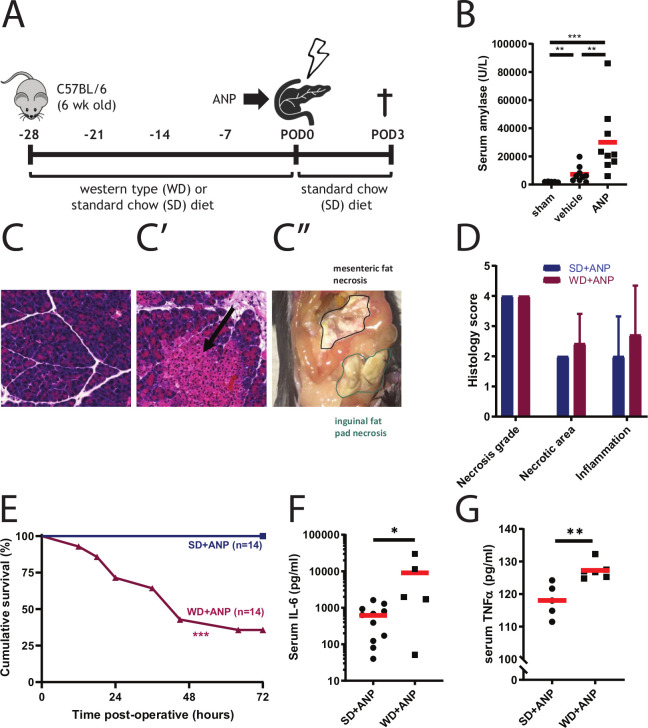
C57BL/6 mice were fed either standard chow or a Western-type diet for 4 weeks and were then subjected to taurocholate-induced necrotising pancreatitis. Blood and pancreas were collected for bacteriology and immune analysis. The cecum microbiota composition of mice was analysed using 16S rRNA gene amplicon sequencing and cecal content metabolites were analysed by targeted (ie, butyrate) and untargeted metabolomics. Prevention of necrotising pancreatitis in this model was compared between faecal microbiota transplantation (FMT) from healthy mice, antibiotic decontamination against Gram-negative bacteria and oral or systemic butyrate administration. Additionally, the faecal microbiota of patients with pancreatitis and healthy subjects were analysed.
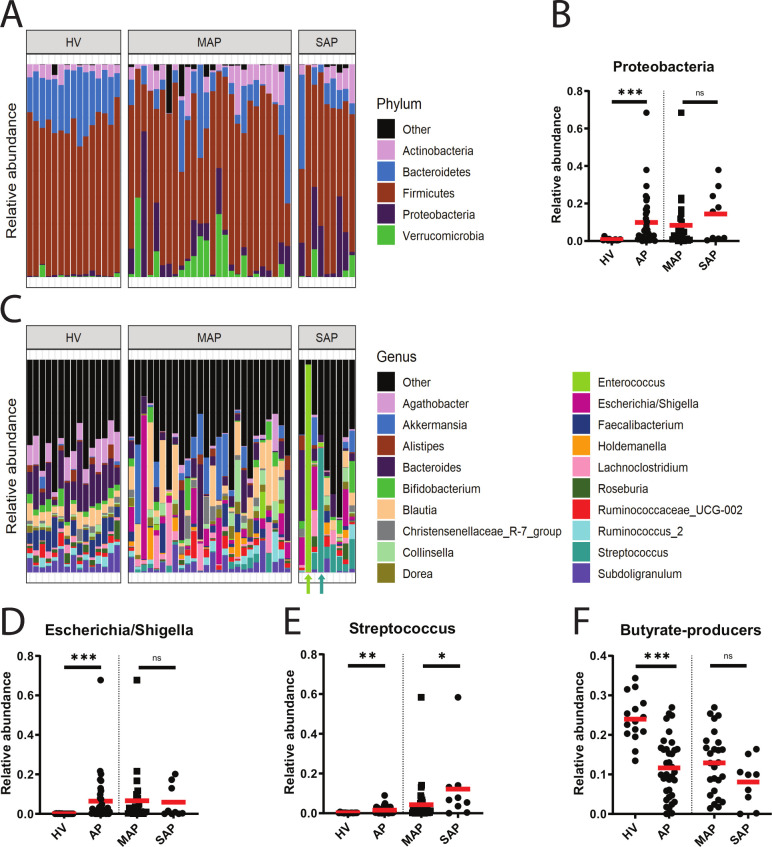
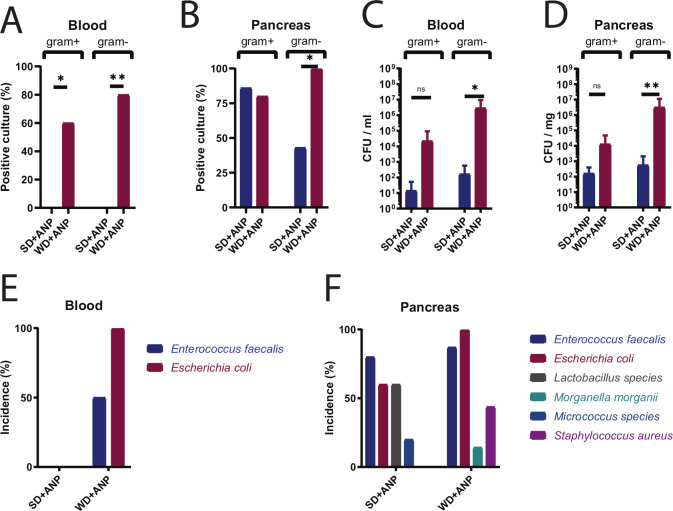
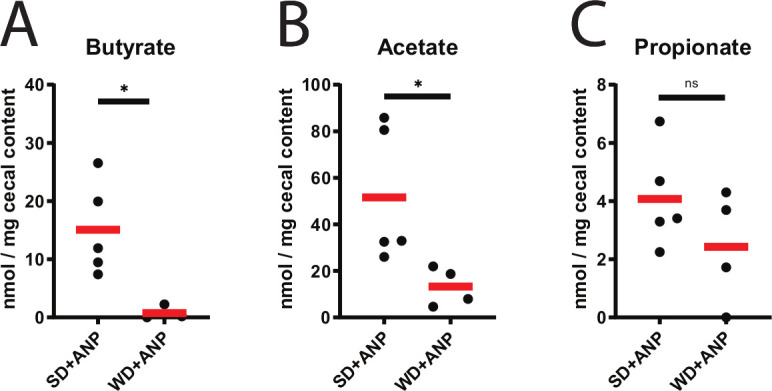
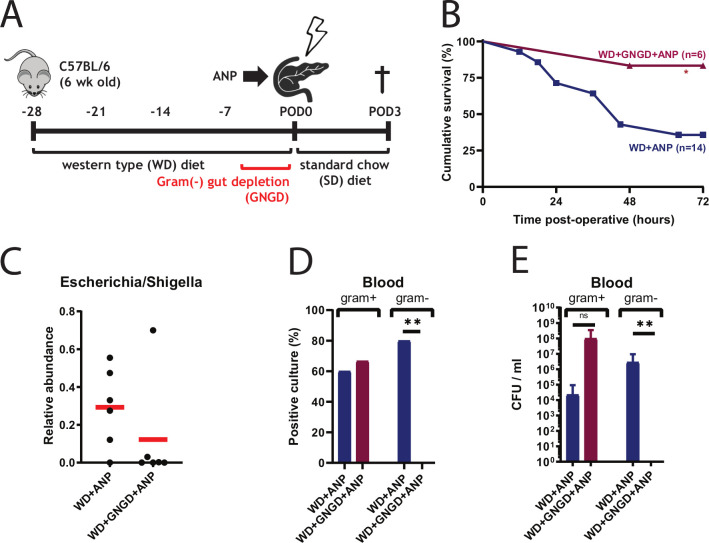
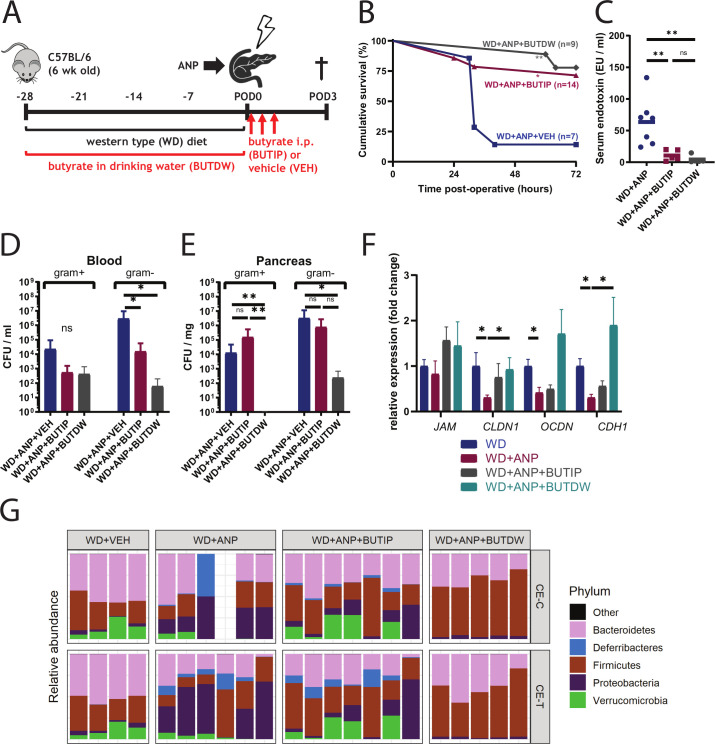
Mortality, systemic inflammation and bacterial dissemination were increased in mice fed Western diet and their gut microbiota were characterised by a loss of diversity, a bloom of and an altered metabolic profile with butyrate depletion. While antibiotic decontamination decreased mortality, Gram-positive dissemination was increased. Both oral and systemic butyrate supplementation decreased mortality, bacterial dissemination, and reversed the microbiota alterations. Paradoxically, mortality and bacterial dissemination were increased with FMT administration. Finally, patients with acute pancreatitis demonstrated an increase in Proteobacteria and a decrease of butyrate producers compared with healthy subjects.
Butyrate depletion and its repletion appear to play a central role in disease progression towards necrotising pancreatitis.
肠道微生物群是坏死性胰腺炎感染的主要来源。我们研究了西式饮食对坏死性胰腺炎中肠道微生物群的破坏及其通过丁酸盐补充的逆转对死亡率和细菌传播的影响。
C57BL/6 小鼠分别用标准饲料或西式饮食喂养 4 周,然后用牛磺胆酸钠诱导坏死性胰腺炎。采集血液和胰腺进行细菌学和免疫分析。使用 16S rRNA 基因扩增子测序分析小鼠盲肠微生物群组成,并用靶向(即丁酸盐)和非靶向代谢组学分析盲肠内容物代谢物。通过粪便微生物群移植(FMT)来自健康小鼠、针对革兰氏阴性菌的抗生素去污染和口服或全身丁酸盐给药,比较了该模型中坏死性胰腺炎的预防。此外,还分析了胰腺炎患者和健康受试者的粪便微生物群。
喂食西式饮食的小鼠死亡率、全身炎症和细菌传播增加,其肠道微生物群的特征是多样性丧失、大量增殖和代谢谱改变,丁酸盐耗竭。虽然抗生素去污染降低了死亡率,但革兰氏阳性菌的传播增加。口服和全身丁酸盐补充均可降低死亡率、细菌传播并逆转微生物群改变。矛盾的是,FMT 给药会增加死亡率和细菌传播。最后,与健康受试者相比,急性胰腺炎患者的变形菌门增加,而丁酸盐产生菌减少。
丁酸盐耗竭及其补充似乎在向坏死性胰腺炎进展的疾病进程中发挥核心作用。