Li Liru, Huang Jie
Department of emergency medicine, Fengxian District Central Hospital, Shanghai, China.
Department of Chinese and Western Medicine, Shanghai Fengxian District Central Hospital, Shanghai, China.
Dose Response. 2020 Aug 18;18(3):1559325820946194. doi: 10.1177/1559325820946194. eCollection 2020 Jul-Sep.
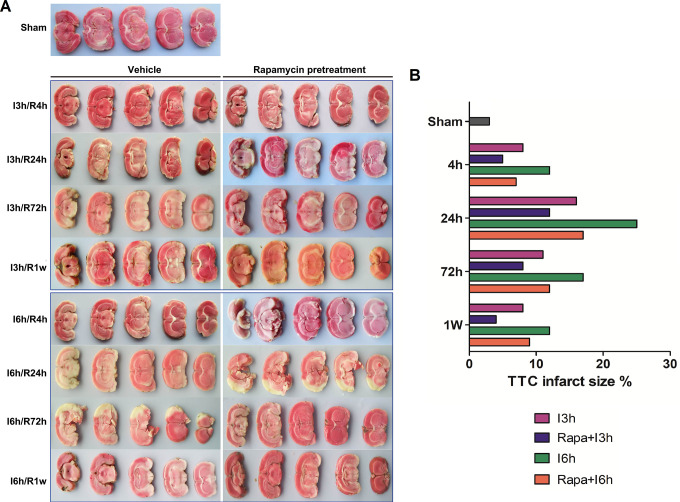
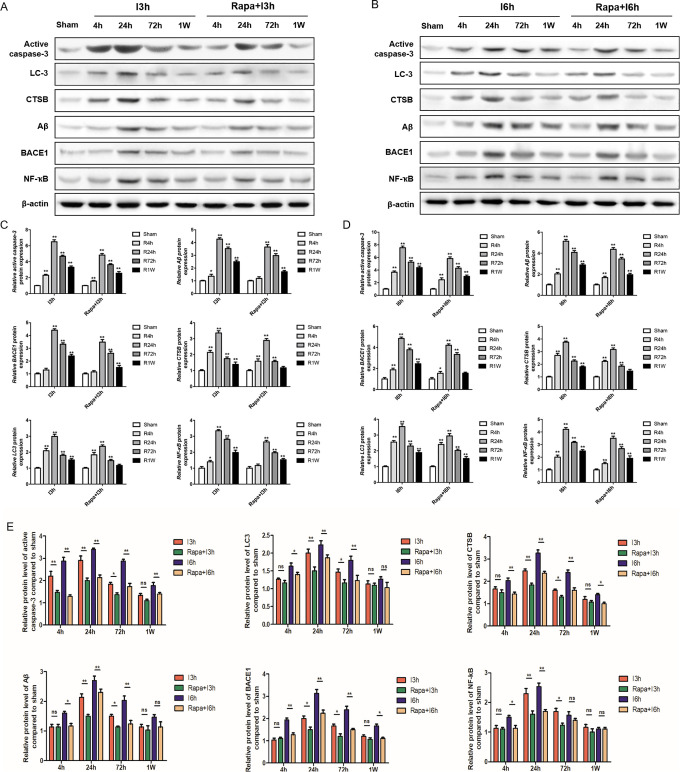
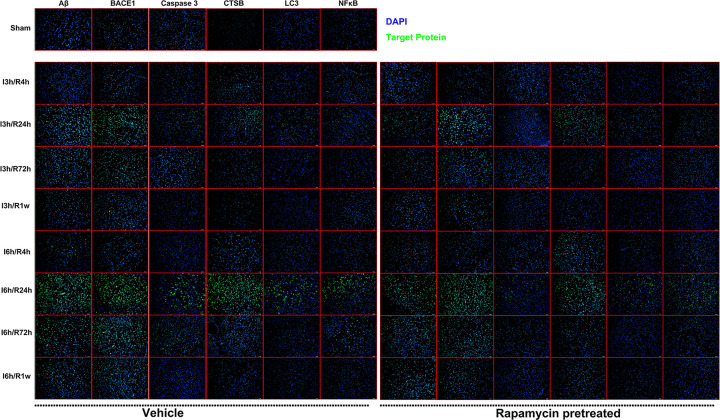
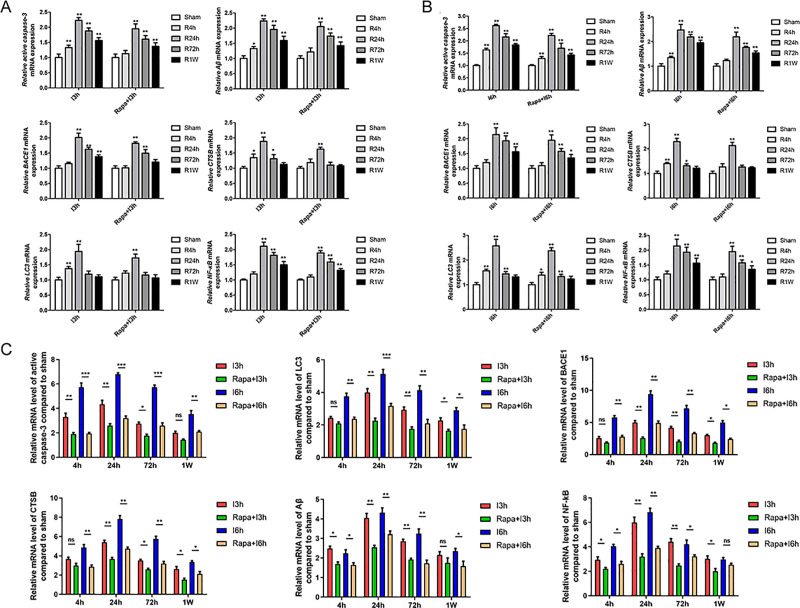
Although rapamycin can attenuate cerebral ischemia/reperfusion (I/R) injury, the potential roles of rapamycin on cerebral I/R injury remain largely controversial. The present work aims to evaluate underlying molecular mechanisms of rapamycin pretreatment on I/R injury. In total, 34 Sprague-Dawley rats were randomly grouped to 3 groups: sham group (n = 2), vehicle group (n = 16), and rapamycin-pretreatment group (n = 16). Before the focal cerebral ischemia was induced, those rats in the pretreatment group were intraperitoneally injected rapamycin (1 mg/kg body) for 20 hours, while rats in the vehicle group received same-volume saline. Then, rats in these 2 groups received focal cerebral ischemia for 3 and 6 hours, respectively (n = 8 in each group), which was followed by the application of reperfusion for 4, 24, 72 hours, and 1 week (n = 2 in each group). The results showed that the rapamycin pretreatment improved the memory functions of rats after I/R injury, which was evaluated using a Y-maze test. Rapamycin pretreatment significantly reduced the size of triphenyltetrazolium chloride infarction and decreased the expression of I/R injury markers. Moreover, the expression of LC-3 and NFκB was also significantly reduced after rapamycin pretreatment. Taken together, rapamycin pretreatment may alleviate cerebral I/R injury partly through inhibiting autophagic activities and NFκB pathways in rats.
尽管雷帕霉素可减轻脑缺血/再灌注(I/R)损伤,但雷帕霉素在脑I/R损伤中的潜在作用仍存在很大争议。本研究旨在评估雷帕霉素预处理对I/R损伤的潜在分子机制。总共34只Sprague-Dawley大鼠被随机分为3组:假手术组(n = 2)、溶剂对照组(n = 16)和雷帕霉素预处理组(n = 16)。在诱导局灶性脑缺血前,预处理组大鼠腹腔注射雷帕霉素(1 mg/kg体重),持续20小时,而溶剂对照组大鼠注射等体积生理盐水。然后,这两组大鼠分别进行3小时和6小时的局灶性脑缺血(每组n = 8),随后分别进行4小时、24小时、72小时和1周的再灌注(每组n = 2)。结果显示,雷帕霉素预处理改善了I/R损伤后大鼠的记忆功能,这通过Y迷宫试验进行评估。雷帕霉素预处理显著减小了氯化三苯基四氮唑梗死灶的大小,并降低了I/R损伤标志物的表达。此外,雷帕霉素预处理后LC-3和NFκB的表达也显著降低。综上所述,雷帕霉素预处理可能部分通过抑制大鼠的自噬活性和NFκB途径减轻脑I/R损伤。