Centre for Biomedical Sciences, Department of Biological Sciences, Royal Holloway University of London, Egham TW20 0EX, United Kingdom.
Department of Child and Youth Psychiatry, Amsterdam Universitair Medische Centra, Amsterdam Neuroscience, Vrije Universiteit Amsterdam, 1081 HV Amsterdam, The Netherlands.
Proc Natl Acad Sci U S A. 2020 Sep 22;117(38):23617-23625. doi: 10.1073/pnas.2008980117. Epub 2020 Sep 2.
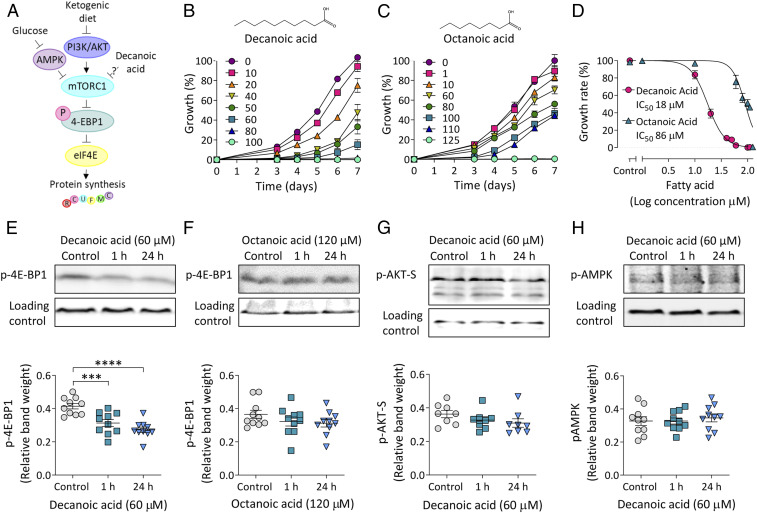
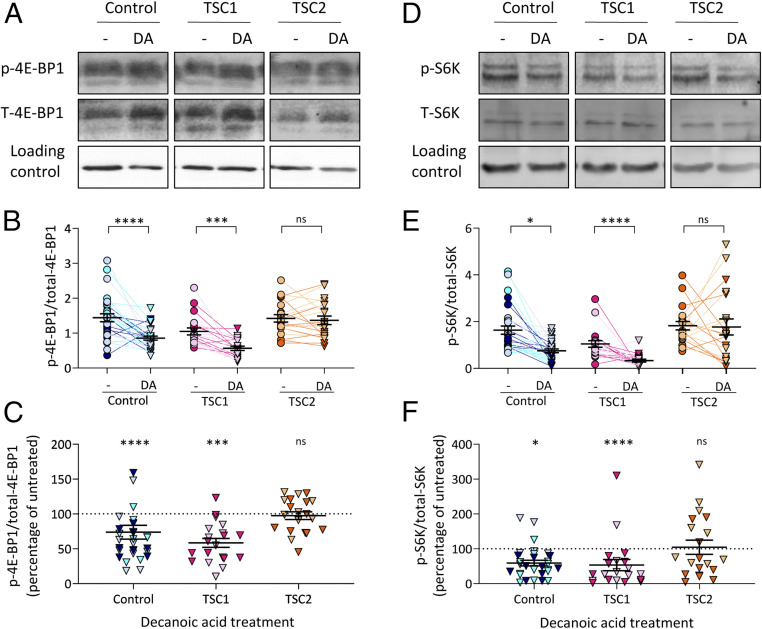
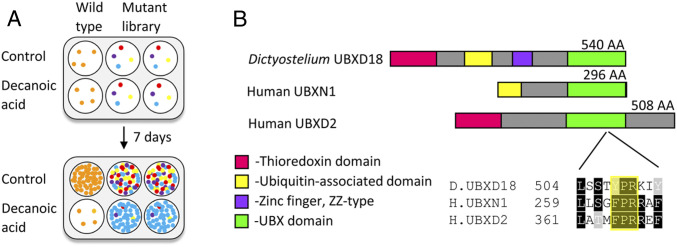
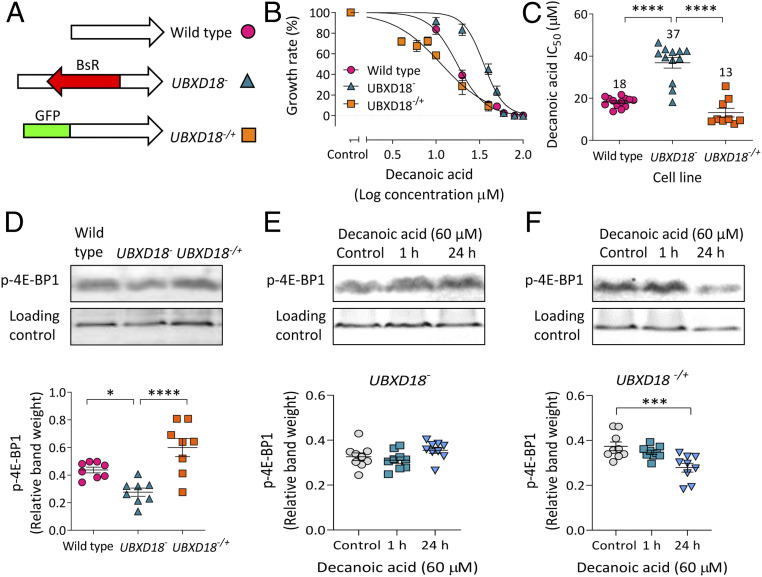
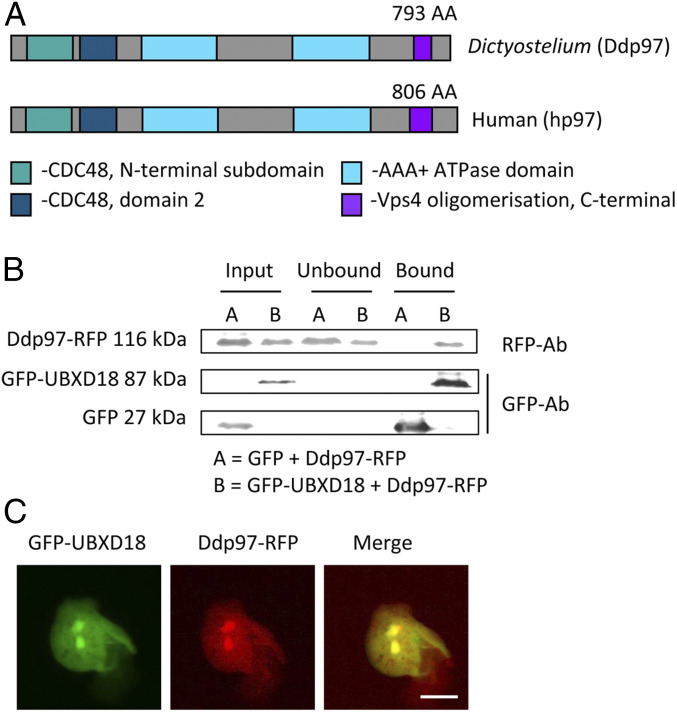
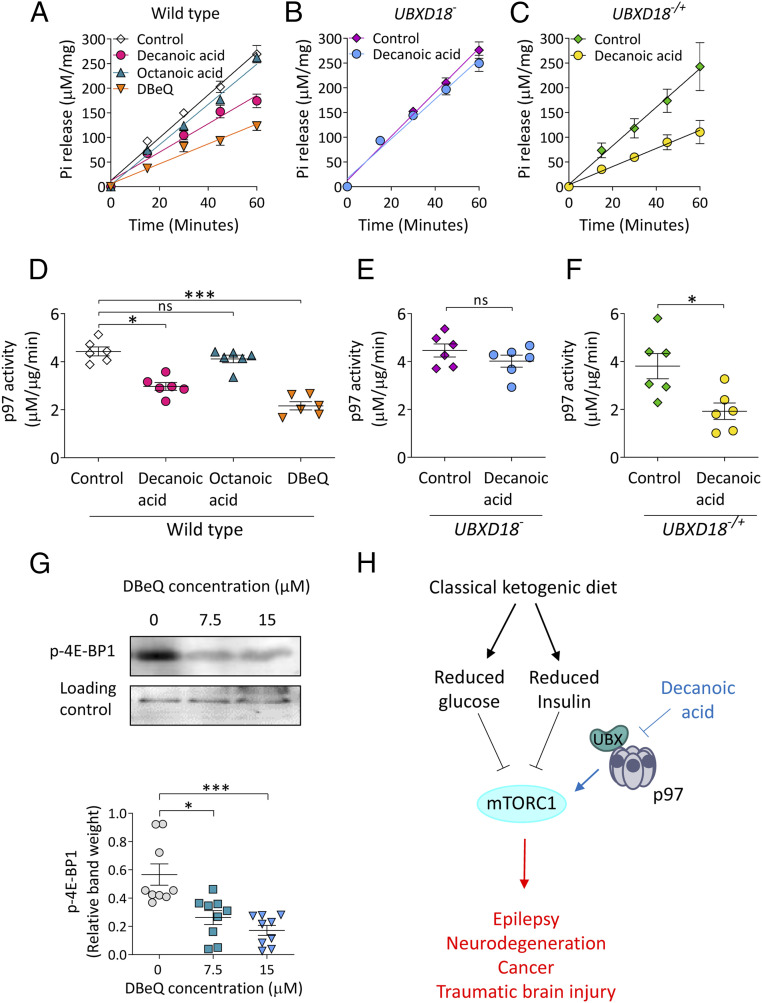
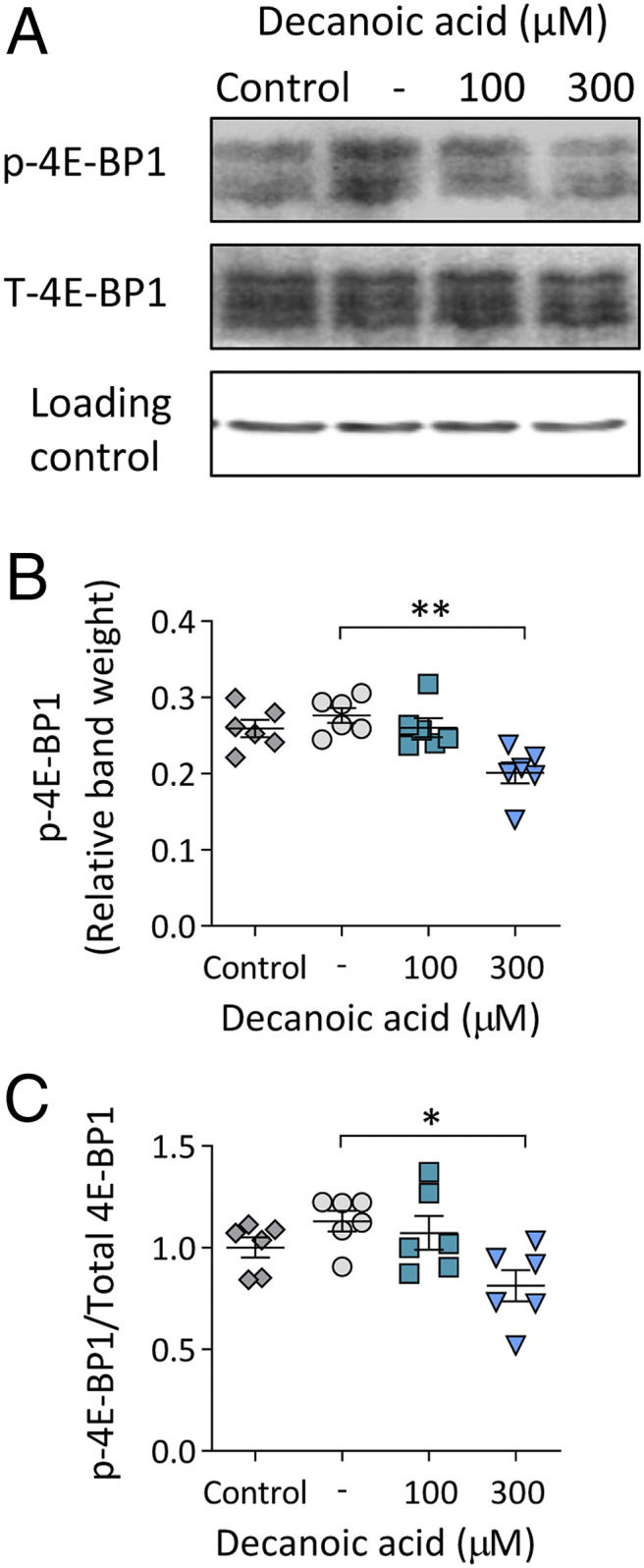
Low-glucose and -insulin conditions, associated with ketogenic diets, can reduce the activity of the mechanistic target of rapamycin complex 1 (mTORC1) signaling pathway, potentially leading to a range of positive medical and health-related effects. Here, we determined whether mTORC1 signaling is also a target for decanoic acid, a key component of the medium-chain triglyceride (MCT) ketogenic diet. Using a tractable model system, , we show that decanoic acid can decrease mTORC1 activity, under conditions of constant glucose and in the absence of insulin, measured by phosphorylation of eukaryotic translation initiation factor 4E-binding protein 1 (4E-BP1). We determine that this effect of decanoic acid is dependent on a ubiquitin regulatory X domain-containing protein, mediating inhibition of a conserved AAA ATPase, p97, a homolog of the human transitional endoplasmic reticulum ATPase (VCP/p97) protein. We then demonstrate that decanoic acid decreases mTORC1 activity in the absence of insulin and under high-glucose conditions in ex vivo rat hippocampus and in tuberous sclerosis complex (TSC) patient-derived astrocytes. Our data therefore indicate that dietary decanoic acid may provide a new therapeutic approach to down-regulate mTORC1 signaling.
低糖和低胰岛素条件与生酮饮食有关,可以降低雷帕霉素靶蛋白复合物 1(mTORC1)信号通路的活性,从而带来一系列积极的医学和健康相关影响。在这里,我们确定癸酸是否也是中链甘油三酯(MCT)生酮饮食的关键成分之一的 mTORC1 信号的靶标。使用可处理的模型系统,我们表明癸酸可以降低 mTORC1 的活性,在葡萄糖恒定且没有胰岛素的情况下,通过真核翻译起始因子 4E 结合蛋白 1(4E-BP1)的磷酸化来测量。我们确定癸酸的这种作用依赖于一个泛素调节 X 结构域蛋白,该蛋白介导对保守的 AAA ATPase、p97 的抑制,p97 是人类内质网过渡 ATP 酶(VCP/p97)蛋白的同源物。然后,我们证明在没有胰岛素和高葡萄糖条件下,癸酸可以降低离体大鼠海马体和结节性硬化症(TSC)患者来源的星形胶质细胞中 mTORC1 的活性。因此,我们的数据表明,膳食癸酸可能为下调 mTORC1 信号提供一种新的治疗方法。