Key Laboratory of Tropical Disease Control of the Ministry of Education, Sun Yat-sen University-Michigan State University Joint Center of Vector Control for Tropical Diseases, Zhongshan School of Medicine, Guangzhou, China.
Department of Microbiology and Molecular Genetics, Michigan State University, East Lansing, Michigan, United States of America.
PLoS Negl Trop Dis. 2020 Sep 3;14(9):e0008561. doi: 10.1371/journal.pntd.0008561. eCollection 2020 Sep.
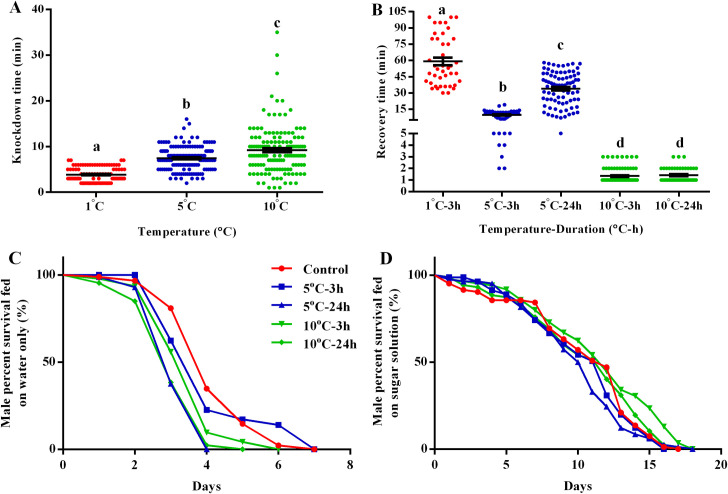
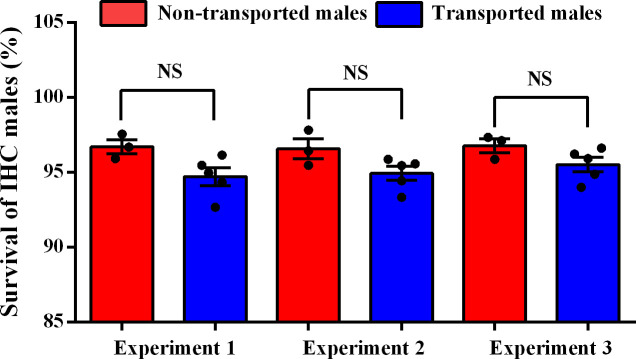
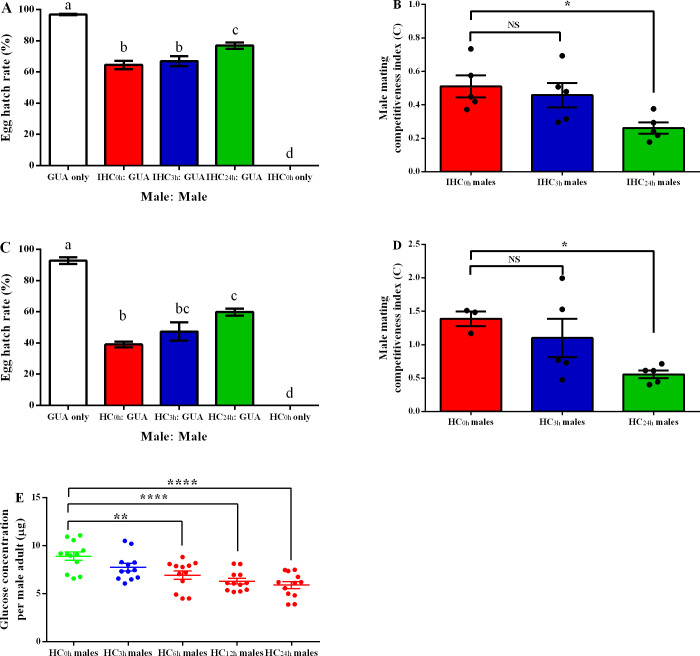
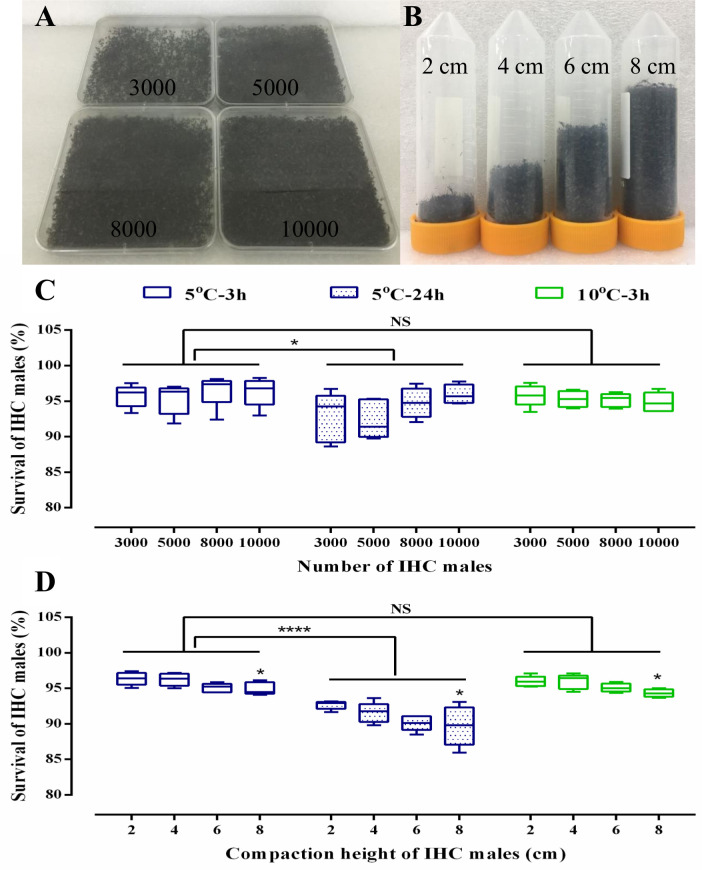
Combined incompatible and sterile insect technique (IIT-SIT) has been considered to be an effective and safe approach to control mosquito populations. Immobilization of male adults by chilling is a crucial process required for the packing, transportation and release of the mosquitoes during the implementation of IIT-SIT for mosquito control. In this study, effects of chilling on the Aedes albopictus males with triple Wolbachia infections (HC line), a powerful weapon to fight against the wild type Ae. albopictus population via IIT-SIT, were evaluated under both laboratory and field conditions. Irradiated HC (IHC) males were exposed to 1, 5 and 10°C for 1, 2, 3, 6 and 24 h. The survival rate of the post-chilled IHC males was then monitored. Longevity of post-chilled IHC males was compared to non-chilled males under laboratory and semi-field conditions. Mating competitiveness of IHC/HC males after exposure to 5 or 10°C for 0, 3 and 24 h was then evaluated. Effects of compaction and transportation under chilled conditions on the survival rate of IHC males were also monitored. The optimal chilling conditions for handling IHC males were temperatures between 5 and 10°C for a duration of less than 3 h with no negative impacts on survival rate, longevity and mating competitiveness when compared to non-chilled males. However, the overall quality of post-chilled IHC/HC males decreased when exposed to low temperatures for 24 h. Reduced survival was observed when IHC males were stored at 5°C under a compaction height of 8 cm. Transportation with chilling temperatures fluctuating from 8 to 12°C has no negative impact on the survival of IHC males. This study identified the optimal chilling temperature and duration for the handling and transportation of Ae. albopictus IHC male adults without any detrimental effect on their survival, longevity and mating competitiveness. Further studies are required to develop drone release systems specific for chilled mosquitoes to improve release efficiency, as well as to compare the population suppression efficiency between release of post-chilled and non-chilled males in the field.
合并使用不育和感染昆虫技术(IIT-SIT)已被认为是控制蚊虫种群的一种有效且安全的方法。通过冷却使雄性成虫固定是 IIT-SIT 实施过程中包装、运输和释放蚊子所必需的关键过程。在本研究中,在实验室和现场条件下,评估了冷却对具有三重沃尔巴克氏体感染(HC 系)的雄性白纹伊蚊的影响,这是通过 IIT-SIT 对抗野生型白纹伊蚊种群的有力武器。将辐照后的 HC(IHC)雄性暴露于 1、5 和 10°C 下 1、2、3、6 和 24 h。然后监测冷却后 IHC 雄性的存活率。在实验室和半野外条件下,比较了冷却后 IHC 雄性的寿命与非冷却雄性的寿命。然后评估了暴露于 5 或 10°C 0、3 和 24 h 后 IHC/HC 雄性的交配竞争力。还监测了在冷却条件下压实和运输对 IHC 雄性存活率的影响。处理 IHC 雄性的最佳冷却条件是在 5 到 10°C 之间,持续时间小于 3 h,与非冷却雄性相比,对存活率、寿命和交配竞争力没有负面影响。然而,当暴露于低温 24 h 时,整体质量下降。当 IHC 雄性在 5°C 下储存时,在压实高度为 8 cm 时观察到存活率降低。在冷却温度从 8 到 12°C 波动的情况下进行运输不会对 IHC 雄性的生存造成任何负面影响。本研究确定了处理和运输白纹伊蚊 IHC 雄性成虫的最佳冷却温度和持续时间,对其生存、寿命和交配竞争力没有任何不利影响。需要进一步的研究来开发特定于冷藏蚊子的无人机释放系统,以提高释放效率,并比较野外释放冷藏和非冷藏雄性后的种群抑制效率。