EcoHealth Alliance, New York, New York, United States of America.
US Geological Survey, Fort Collins Science Center, Ft. Collins, Colorado, United States of America.
PLoS Pathog. 2020 Sep 3;16(9):e1008758. doi: 10.1371/journal.ppat.1008758. eCollection 2020 Sep.
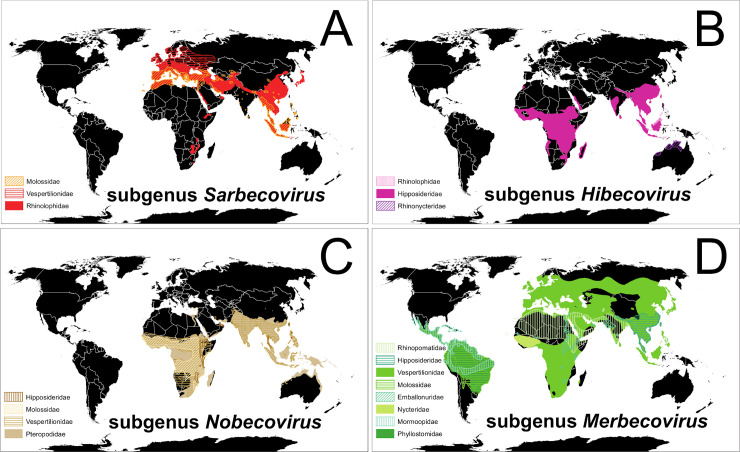
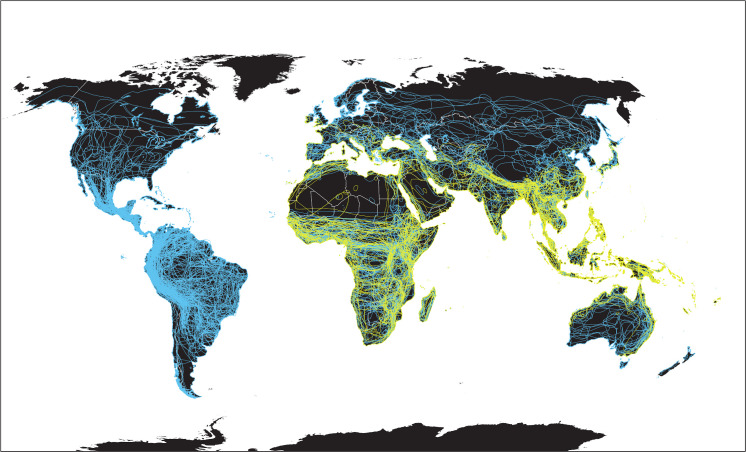
The COVID-19 pandemic highlights the substantial public health, economic, and societal consequences of virus spillover from a wildlife reservoir. Widespread human transmission of severe acute respiratory syndrome coronavirus 2 (SARS-CoV-2) also presents a new set of challenges when considering viral spillover from people to naïve wildlife and other animal populations. The establishment of new wildlife reservoirs for SARS-CoV-2 would further complicate public health control measures and could lead to wildlife health and conservation impacts. Given the likely bat origin of SARS-CoV-2 and related beta-coronaviruses (β-CoVs), free-ranging bats are a key group of concern for spillover from humans back to wildlife. Here, we review the diversity and natural host range of β-CoVs in bats and examine the risk of humans inadvertently infecting free-ranging bats with SARS-CoV-2. Our review of the global distribution and host range of β-CoV evolutionary lineages suggests that 40+ species of temperate-zone North American bats could be immunologically naïve and susceptible to infection by SARS-CoV-2. We highlight an urgent need to proactively connect the wellbeing of human and wildlife health during the current pandemic and to implement new tools to continue wildlife research while avoiding potentially severe health and conservation impacts of SARS-CoV-2 "spilling back" into free-ranging bat populations.
新型冠状病毒肺炎疫情凸显了病毒从野生动物宿主溢出对公共卫生、经济和社会造成的重大影响。严重急性呼吸综合征冠状病毒 2 型(SARS-CoV-2)在人类中的广泛传播,也给考虑病毒从人传播到原始野生动物和其他动物种群带来了新的挑战。SARS-CoV-2 在新的野生动物宿主中的建立将进一步使公共卫生控制措施复杂化,并可能导致野生动物健康和保护的影响。鉴于 SARS-CoV-2 和相关的β冠状病毒(β-CoVs)很可能源自蝙蝠,自由栖息的蝙蝠是人类向野生动物溢出的一个关键关注群体。在这里,我们回顾了蝙蝠中β-CoVs 的多样性和自然宿主范围,并研究了人类无意中用 SARS-CoV-2 感染自由栖息的蝙蝠的风险。我们对全球β-CoV 进化谱系的分布和宿主范围的综述表明,40 多种温带北美的蝙蝠可能对 SARS-CoV-2 具有免疫原性,易受感染。我们强调迫切需要在当前大流行期间积极将人类和野生动物健康联系起来,并实施新的工具,在避免 SARS-CoV-2“回溢”到自由栖息的蝙蝠种群中产生潜在严重健康和保护影响的同时,继续开展野生动物研究。