Geldenhuys Marike, Mortlock Marinda, Epstein Jonathan H, Pawęska Janusz T, Weyer Jacqueline, Markotter Wanda
Centre for Viral Zoonoses, Department of Medical Virology, Faculty of Health Sciences, University of Pretoria, Pretoria 0001, South Africa.
EcoHealth Alliance, New York, NY 10001, USA.
Viruses. 2021 May 18;13(5):936. doi: 10.3390/v13050936.
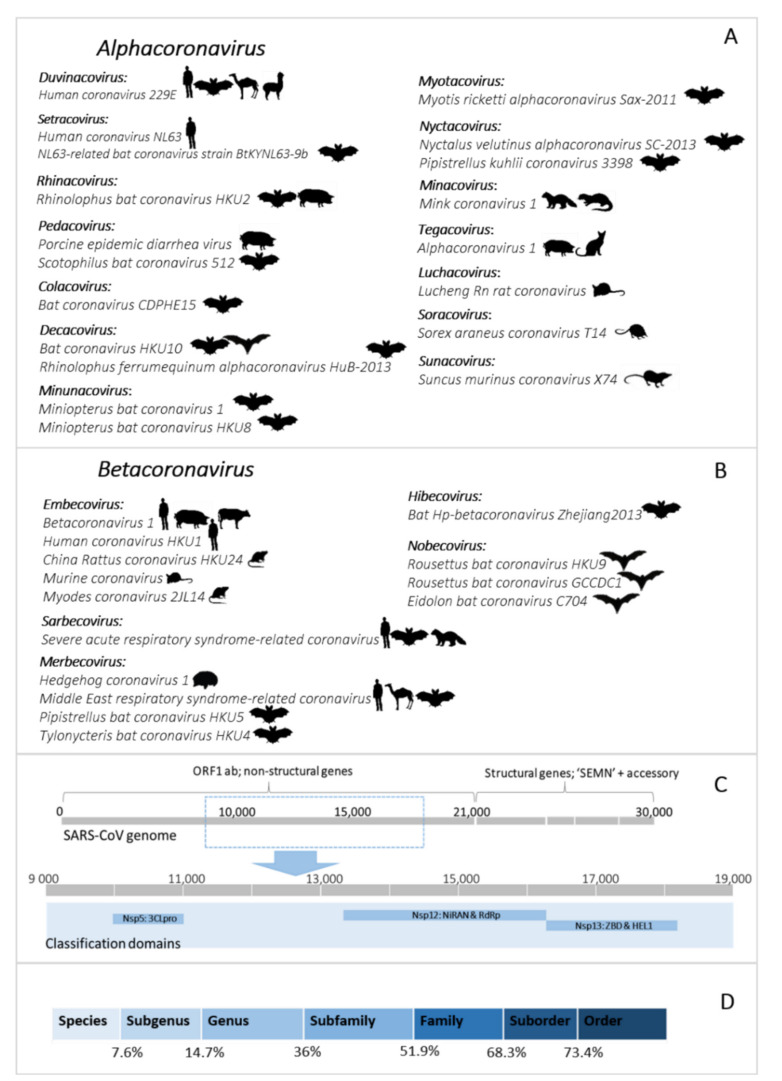
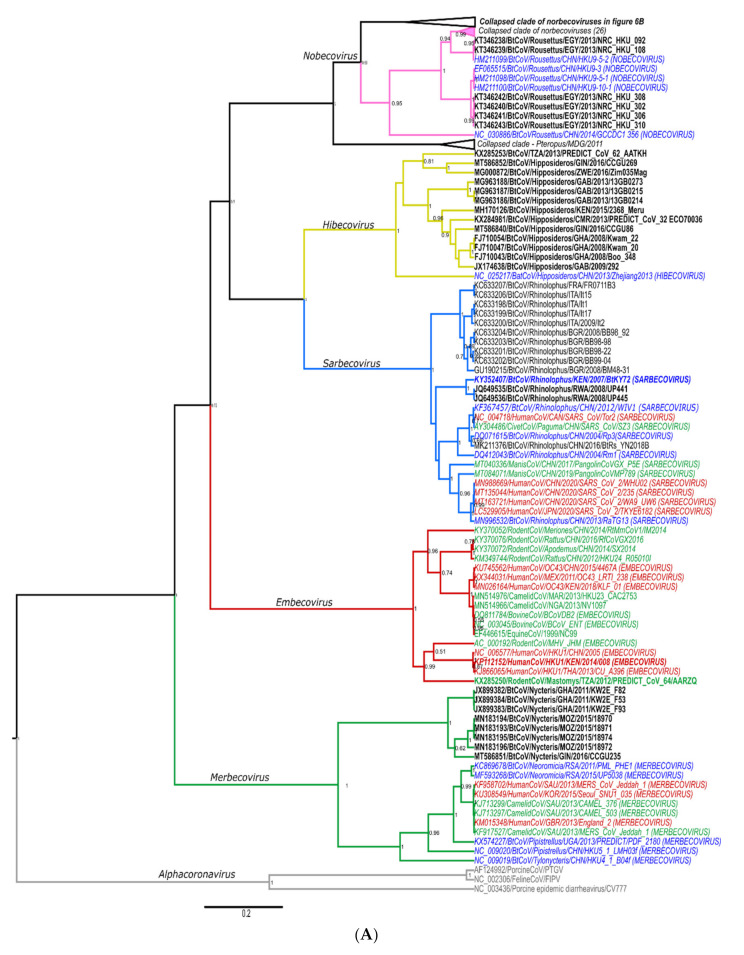
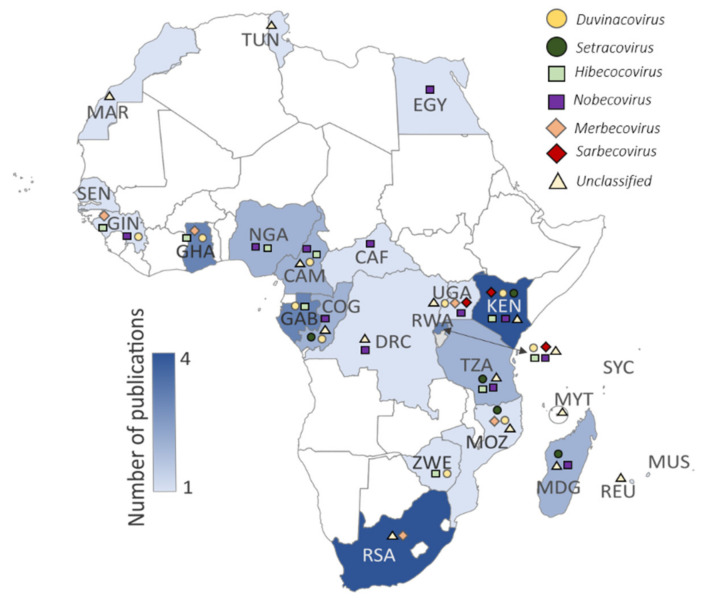
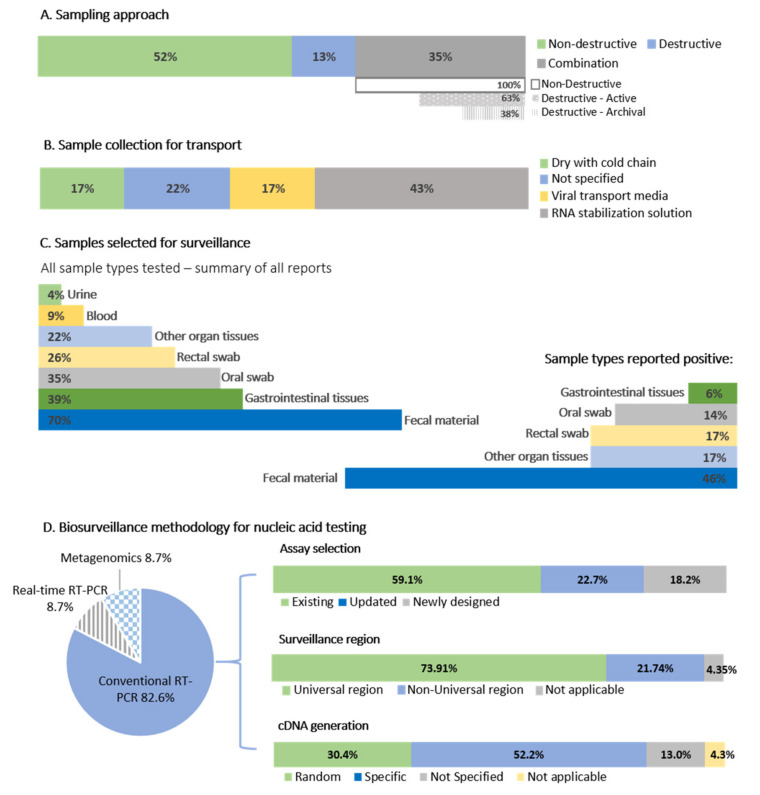
The ongoing coronavirus disease 2019 (COVID-19) pandemic has had devastating health and socio-economic impacts. Human activities, especially at the wildlife interphase, are at the core of forces driving the emergence of new viral agents. Global surveillance activities have identified bats as the natural hosts of diverse coronaviruses, with other domestic and wildlife animal species possibly acting as intermediate or spillover hosts. The African continent is confronted by several factors that challenge prevention and response to novel disease emergences, such as high species diversity, inadequate health systems, and drastic social and ecosystem changes. We reviewed published animal coronavirus surveillance studies conducted in Africa, specifically summarizing surveillance approaches, species numbers tested, and findings. Far more surveillance has been initiated among bat populations than other wildlife and domestic animals, with nearly 26,000 bat individuals tested. Though coronaviruses have been identified from approximately 7% of the total bats tested, surveillance among other animals identified coronaviruses in less than 1%. In addition to a large undescribed diversity, sequences related to four of the seven human coronaviruses have been reported from African bats. The review highlights research gaps and the disparity in surveillance efforts between different animal groups (particularly potential spillover hosts) and concludes with proposed strategies for improved future biosurveillance.
持续的2019冠状病毒病(COVID-19)大流行对健康和社会经济产生了毁灭性影响。人类活动,尤其是在野生动物界面的活动,是推动新病毒病原体出现的核心力量。全球监测活动已确定蝙蝠是多种冠状病毒的天然宿主,其他家养和野生动物物种可能作为中间宿主或溢出宿主。非洲大陆面临着几个挑战新疾病出现预防和应对的因素,如物种多样性高、卫生系统不完善以及剧烈的社会和生态系统变化。我们回顾了在非洲开展的已发表的动物冠状病毒监测研究,特别总结了监测方法、检测的物种数量和研究结果。对蝙蝠种群开展的监测远多于其他野生动物和家养动物,已检测了近26000只蝙蝠个体。虽然在所检测的蝙蝠总数中约7%检出了冠状病毒,但在其他动物中的监测发现冠状病毒的比例不到1%。除了大量未描述的多样性外,非洲蝙蝠中还报告了与七种人类冠状病毒中的四种相关的序列。该综述突出了研究空白以及不同动物群体(特别是潜在溢出宿主)之间监测工作的差异,并最后提出了改进未来生物监测的策略。