Kadoić Balaško Martina, Mikac Katarina M, Bažok Renata, Lemic Darija
Department of Agricultural Zoology, Faculty of Agriculture, University of Zagreb, Svetošimunska 25, 10000 Zagreb, Croatia.
Centre for Sustainable Ecosystem Solutions, School of Earth, Atmospheric and Life Sciences, Faculty of Science, Medicine and Health, University of Wollongong, Wollongong 2522, Australia.
Insects. 2020 Sep 1;11(9):581. doi: 10.3390/insects11090581.
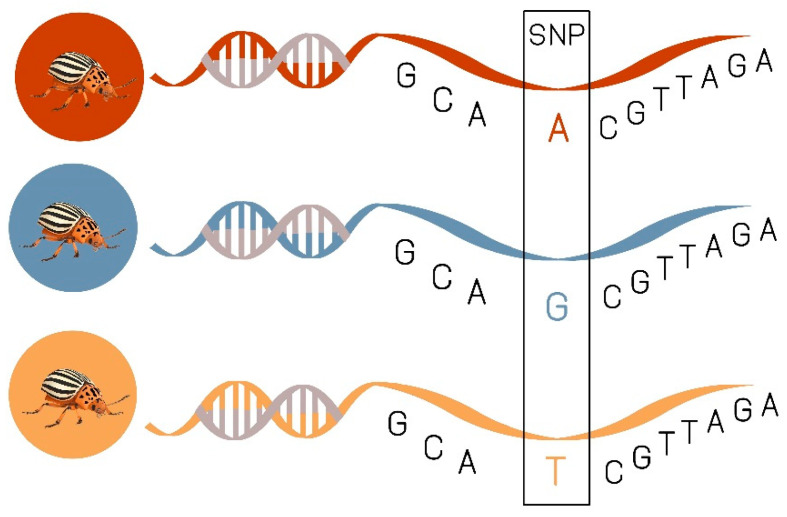
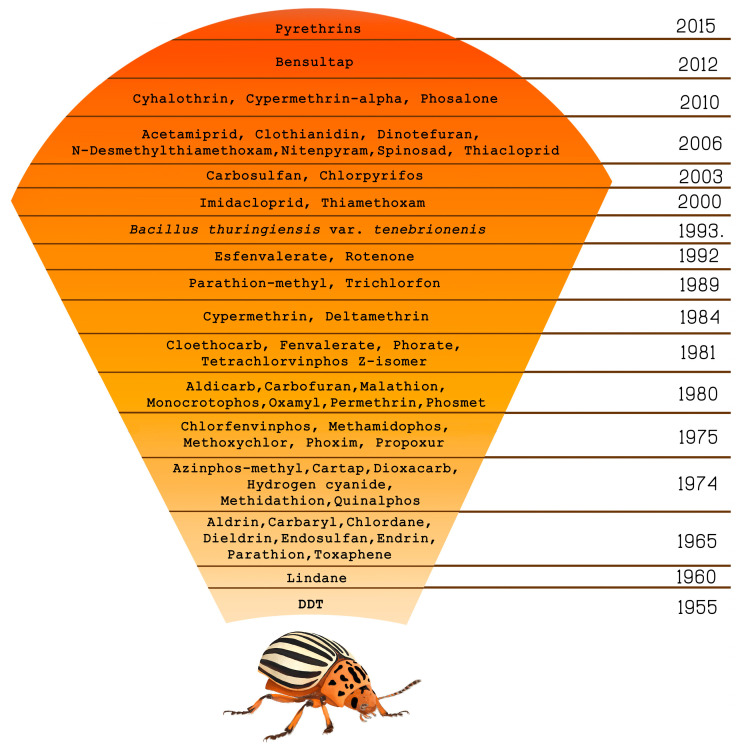
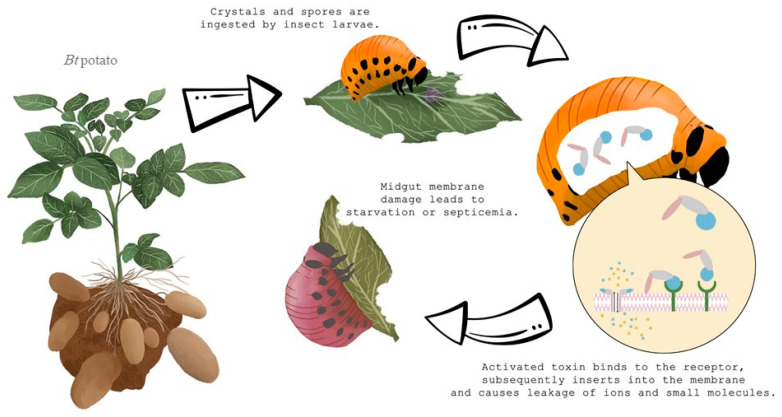
Colorado potato beetle, CPB ( Say), is one of the most important pests of the potato globally. Larvae and adults can cause complete defoliation of potato plant leaves and can lead to a large yield loss. The insect has been successfully suppressed by insecticides; however, over time, has developed resistance to insecticides from various chemical groups, and its once successful control has diminished. The number of available active chemical control substances is decreasing with the process of testing, and registering new products on the market are time-consuming and expensive, with the possibility of resistance ever present. All of these concerns have led to the search for new methods to control CPB and efficient tools to assist with the detection of resistant variants and monitoring of resistant populations. Current strategies that may aid in slowing resistance include gene silencing by RNA interference (RNAi). RNAi, besides providing an efficient tool for gene functional studies, represents a safe, efficient, and eco-friendly strategy for CPB control. Genetically modified (GM) crops that produce the toxins of () have many advantages over agro-technical, mechanical, biological, and chemical measures. However, pest resistance that may occur and public acceptance of GM modified food crops are the main problems associated with crops. Recent developments in the speed, cost, and accuracy of next generation sequencing are revolutionizing the discovery of single nucleotide polymorphisms (SNPs) and field of population genomics. There is a need for effective resistance monitoring programs that are capable of the early detection of resistance and successful implementation of integrated resistance management (IRM). The main focus of this review is on new technologies for CPB control (RNAi) and tools (SNPs) for detection of resistant CPB populations.
科罗拉多马铃薯甲虫(CPB,Say)是全球马铃薯最重要的害虫之一。幼虫和成虫会导致马铃薯植株叶片完全脱叶,并可能导致大幅减产。这种昆虫已被杀虫剂成功抑制;然而,随着时间的推移,它已对各种化学类别的杀虫剂产生了抗性,其曾经成功的防治效果已减弱。随着测试过程的推进,可用的活性化学防治物质数量在减少,在市场上测试和注册新产品既耗时又昂贵,而且始终存在产生抗性的可能性。所有这些问题都促使人们寻找控制CPB的新方法以及有助于检测抗性变体和监测抗性种群的有效工具。当前可能有助于减缓抗性的策略包括通过RNA干扰(RNAi)实现基因沉默。RNAi除了为基因功能研究提供一种有效工具外,还代表了一种安全、高效且环保的CPB防治策略。产生()毒素的转基因作物相对于农业技术、机械、生物和化学措施具有许多优势。然而,可能出现的害虫抗性以及公众对转基因食品作物的接受度是与转基因作物相关的主要问题。新一代测序在速度、成本和准确性方面的最新进展正在彻底改变单核苷酸多态性(SNP)的发现和群体基因组学领域。需要有效的抗性监测计划,能够早期检测抗性并成功实施综合抗性管理(IRM)。本综述的主要重点是CPB控制的新技术(RNAi)和检测抗性CPB种群的工具(SNP)。