Molecular Neuroimmunology Group, Department of Neurology, University of Heidelberg, Heidelberg, Germany.
Institute of Clinical Neuroimmunology, University Hospital and Biomedical Center, Ludwig-Maximilians University Munich, Munich, Germany.
J Neuroinflammation. 2020 Sep 3;17(1):261. doi: 10.1186/s12974-020-01824-2.
New-generation cell-based assays have demonstrated a robust association of serum autoantibodies to full-length human myelin oligodendrocyte glycoprotein (MOG-IgG) with (mostly recurrent) optic neuritis, myelitis, and brainstem encephalitis, as well as with neuromyelitis optica (NMO)-like or acute-disseminated encephalomyelitis (ADEM)-like presentations. However, only limited data are yet available on cerebrospinal fluid (CSF) findings in MOG-IgG-associated encephalomyelitis (MOG-EM; also termed MOG antibody-associated disease, MOGAD).
To describe systematically the CSF profile in MOG-EM.
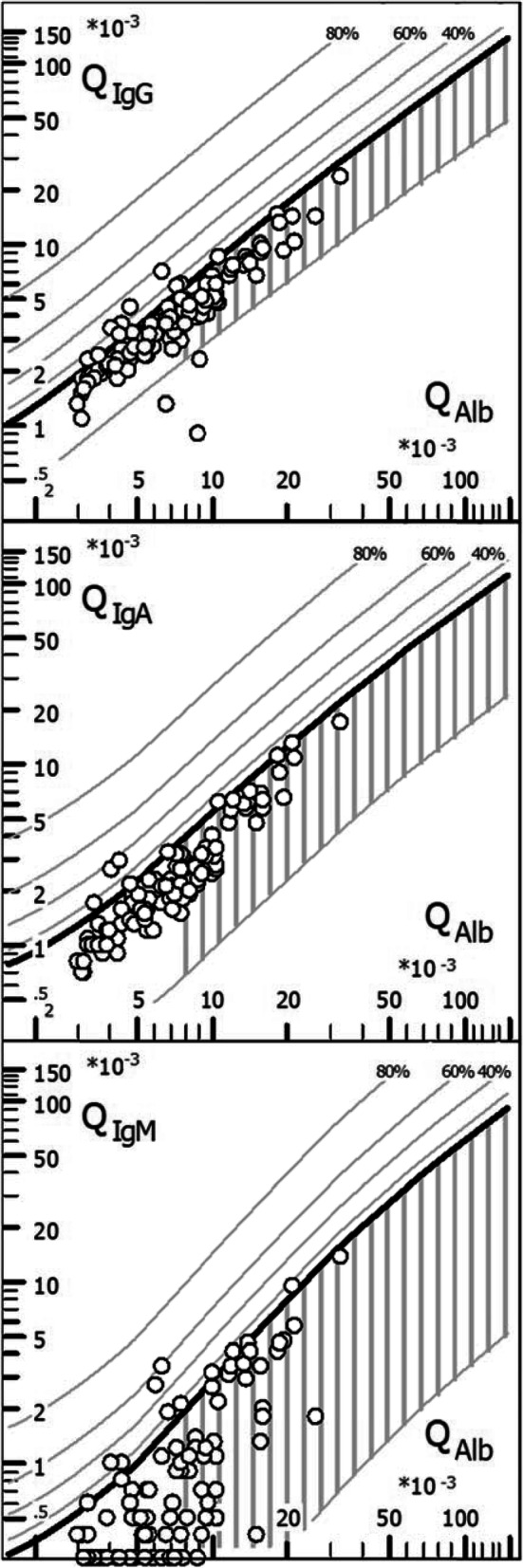
Cytological and biochemical findings (including white cell counts and differentiation; frequency and patterns of oligoclonal bands; IgG/IgM/IgA and albumin concentrations and CSF/serum ratios; intrathecal IgG/IgA/IgM fractions; locally produced IgG/IgM/IgA concentrations; immunoglobulin class patterns; IgG/IgA/IgM reibergrams; Link index; measles/rubella/zoster (MRZ) reaction; other anti-viral and anti-bacterial antibody indices; CSF total protein; CSF L-lactate) from 163 lumbar punctures in 100 adult patients of mainly Caucasian descent with MOG-EM were analyzed retrospectively.
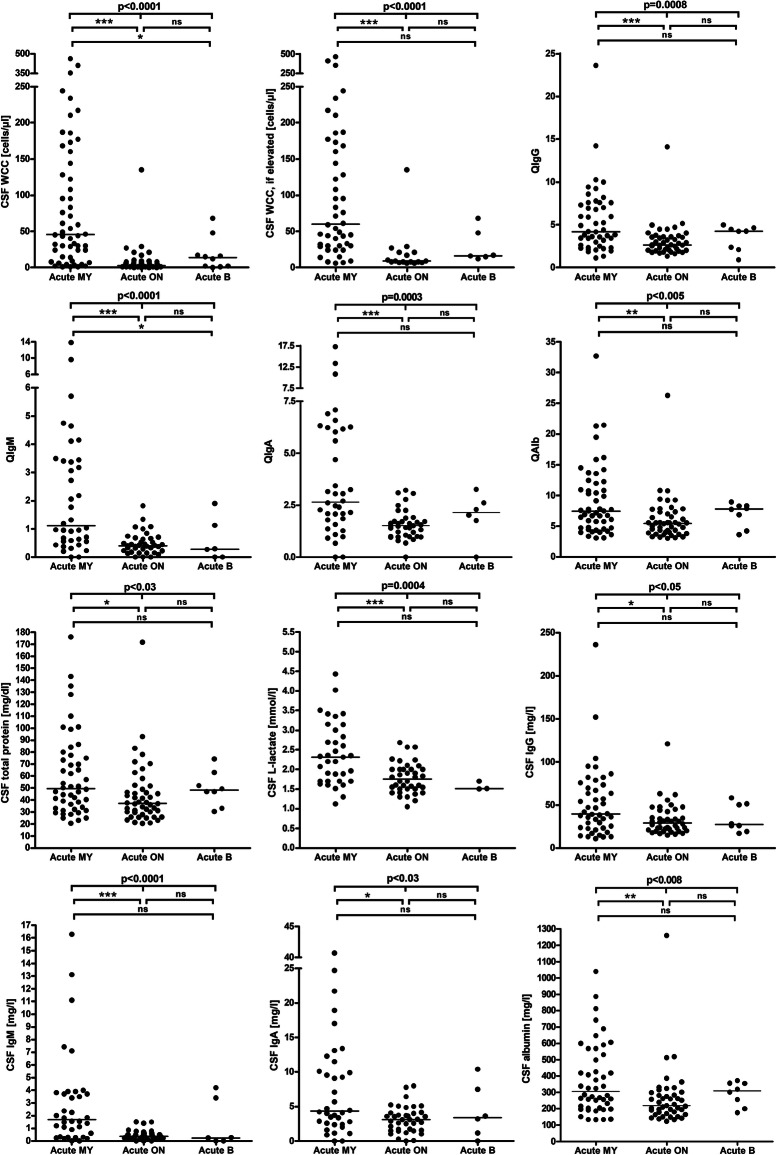
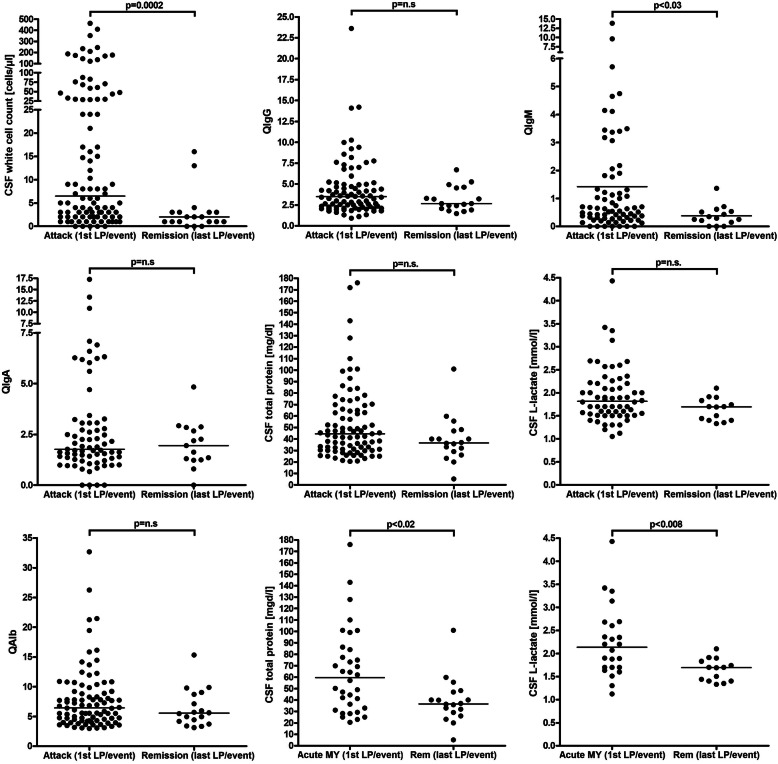
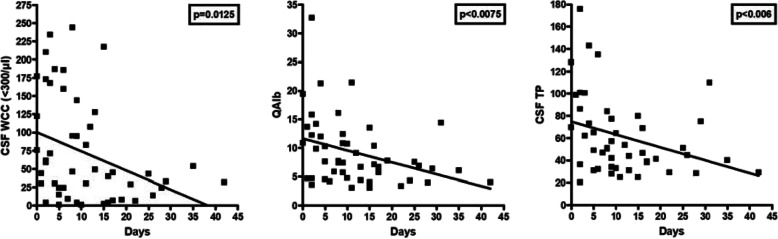
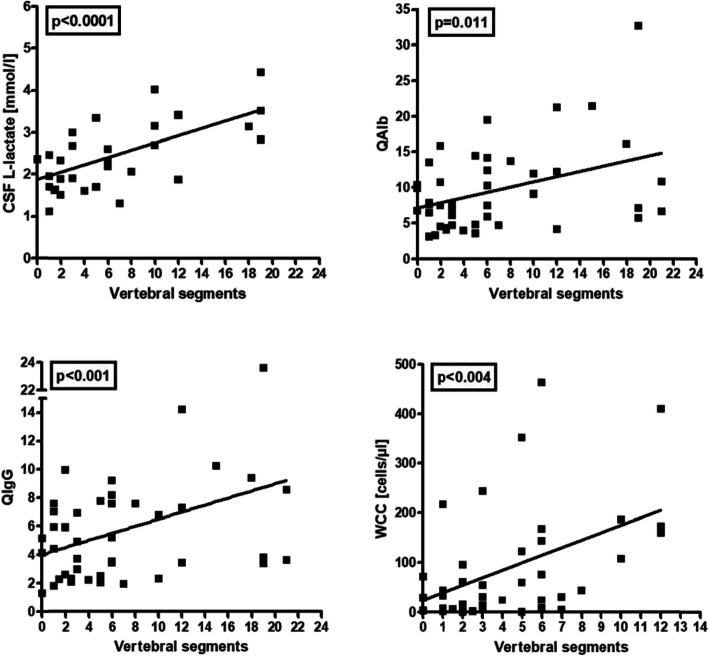
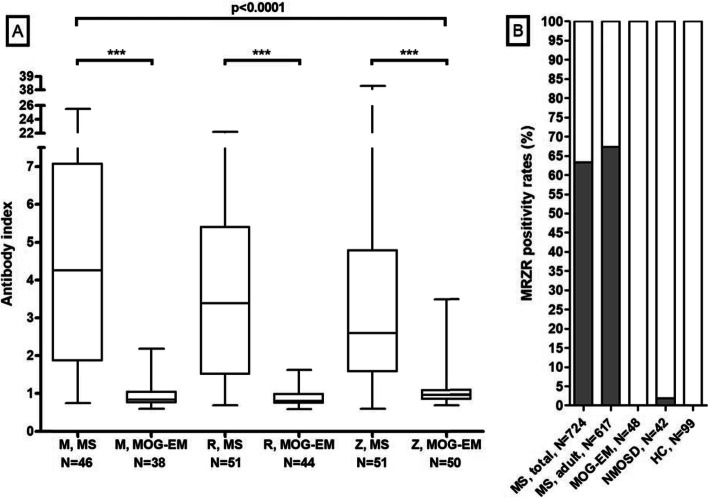
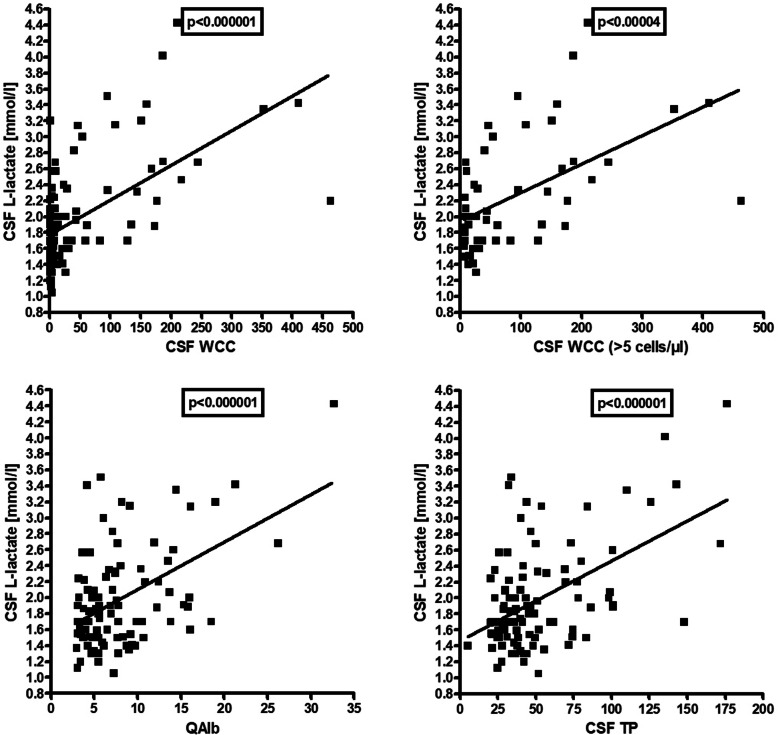
Most strikingly, CSF-restricted oligoclonal IgG bands, a hallmark of multiple sclerosis (MS), were absent in almost 90% of samples (N = 151), and the MRZ reaction, the most specific laboratory marker of MS known so far, in 100% (N = 62). If present, intrathecal IgG (and, more rarely, IgM) synthesis was low, often transient and mostly restricted to acute attacks. CSF WCC was elevated in > 50% of samples (median 31 cells/μl; mostly lymphocytes and monocytes; > 100/μl in 12%). Neutrophils were present in > 40% of samples; activated lymphocytes were found less frequently and eosinophils and/or plasma cells only very rarely (< 4%). Blood-CSF barrier dysfunction (as indicated by an elevated albumin CSF/serum ratio) was present in 48% of all samples and at least once in 55% of all patients (N = 88) tested. The frequency and degree of CSF alterations were significantly higher in patients with acute myelitis than in patients with acute ON and varied strongly depending on attack severity. CSF L-lactate levels correlated significantly with the spinal cord lesion load in patients with acute myelitis (p < 0.0001). Like pleocytosis, blood-CSF barrier dysfunction was present also during remission in a substantial number of patients.
MOG-IgG-positive EM is characterized by CSF features that are distinct from those in MS. Our findings are important for the differential diagnosis of MS and MOG-EM and add to the understanding of the immunopathogenesis of this newly described autoimmune disease.
新一代基于细胞的检测方法已经证明,血清自身抗体与全长人髓鞘少突胶质细胞糖蛋白(MOG-IgG)与(主要是复发性)视神经炎、脊髓炎和脑干脑炎,以及视神经脊髓炎(NMO)样或急性播散性脑脊髓炎(ADEM)样表现之间存在较强的关联。然而,关于 MOG-IgG 相关脑炎(MOG-EM;也称为 MOG 抗体相关疾病,MOGAD)的脑脊液(CSF)发现,目前仅有有限的数据。
系统描述 MOG-EM 的 CSF 特征。
回顾性分析了 100 例主要为白种人成年患者的 163 次腰椎穿刺的细胞学和生化发现(包括白细胞计数和分类;寡克隆带的频率和模式;IgG/IgM/IgA 和白蛋白浓度及 CSF/血清比值;鞘内 IgG/IgA/IgM 分数;局部产生的 IgG/IgM/IgA 浓度;免疫球蛋白类模式;IgG/IgA/IgM 再吸印图谱;Link 指数;麻疹/风疹/带状孢疹(MRZ)反应;其他抗病毒和抗细菌抗体指数;CSF 总蛋白;CSF L-乳酸)。
最显著的是,几乎 90%(N=151)的样本中缺乏 CSF 限制的寡克隆 IgG 带,这是多发性硬化症(MS)的一个标志,而目前已知的最特异的 MS 实验室标志物 MRZ 反应在 100%(N=62)的样本中均为阳性。如果存在,鞘内 IgG(以及更罕见的 IgM)合成较低,通常是短暂的,主要局限于急性发作。>50%的样本中 CSF WCC 升高(中位数为 31 个细胞/μl;主要是淋巴细胞和单核细胞;>100/μl 占 12%)。>40%的样本中存在中性粒细胞;较少发现活化的淋巴细胞,而嗜酸性粒细胞和/或浆细胞则非常罕见(<4%)。48%的所有样本均存在血脑屏障功能障碍(以白蛋白 CSF/血清比值升高为指标),55%(N=88)的所有患者至少有一次出现该功能障碍。与急性视神经炎患者相比,急性脊髓炎患者的 CSF 改变频率和程度明显更高,且严重程度波动较大。急性脊髓炎患者的 CSF L-乳酸水平与脊髓病变负荷显著相关(p<0.0001)。与白细胞增多一样,血脑屏障功能障碍在相当数量的患者缓解期也存在。
MOG-IgG 阳性的 EM 以与 MS 不同的 CSF 特征为特征。我们的发现对 MS 和 MOG-EM 的鉴别诊断很重要,并有助于理解这种新描述的自身免疫性疾病的免疫发病机制。