Sunanta Piyachat, Chung Hsiao-Hang, Kunasakdakul Kaewalin, Ruksiriwanich Warintorn, Jantrawut Pensak, Hongsibsong Surat, Sommano Sarana Rose
Interdisciplinary Program in Biotechnology Graduate School Chiang Mai University Chiang Mai Thailand.
Plant Bioactive Compound Laboratory (BAC) Faculty of Agriculture Chiang Mai University Chiang Mai Thailand.
Food Sci Nutr. 2020 Jul 9;8(8):4534-4545. doi: 10.1002/fsn3.1762. eCollection 2020 Aug.
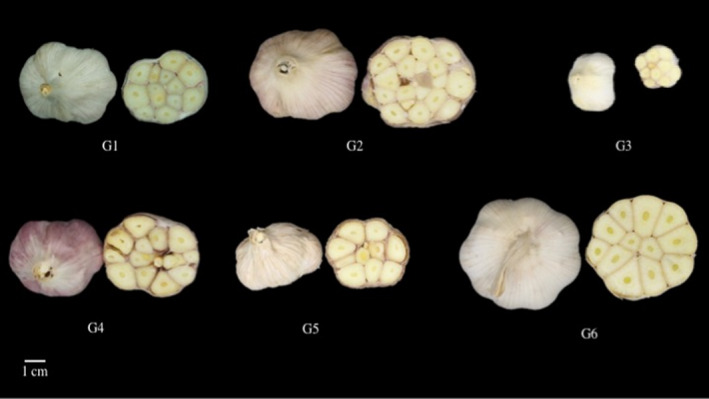
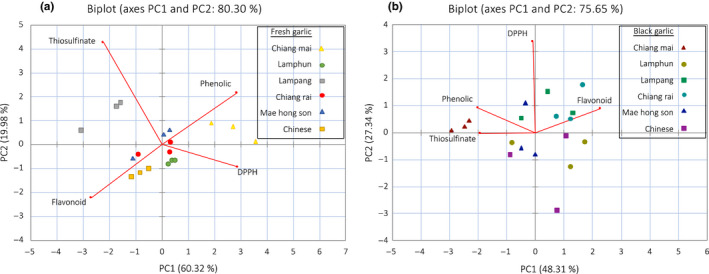
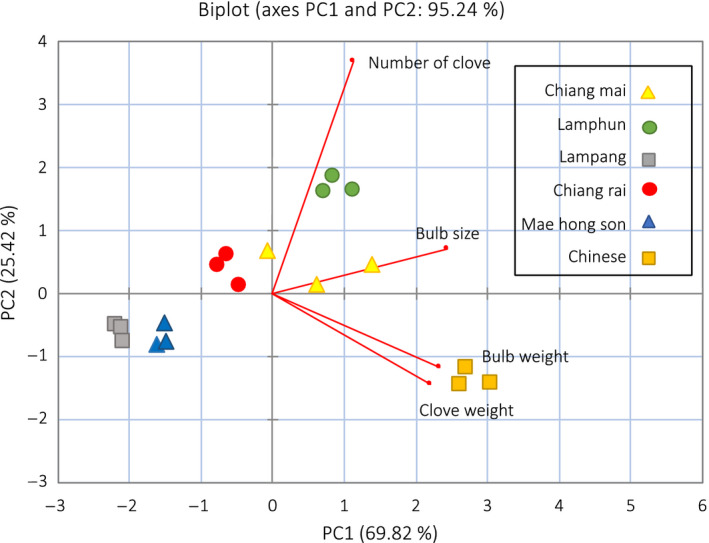
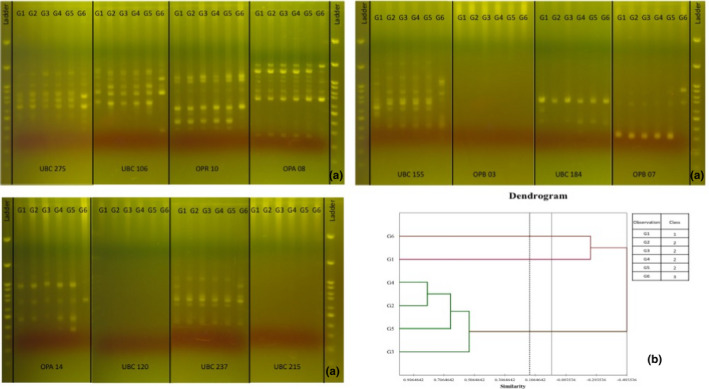
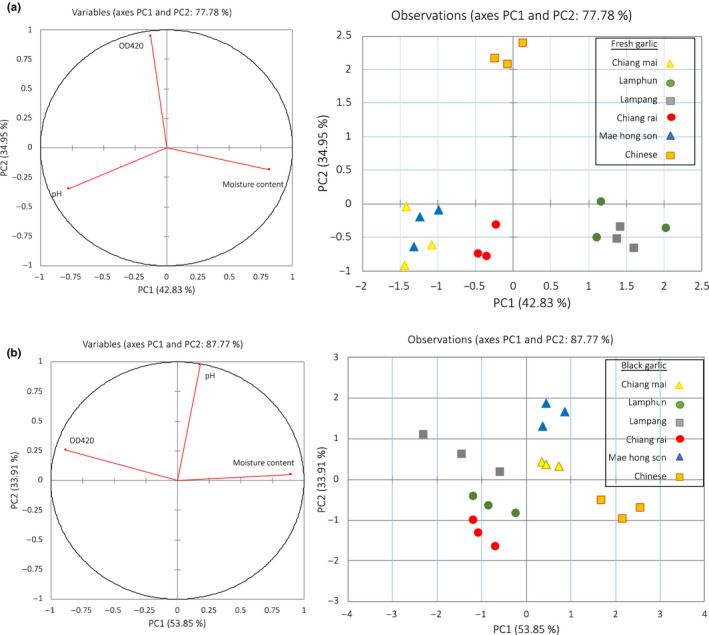
Raw materials used for black garlic (BG) processing were collected from the major garlic production areas in Northern Thailand. Five of those were identified as of Thai origin (accession G1-G5), and accession G6 was of the Chinese variety. They were initially analyzed for varietal differences using morphological characteristics and genetic variation. Fresh materials from each accession were dried to the same moisture content (55%-60%) and BG processed at 75°C, 90% relative humidity (RH) for 15 days. Thereafter, physiochemical and chemical profiles were analyzed and compared. The dendrogram from random amplified polymorphic DNA fingerprints grouped G2, G3, G4, and G5 as closely related while G1 and G6 were out-groups. Prior to BG processing, the pH of fresh garlic was approximately 6.3 and decreased to 3.7, thereafter. The contents of chemical properties were independent with genotypes. BG processing improved phenolic, flavonoid, and antioxidant but the content of thiosulfinate was minimized in all BG samples. Overall, result indicated that garlics grown in Northern Thailand were genotypically variable. BG processing altered physical and chemical appearance, and these changes were independent with the genotypes.
用于黑蒜加工的原材料采自泰国北部的主要大蒜产区。其中5种被鉴定为泰国本土品种(编号G1 - G5),编号G6为中国品种。最初利用形态特征和遗传变异对它们进行品种差异分析。将每个品种的新鲜材料干燥至相同的水分含量(55% - 60%),然后在75°C、相对湿度90%(RH)的条件下加工15天制成黑蒜。此后,对其理化和化学特征进行分析和比较。随机扩增多态性DNA指纹图谱的树状图将G2、G3、G4和G5归为密切相关的一组,而G1和G6则为外群。在加工成黑蒜之前,新鲜大蒜的pH值约为6.3,之后降至3.7。化学性质的含量与基因型无关。黑蒜加工提高了酚类、黄酮类和抗氧化剂的含量,但所有黑蒜样品中的硫代亚磺酸盐含量降至最低。总体而言,结果表明泰国北部种植的大蒜在基因型上存在差异。黑蒜加工改变了其物理和化学外观,且这些变化与基因型无关。