Peng Pai, Wang Linlin, Shu Guowei, Li Jianke, Chen Li
College of Food Engineering and Nutritional Science Shaanxi Normal University Xi'an P. R. China.
School of Food and Biological Engineering Shaanxi University of Science and Technology Xi'an P.R. China.
Food Sci Nutr. 2020 Jul 9;8(8):4565-4572. doi: 10.1002/fsn3.1768. eCollection 2020 Aug.
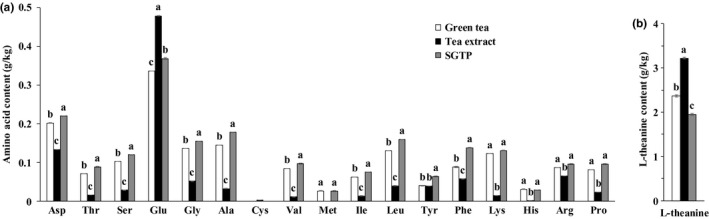
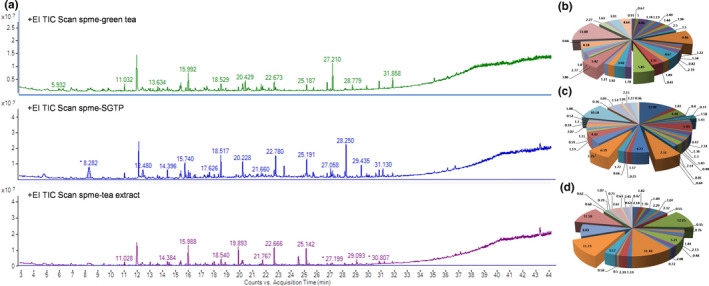
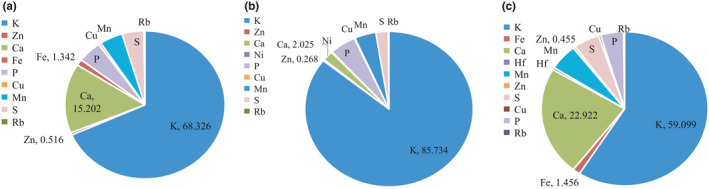
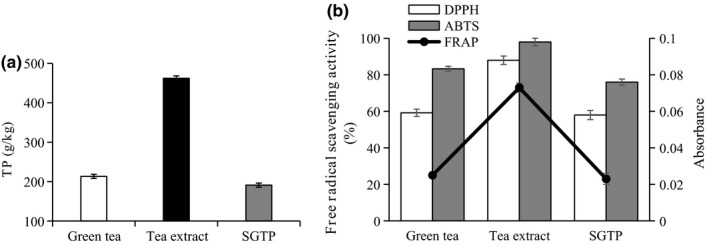
Green tea, superfine green tea powder (SGTP), and tea extract were prepared to determine their chemical components and antioxidant activity. The nutrition and aroma challenges of green tea during traditional extract technique and superfine grinding were profiled in this study. The traditional extract technique took advantage over superfine grinding in L-theanine and glutamic acid (Glu) preservation, but not in other 16 essential amino acids. SGTP preserved a maximum of elements from green tea, whereas tea extract greatly changed the elements ratio. Tea extract contained higher VB2 and VC contents and doubled the tea polyphenol (TP) content in comparison with green tea and SGTP. Additionally, tea extract contained more favorable aroma compounds and maintained stronger antioxidant activity in comparison with green tea and SGTP. This study profiled an important basis for the comprehensive utilization of green tea resources by consumers and manufacturers.
制备了绿茶、超微绿茶粉(SGTP)和茶叶提取物,以测定它们的化学成分和抗氧化活性。本研究剖析了传统提取技术和超微粉碎过程中绿茶的营养和香气挑战。传统提取技术在L-茶氨酸和谷氨酸(Glu)的保留方面优于超微粉碎,但在其他16种必需氨基酸方面则不然。SGTP保留了绿茶中最多的成分,而茶叶提取物则极大地改变了成分比例。与绿茶和SGTP相比,茶叶提取物含有更高的VB2和VC含量,且茶多酚(TP)含量增加了一倍。此外,与绿茶和SGTP相比,茶叶提取物含有更多有益的香气化合物,并保持了更强的抗氧化活性。本研究为消费者和制造商全面利用绿茶资源提供了重要依据。