Phongpreecha Thanaphong, Cholerton Brenna, Mata Ignacio F, Zabetian Cyrus P, Poston Kathleen L, Aghaeepour Nima, Tian Lu, Quinn Joseph F, Chung Kathryn A, Hiller Amie L, Hu Shu-Ching, Edwards Karen L, Montine Thomas J
Department of Anesthesiology, Perioperative and Pain Medicine, Stanford University School of Medicine, Palo Alto, CA USA.
Department of Pathology, Stanford University School of Medicine, Palo Alto, CA USA.
NPJ Parkinsons Dis. 2020 Aug 25;6:20. doi: 10.1038/s41531-020-00121-2. eCollection 2020.
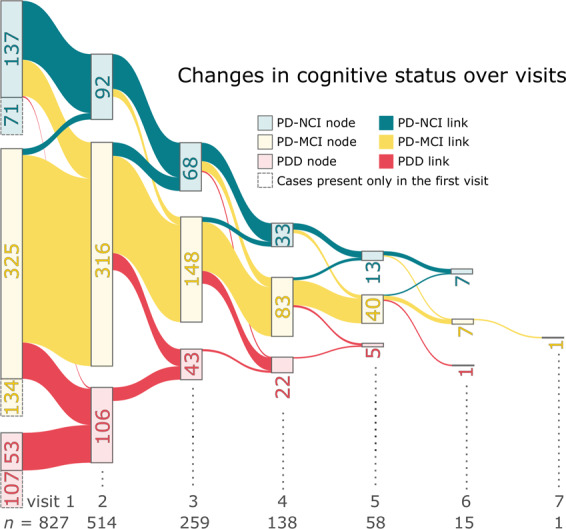
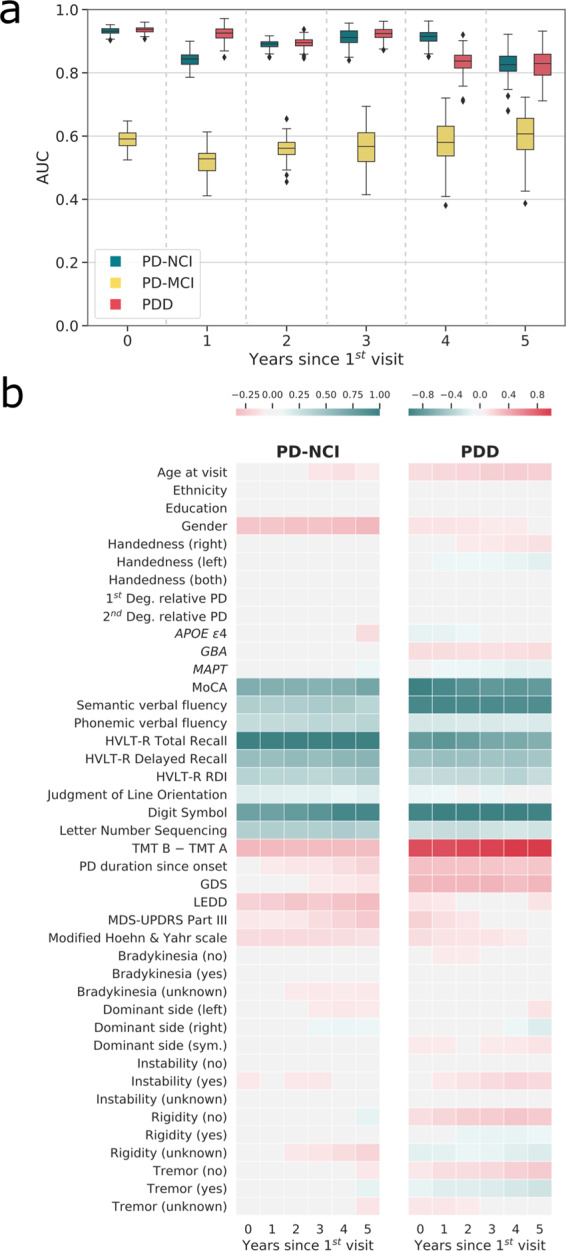
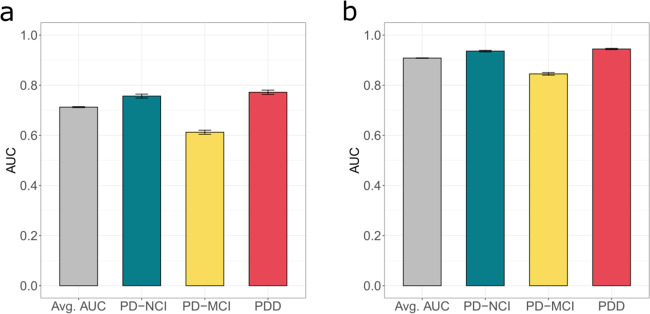
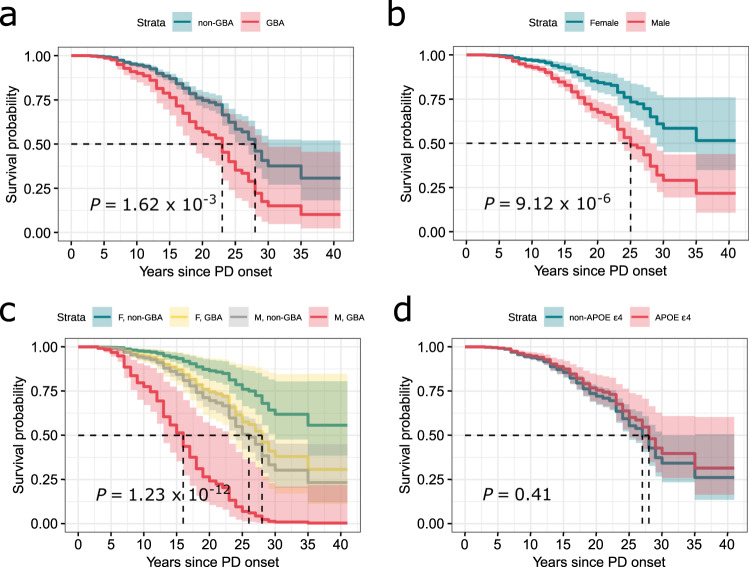
Cognitive impairment in Parkinson's disease (PD) is pervasive with potentially devastating effects. Identification of those at risk for cognitive decline is vital to identify and implement appropriate interventions. Robust multivariate approaches, including fixed-effect, mixed-effect, and multitask learning models, were used to study associations between biological, clinical, and cognitive factors and for predicting cognitive status longitudinally in a well-characterized prevalent PD cohort ( = 827). Age, disease duration, sex, and status were the primary biological factors associated with cognitive status and progression to dementia. Specific cognitive tests were better predictors of subsequent cognitive status for cognitively unimpaired and dementia groups. However, these models could not accurately predict future mild cognitive impairment (PD-MCI). Data collected from a large PD cohort thus revealed the primary biological and cognitive factors associated with dementia, and provide clinicians with data to aid in the identification of risk for dementia. Sex differences and their potential relationship to genetic status are also discussed.
帕金森病(PD)中的认知障碍普遍存在,可能产生毁灭性影响。识别有认知衰退风险的人对于确定并实施适当干预措施至关重要。我们使用了强大的多变量方法,包括固定效应、混合效应和多任务学习模型,来研究生物学、临床和认知因素之间的关联,并在一个特征明确的PD现患队列(n = 827)中纵向预测认知状态。年龄、病程、性别和基因状态是与认知状态及进展为痴呆相关的主要生物学因素。对于认知未受损和痴呆组,特定的认知测试是后续认知状态更好的预测指标。然而,这些模型无法准确预测未来的轻度认知障碍(PD-MCI)。因此,从一个大型PD队列收集的数据揭示了与痴呆相关的主要生物学和认知因素,并为临床医生提供数据以帮助识别痴呆风险。还讨论了性别差异及其与基因状态的潜在关系。