Korsakov Anton V, Geger Emilia V, Lagerev Dmitry G, Pugach Leonid I, Mousseau Timothy A
Bryansk State Technical University, Laboratory "Human Ecology and Data Analysis in the Technosphere", Russian Federation.
University of South Carolina Columbia, Department of Biological Sciences, USA.
Heliyon. 2020 Aug 17;6(8):e04616. doi: 10.1016/j.heliyon.2020.e04616. eCollection 2020 Aug.
Ionizing radiation and chemical pollution can disrupt normal embryonic development and lead to congenital malformations and fetal death. We used official government statistical data for 2000-2017 to test the hypothesis that radioactive and chemical pollutants influenced the frequency of congenital malformations in newborns of the Bryansk region of southwest Russia.
A variety of statistical approaches were used to assess congenital malformation frequencies including the Shapiro-Wilk test, White's homoscedasticity test, Wilcoxon T-test, Spearman's rank correlation test, and the inversely proportional regression.
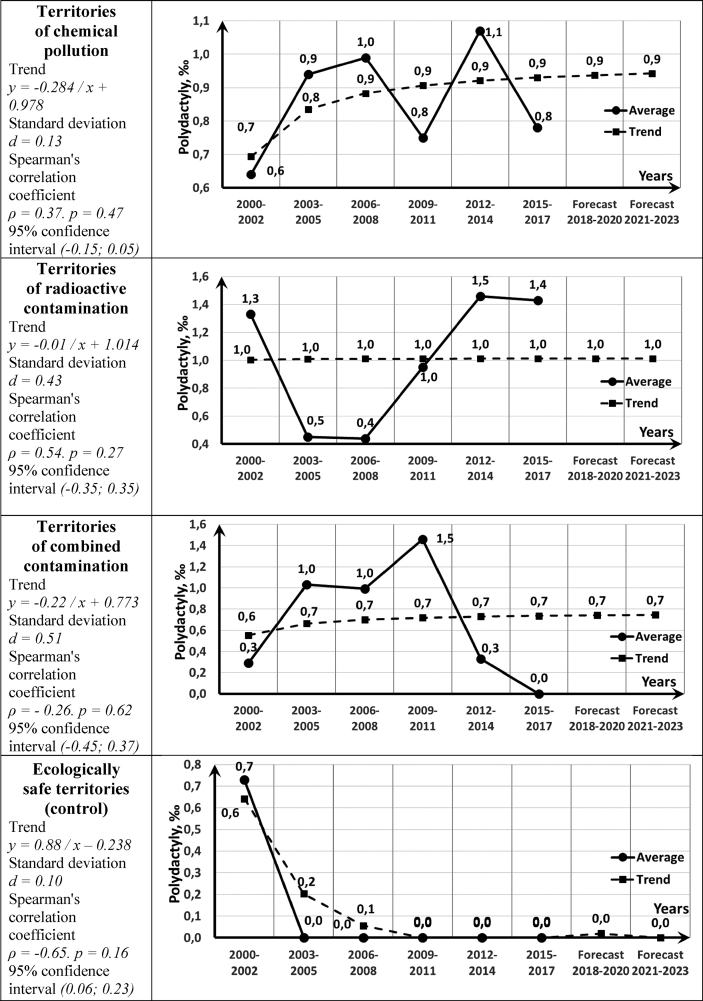
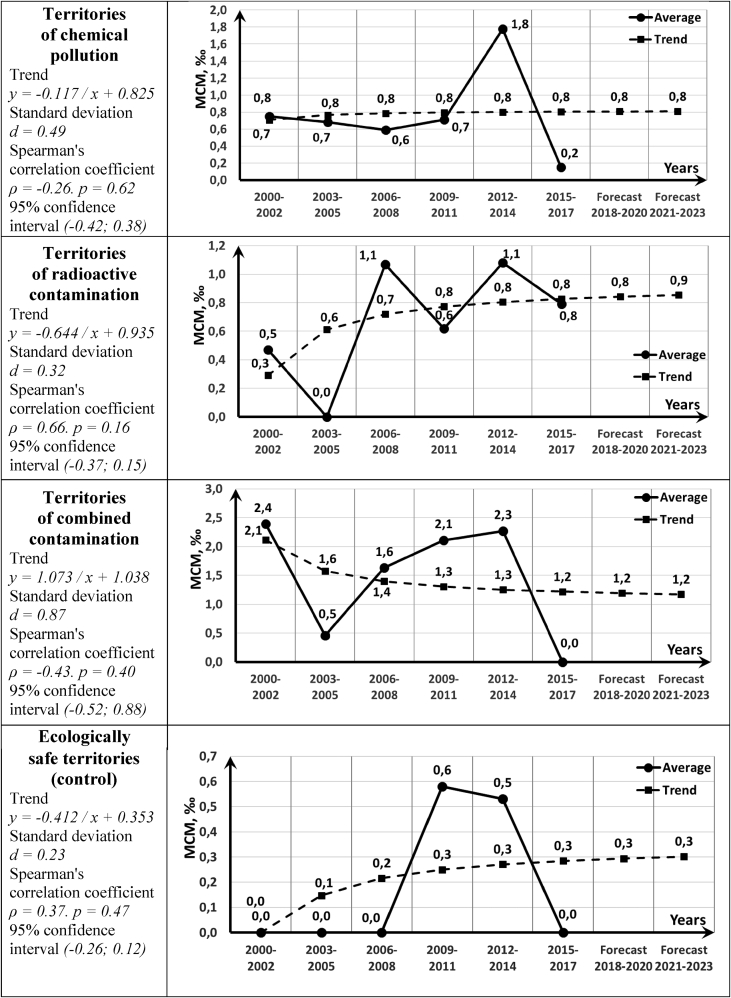
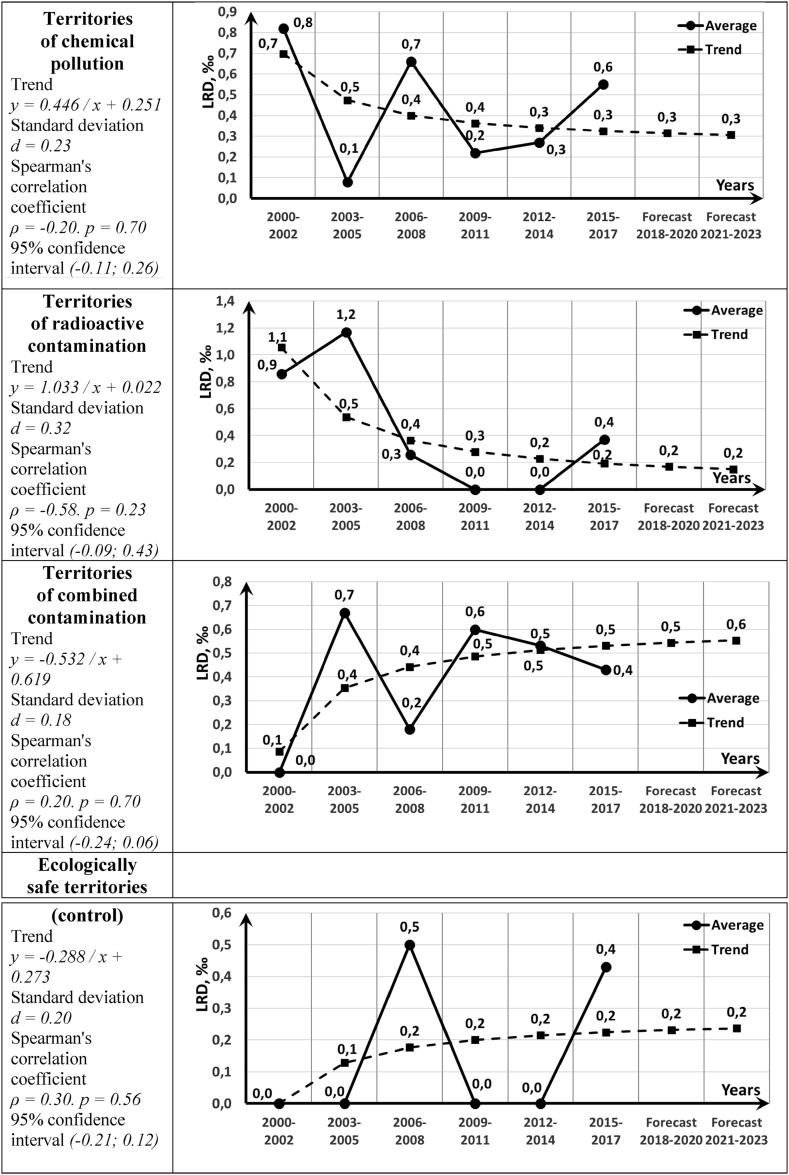
We found that the frequency of polydactyly, multiple congenital malformations, and the frequency of congenital malformations in newborns were significantly higher (p = 0.001-0.054) in regions with elevated radioactive, chemical and combined contamination. Polydactyly, multiple congenital malformations, and the sum of all congenital malformations were 4.7-7.4 times, 2.5-6.8 times, and 3.5-4.6 times higher in contaminated regions in comparison with the control group. The combination of both radioactive and chemical pollutants led to significantly higher frequencies of multiple congenital malformations when compared to regions with only one pollutant (radiation alone: 2.2 times, p = 0.034; chemical pollutants alone: 1.9 times, p = 0.008) implying that the effects of these stressors were at minimum additive. Although there was a trend for decreasing frequencies of multiple congenital malformations during the 2000-2017 period in areas of combined pollution, the opposite was true for regions with radioactive or chemical pollutants alone. However, overall, our models suggest that the frequency of multiple congenital malformations in areas of combined pollution will significantly (p = 0.027) exceed the frequencies observed for regions containing radioactive or chemical pollutants alone by 39.6% and 45.7% respectively, by 2018-2023.
These findings suggest additive and potentially synergistic effects of radioactive and chemical pollutants on the frequencies of multiple congenital malformations in the Bryansk region of southwestern Russia.
电离辐射和化学污染会干扰胚胎正常发育,导致先天性畸形和胎儿死亡。我们利用2000年至2017年政府官方统计数据,来检验放射性和化学污染物影响俄罗斯西南部布良斯克地区新生儿先天性畸形发生率这一假设。
采用多种统计方法评估先天性畸形发生率,包括夏皮罗-威尔克检验、怀特同方差性检验、威尔科克森T检验、斯皮尔曼等级相关检验以及反比例回归分析。
我们发现,在放射性、化学和复合污染水平升高的地区,多指畸形、多重先天性畸形以及新生儿先天性畸形的发生率显著更高(p = 0.001 - 0.054)。与对照组相比,污染地区的多指畸形、多重先天性畸形以及所有先天性畸形的总和分别高出4.7至7.4倍、2.5至6.8倍以及3.5至4.6倍。与仅有一种污染物的地区相比,放射性和化学污染物的复合作用导致多重先天性畸形的发生率显著更高(仅辐射:2.2倍,p = 0.034;仅化学污染物:1.9倍,p = 0.008),这意味着这些应激源的影响至少是累加性的。尽管在2000年至2017年期间,复合污染地区的多重先天性畸形发生率呈下降趋势,但仅受放射性或化学污染物污染的地区情况则相反。然而,总体而言,我们的模型表明,到2018年至2023年,复合污染地区的多重先天性畸形发生率将分别显著(p = 0.027)超过仅含放射性或化学污染物地区的发生率39.6%和45.7%。
这些发现表明,放射性和化学污染物对俄罗斯西南部布良斯克地区多重先天性畸形发生率具有累加和潜在的协同作用。