Division of Radiation and Cancer Biology, Department of Radiation Oncology, Stanford University School of Medicine, Stanford, CA.
Department of Biology, Stanford University, Stanford, CA.
J Cell Biol. 2020 Nov 2;219(11). doi: 10.1083/jcb.201908212.
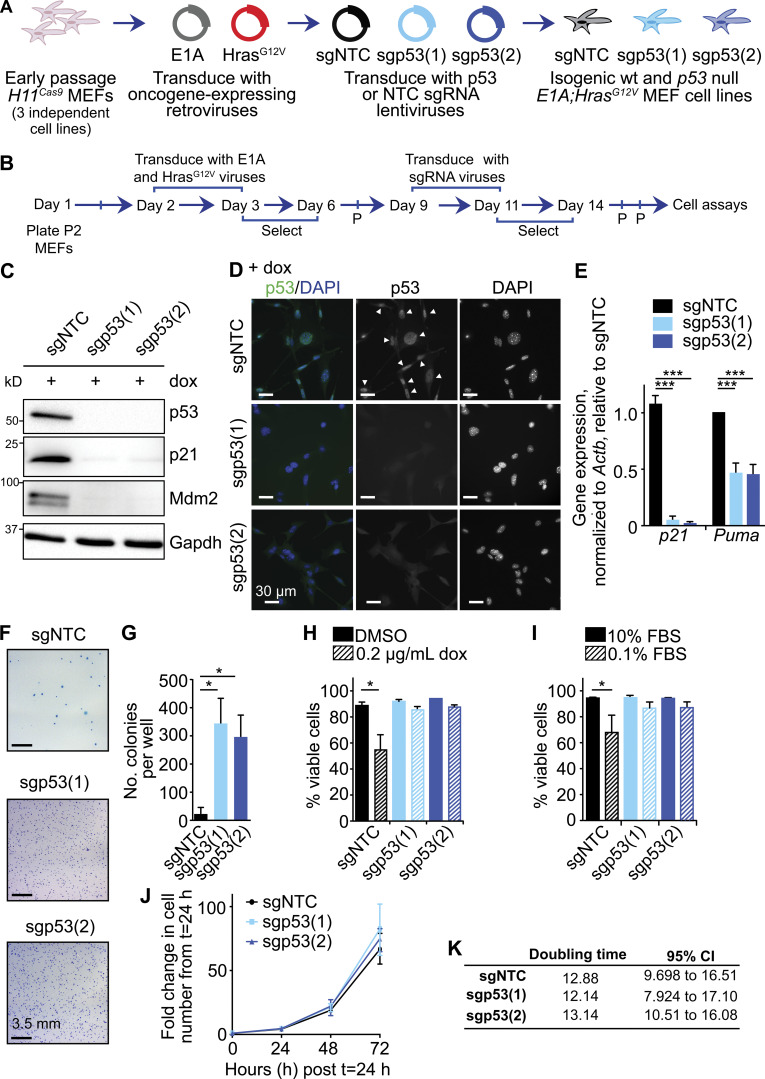
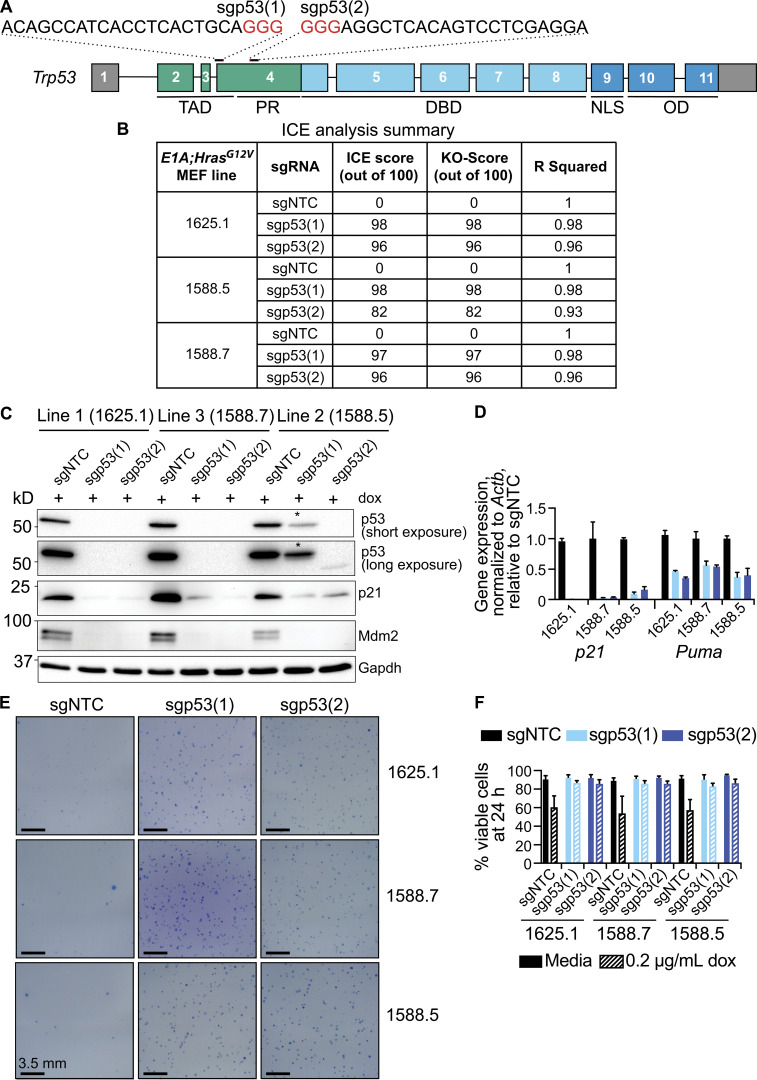
The mechanisms by which TP53, the most frequently mutated gene in human cancer, suppresses tumorigenesis remain unclear. p53 modulates various cellular processes, such as apoptosis and proliferation, which has led to distinct cellular mechanisms being proposed for p53-mediated tumor suppression in different contexts. Here, we asked whether during tumor suppression p53 might instead regulate a wide range of cellular processes. Analysis of mouse and human oncogene-expressing wild-type and p53-deficient cells in physiological oxygen conditions revealed that p53 loss concurrently impacts numerous distinct cellular processes, including apoptosis, genome stabilization, DNA repair, metabolism, migration, and invasion. Notably, some phenotypes were uncovered only in physiological oxygen. Transcriptomic analysis in this setting highlighted underappreciated functions modulated by p53, including actin dynamics. Collectively, these results suggest that p53 simultaneously governs diverse cellular processes during transformation suppression, an aspect of p53 function that would provide a clear rationale for its frequent inactivation in human cancer.
TP53 是人类癌症中最常发生突变的基因,其抑制肿瘤发生的机制仍不清楚。p53 调节多种细胞过程,如细胞凋亡和增殖,这导致在不同的背景下提出了不同的细胞机制来解释 p53 介导的肿瘤抑制作用。在这里,我们想知道 p53 是否在肿瘤抑制过程中调节广泛的细胞过程。在生理氧条件下分析表达致癌基因的小鼠和人野生型和 p53 缺陷细胞,发现 p53 缺失会同时影响许多不同的细胞过程,包括细胞凋亡、基因组稳定、DNA 修复、代谢、迁移和侵袭。值得注意的是,一些表型仅在生理氧条件下被揭示。在这种情况下的转录组分析突出了 p53 调节的一些未被充分认识的功能,包括肌动蛋白动力学。总之,这些结果表明,p53 在转化抑制过程中同时控制着多种细胞过程,这是 p53 功能的一个方面,为其在人类癌症中经常失活提供了明确的理由。