Division of Pulmonary, Critical Care, and Sleep Medicine, University of Florida, Gainesville, USA.
College of Dentistry, University of Florida, Gainesville, USA.
Cell Commun Signal. 2020 Sep 4;18(1):140. doi: 10.1186/s12964-020-00648-0.
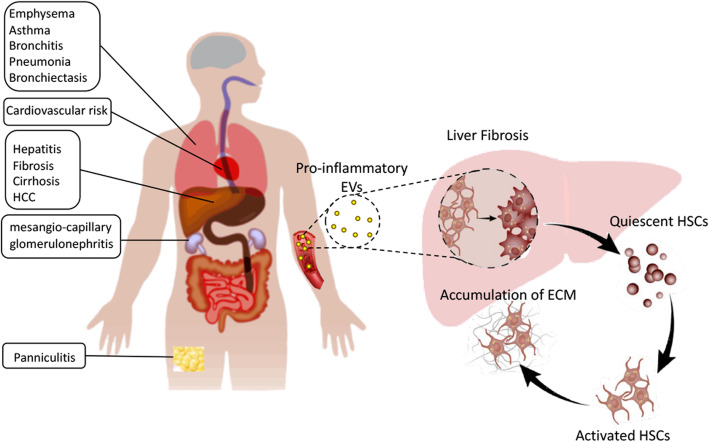
Alpha-1 antitrypsin deficiency (AATD)-mediated liver disease is a toxic "gain-of-function" inflammation in the liver associated with intracellular retention of mutant alpha-1 antitrypsin. The clinical presentation of the disease includes fibrosis, cirrhosis and liver failure. However, the pathogenic mechanism of AATD-mediated liver disease is not well understood. Here, we investigated the role of plasma extracellular vesicles (EVs) in progression of AATD-mediated liver disease.
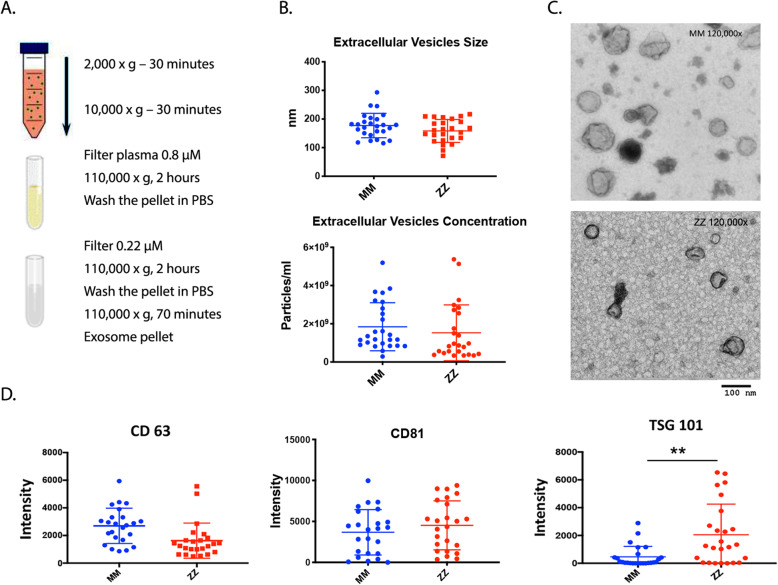
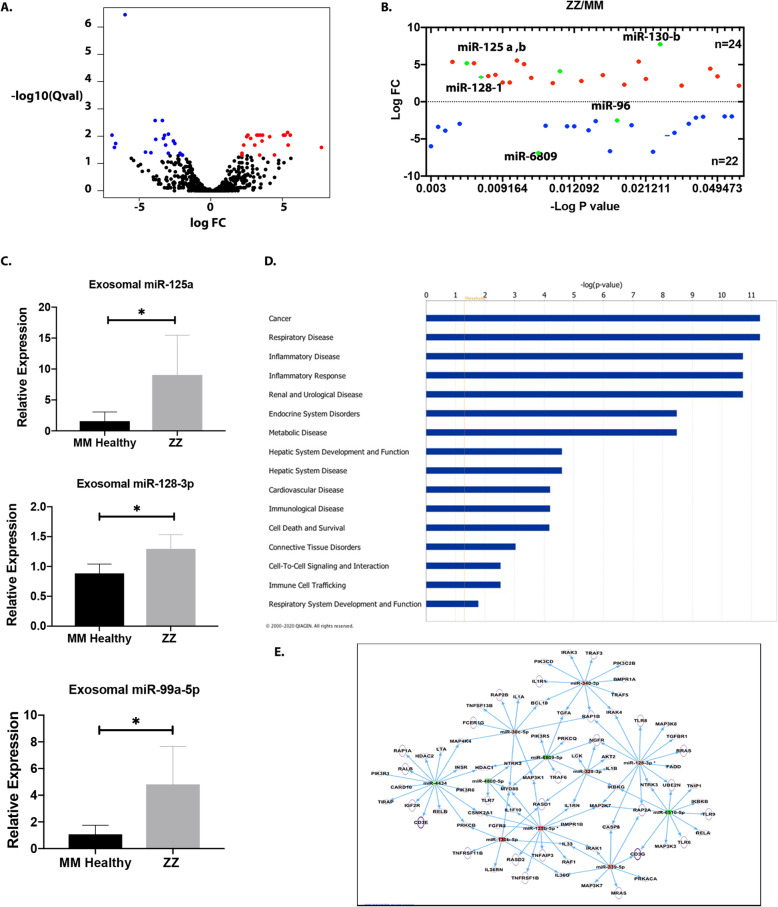
EVs were isolated from plasma of AATD individuals with liver disease and healthy controls. Their cytokines and miRNA content were examined by multiplex assay and small RNA sequencing. The bioactivity of EVs was assessed by qPCR, western blot analysis and immunofluorescent experiments using human hepatic stellate cells (HSCs) treated with EVs isolated from control or AATD plasma samples.
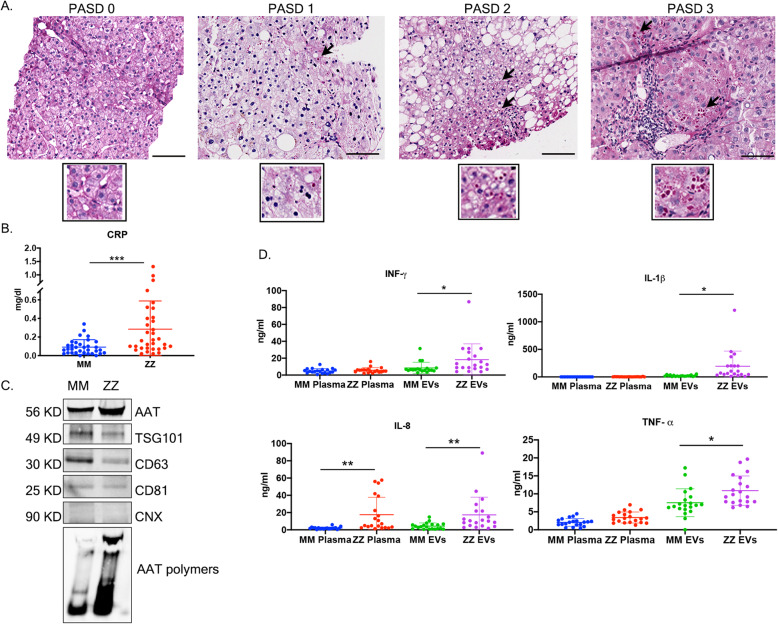
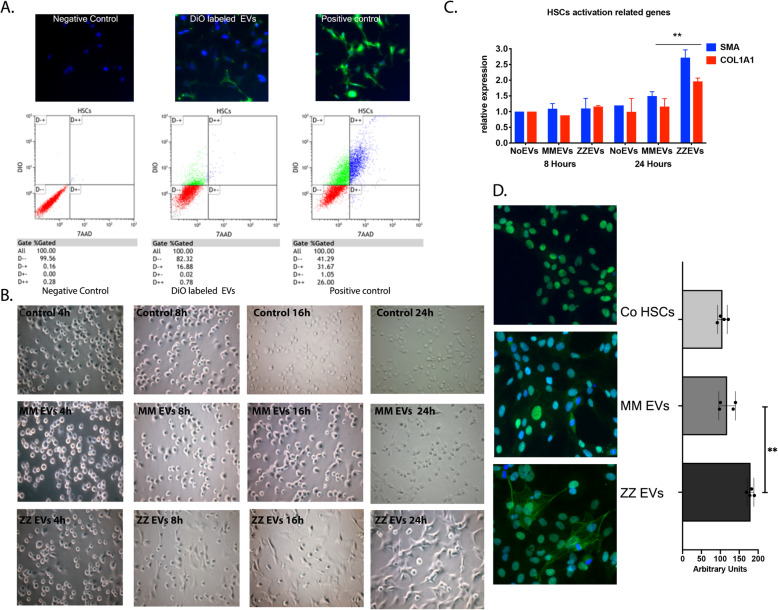
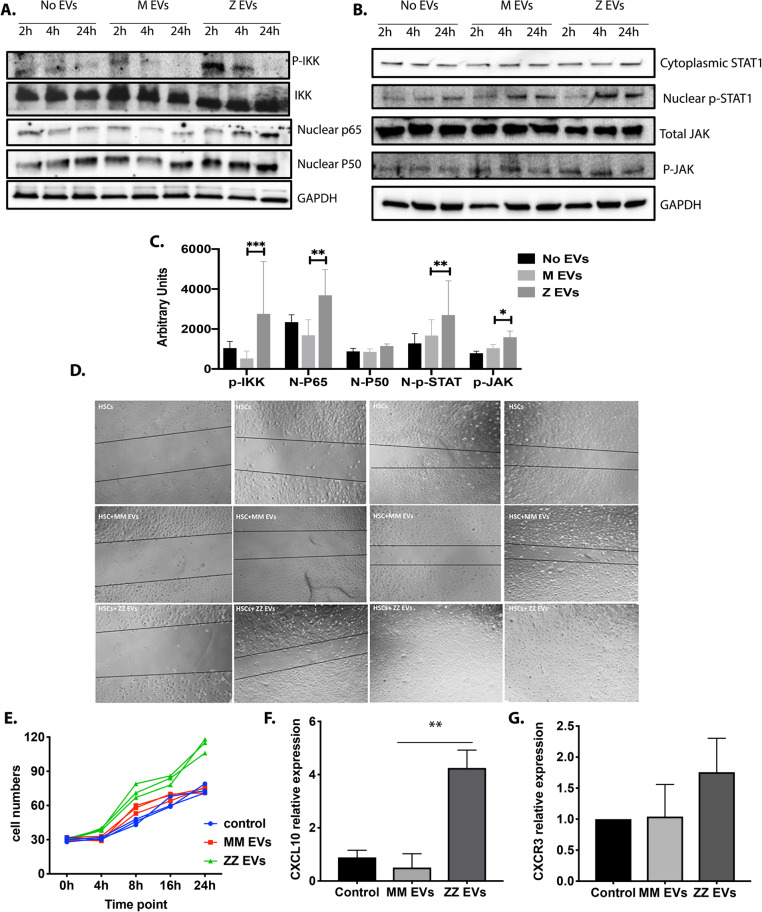
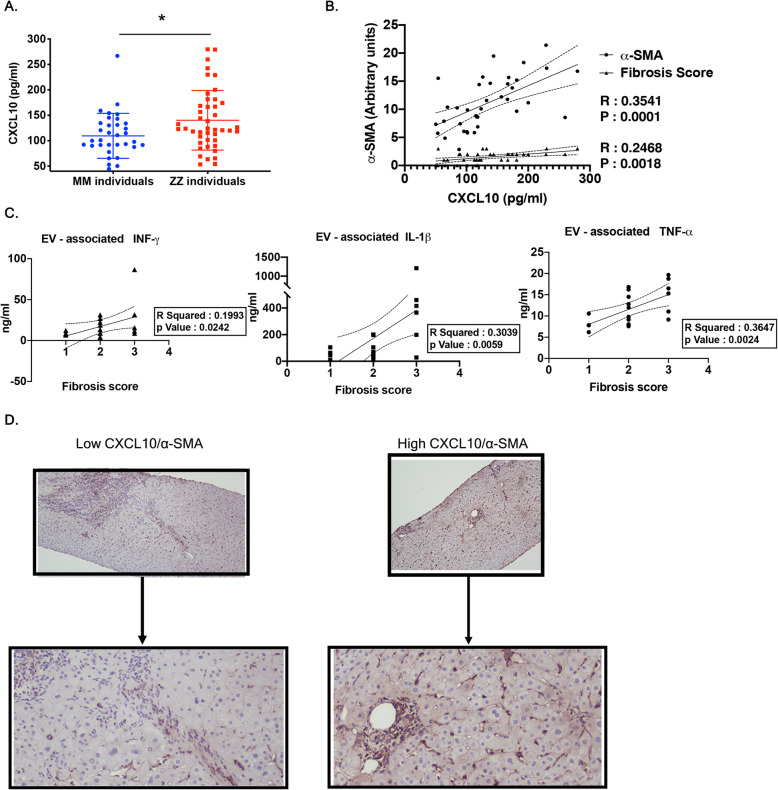
We have found that AATD individuals have a distinct population of EVs with pathological cytokine and miRNA contents. When HSCs were cultured with AATD plasma derived-EVs, the expression of genes related to the development of fibrosis were significantly amplified compared to those treated with healthy control plasma EVs.
AATD individuals have a distinct population of EVs with abnormal cytokine and miRNA contents and the capacity to activate HSCs and mediate fibrosis. Better understanding of the components which cause liver inflammation and fibrogenesis, leading to further liver injury, has the potential to lead to the development of new treatments or preventive strategies to prevent AATD-mediated liver disease. Video abstract.
α-1 抗胰蛋白酶缺乏症(AATD)介导的肝脏疾病是一种在肝脏中发生的毒性“获得性功能”炎症,与突变型α-1 抗胰蛋白酶在细胞内的滞留有关。该疾病的临床表现包括纤维化、肝硬化和肝功能衰竭。然而,AATD 介导的肝脏疾病的发病机制尚不清楚。在这里,我们研究了血浆细胞外囊泡(EVs)在 AATD 介导的肝脏疾病进展中的作用。
从患有肝脏疾病的 AATD 个体和健康对照者的血浆中分离 EVs。通过多重分析和小 RNA 测序检测其细胞因子和 miRNA 含量。使用 qPCR、western blot 分析和免疫荧光实验评估 EVs 的生物活性,方法是用人肝星状细胞(HSCs)培养物处理从对照或 AATD 血浆样本中分离的 EVs。
我们发现 AATD 个体具有具有病理细胞因子和 miRNA 含量的独特 EV 群体。当 HSCs 用源自 AATD 血浆的 EVs 培养时,与用健康对照血浆 EVs 处理的相比,与纤维化发展相关的基因表达明显增强。
AATD 个体具有具有异常细胞因子和 miRNA 含量的独特 EV 群体,并且具有激活 HSCs 和介导纤维化的能力。更好地了解导致肝脏炎症和纤维化、进而导致进一步肝损伤的成分,有可能导致开发新的治疗方法或预防策略来预防 AATD 介导的肝脏疾病。视频摘要。