Oshins Regina, Greenberg Zachary, Tai Yun-Ling, Zhao Derrick, Wang Xuan, Mehrad Borna, He Mei, Patel Ishan, Khartabil Laith, Zhou Huiping, Brantly Mark, Khodayari Nazli
Department of Medicine, Division of Pulmonary, Critical Care and Sleep Medicine; University of Florida, Gainesville, Florida, USA.
Department of Pharmaceutics, College of Pharmacy; University of Florida, Gainesville, Florida, USA.
bioRxiv. 2024 Aug 21:2024.08.20.608832. doi: 10.1101/2024.08.20.608832.
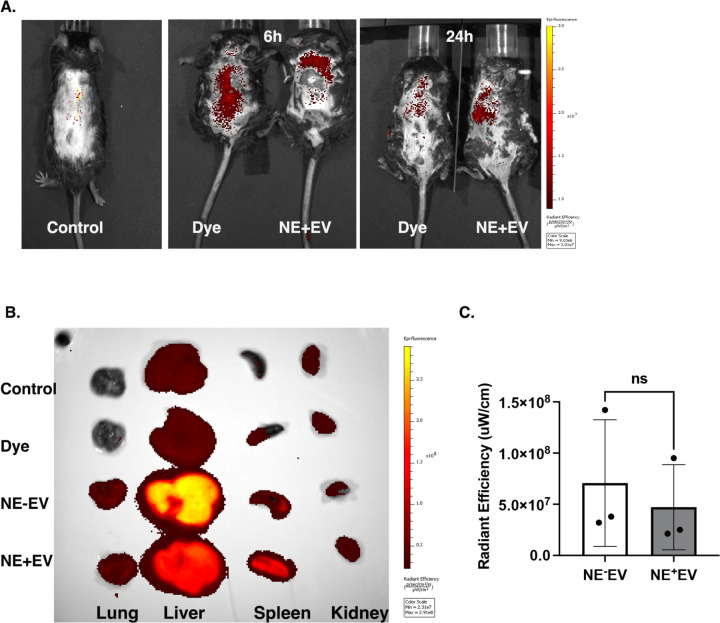
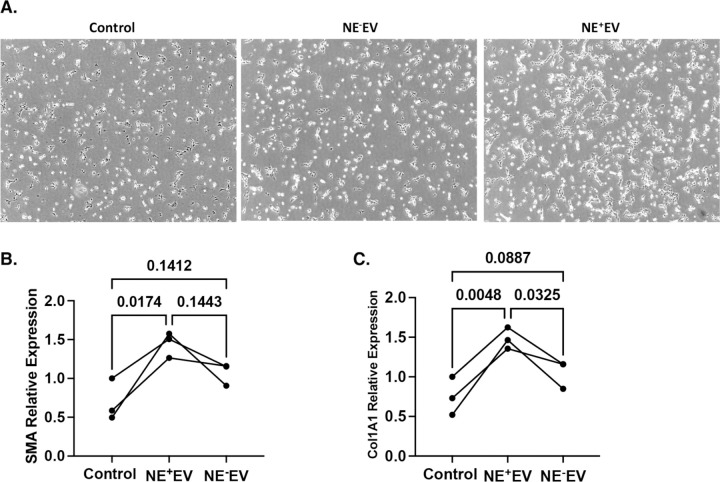
Liver fibrosis associated with increased mortality is caused by activation of hepatic stellate cells and excessive production and accumulation of extracellular matrix in response to fibrotic insults. It has been shown that in addition to liver inflammation, systemic inflammation also contributes to liver fibrogenesis. A deeper understanding of mechanisms that control liver fibrotic response to intra- and extra-hepatic inflammation is essential to develop novel clinical strategies against this disease. Extracellular vesicles (EV) have been recognized as immune mediators that facilitate activation of hepatic stellate cells. In inflammatory diseases, activated neutrophils release neutrophil elastase (NE) bound to EV, which has been identified as a significant contributor to inflammation by promoting immune cell activation. Here, we aimed to explore the role of inflammation derived plasma EV-associated NE in liver fibrogenesis and its potential mechanisms. We show EV-associated NE induces activation, proliferation and migration of hepatic stellate cells by promoting activation of the ERK1/2 signaling pathway. This effect did not occur through EV without surface NE, and Sivelestat, a NE inhibitor, inhibited activation of the ERK1/2 signaling pathway mediated by EV-associated NE. Moreover, we found plasma EV-associated NE increases deposition of collagen1 and α-smooth muscle actin in the liver of a mouse model of liver fibrosis (Mdr2). Notably, this effect does not occur in control mice without preexisting liver disease. These data suggest that EV-associated NE is a pro-fibrogenic factor for hepatic stellate cell activation via the ERK1/2 signaling pathway in pre-existing liver injuries. Inhibition of the plasma EV-associated NE in inflammatory conditions may be a therapeutic target for liver fibrosis in patients with inflammatory diseases.
与死亡率增加相关的肝纤维化是由肝星状细胞激活以及细胞外基质在纤维化损伤刺激下过度产生和积聚所致。研究表明,除了肝脏炎症外,全身炎症也参与肝纤维化的发生。深入了解控制肝脏对肝内和肝外炎症纤维化反应的机制,对于开发针对该疾病的新型临床策略至关重要。细胞外囊泡(EV)已被认为是促进肝星状细胞激活的免疫介质。在炎症性疾病中,活化的中性粒细胞释放与EV结合的中性粒细胞弹性蛋白酶(NE),通过促进免疫细胞激活,NE已被确定为炎症的重要促成因素。在此,我们旨在探讨炎症来源的血浆EV相关NE在肝纤维化中的作用及其潜在机制。我们发现,EV相关NE通过促进ERK1/2信号通路的激活,诱导肝星状细胞的激活、增殖和迁移。没有表面NE的EV不会产生这种效应,NE抑制剂西维来司他可抑制EV相关NE介导的ERK1/2信号通路的激活。此外,我们发现血浆EV相关NE增加了肝纤维化小鼠模型(Mdr2)肝脏中胶原蛋白1和α平滑肌肌动蛋白的沉积。值得注意的是,在没有预先存在肝病的对照小鼠中不会出现这种效应。这些数据表明,在预先存在的肝损伤中,EV相关NE是通过ERK1/2信号通路激活肝星状细胞的促纤维化因子。在炎症条件下抑制血浆EV相关NE可能是炎症性疾病患者肝纤维化的治疗靶点。