Laboratorio de Virología y Genética Molecular, Facultad de Ciencias Naturales y Ciencias de la Salud, Universidad Nacional de la Patagonia San Juan Bosco, 9 de Julio y Belgrano s/n, (9100), Trelew, Chubut, Argentina; Consejo Nacional de Investigaciones Científicas y Técnicas (CONICET), Buenos Aires, Argentina.
Laboratorio de Virología y Genética Molecular, Facultad de Ciencias Naturales y Ciencias de la Salud, Universidad Nacional de la Patagonia San Juan Bosco, 9 de Julio y Belgrano s/n, (9100), Trelew, Chubut, Argentina; Consejo Nacional de Investigaciones Científicas y Técnicas (CONICET), Buenos Aires, Argentina.
Virology. 2020 Nov;550:70-77. doi: 10.1016/j.virol.2020.08.010. Epub 2020 Aug 26.
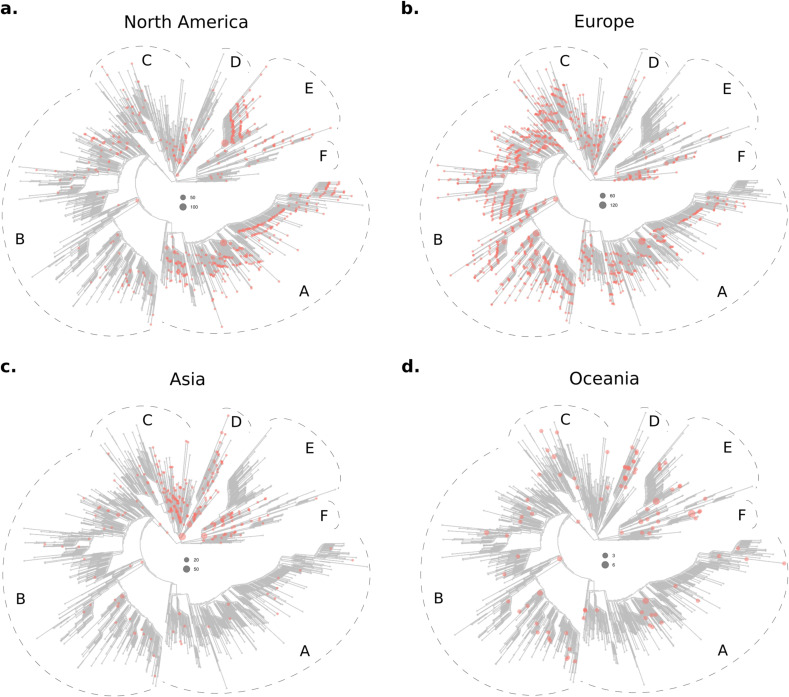
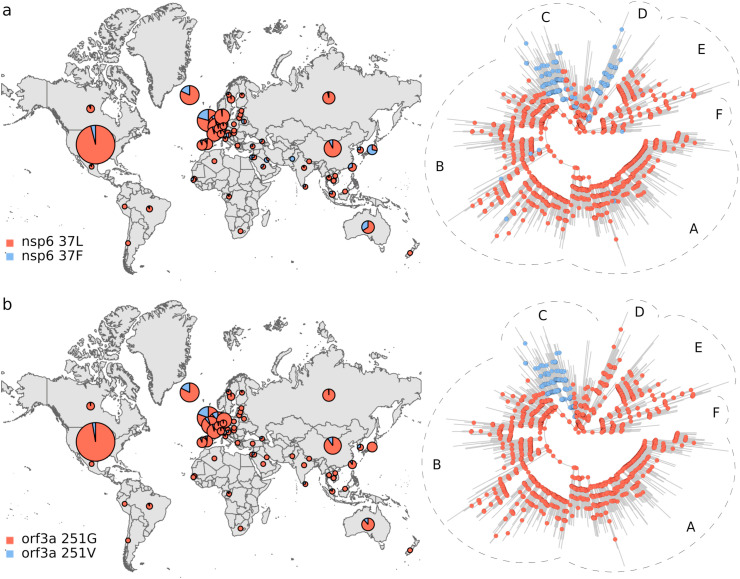
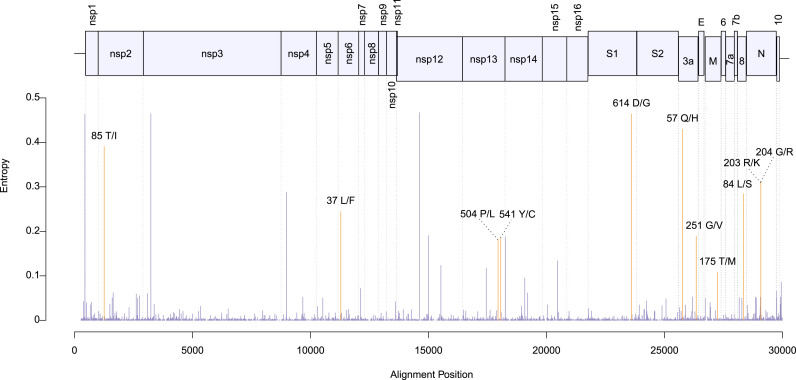
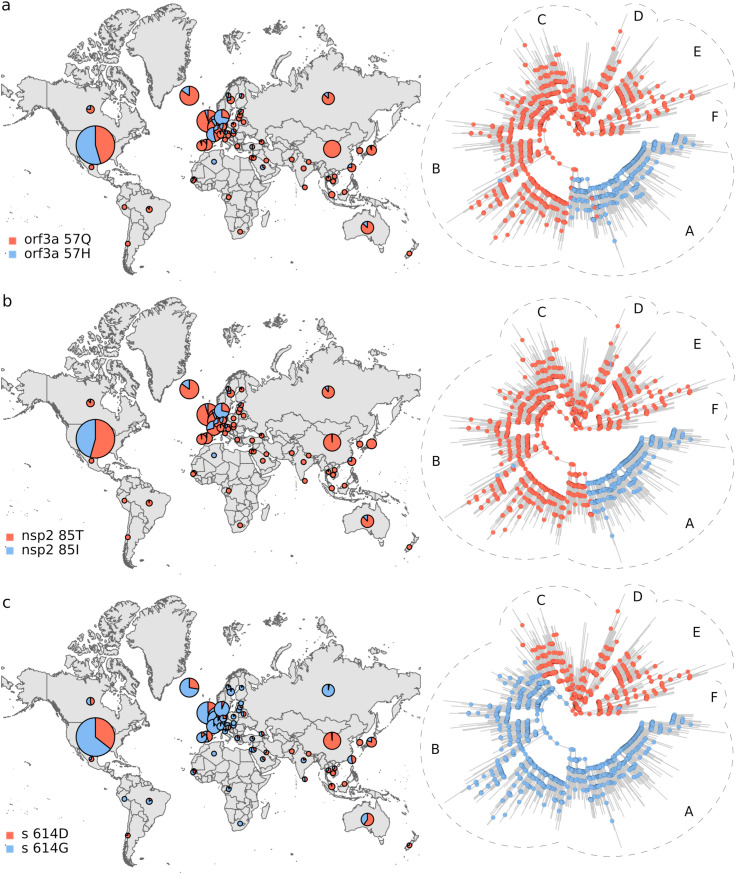
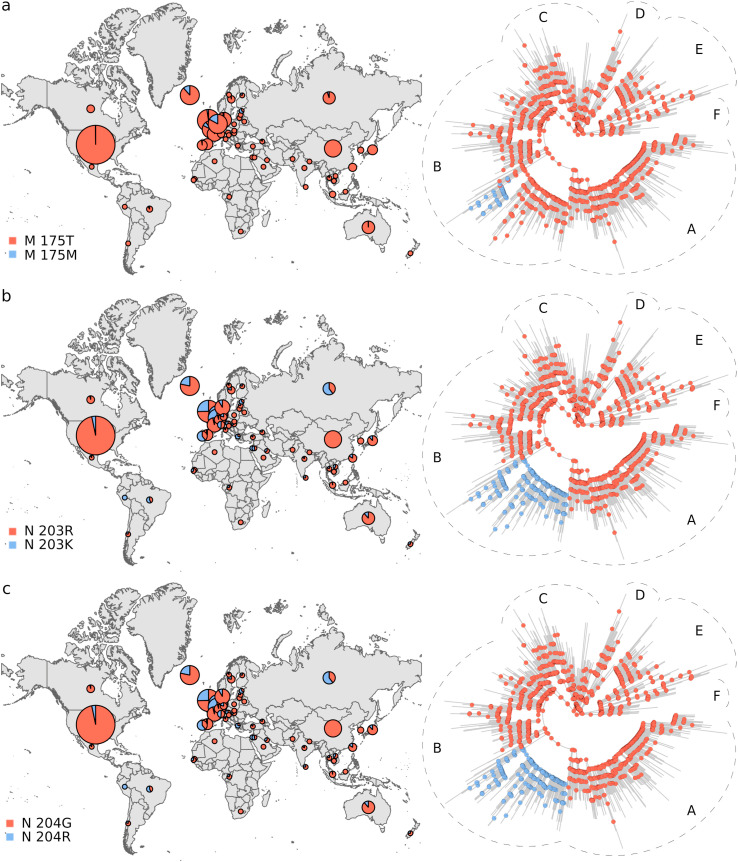
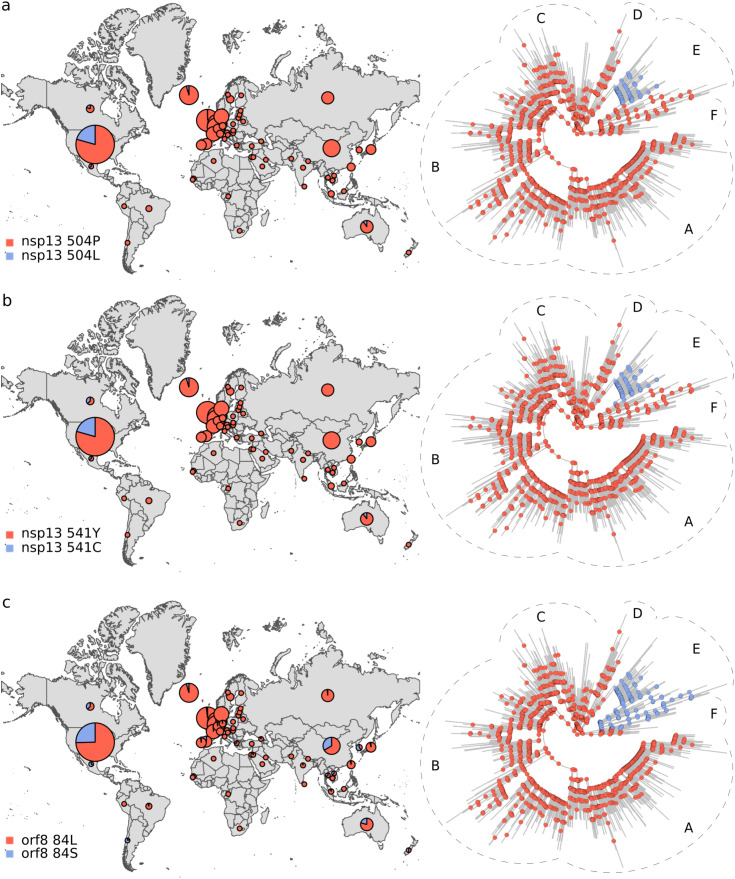
Severe acute respiratory syndrome coronavirus 2 (SARS-CoV-2) is an emergent RNA virus that spread around the planet in about 4 months. The consequences of this rapid dispersion are under investigation. In this work, we analyzed thousands of genomes and protein sequences from Africa, America, Asia, Europe, and Oceania. We provide statistically significant evidence that SARS-CoV-2 phylogeny is spatially structured. Remarkably, the virus phylogeographic patterns were correlated with ancestral amino acidic substitutions, suggesting that such mutations emerged along colonization events. We hypothesize that geographic structuring is the result of founder effects occurring as a consequence of, and local evolution occurring after, long-distance dispersion. Based on previous studies, the possibility that this could significantly affect the virus biology is not remote.
严重急性呼吸系统综合症冠状病毒 2(SARS-CoV-2)是一种新兴的 RNA 病毒,大约在 4 个月内在全球范围内传播。这种快速传播的后果正在调查中。在这项工作中,我们分析了来自非洲、美洲、亚洲、欧洲和大洋洲的数千个基因组和蛋白质序列。我们提供了具有统计学意义的证据,表明 SARS-CoV-2 的系统发生是空间结构的。值得注意的是,病毒的系统发生地理模式与祖先氨基酸取代相关,这表明这些突变是在殖民化事件中出现的。我们假设地理结构是由于长途扩散而产生的奠基者效应的结果,以及长途扩散后发生的局部进化的结果。基于以前的研究,这种情况极有可能显著影响病毒生物学。