University of Waikato, Hamilton, New Zealand.
Auckland University of Technology, Auckland, New Zealand.
Eur J Clin Invest. 2021 Mar;51(3):e13398. doi: 10.1111/eci.13398. Epub 2020 Sep 19.
A major problem in quantifying symptoms of schizophrenia is establishing a reliable distinction between enduring and dynamic aspects of psychopathology. This is critical for accurate diagnosis, monitoring and evaluating treatment effects in both clinical practice and trials.
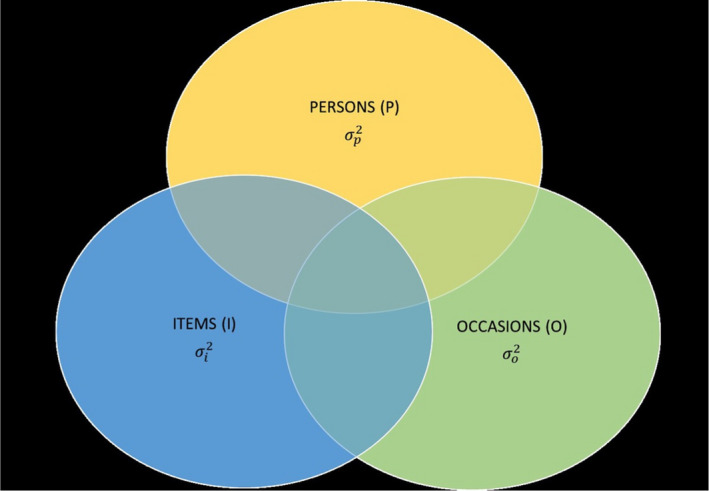
We applied Generalizability Theory, a robust novel method to distinguish between dynamic and stable aspects of schizophrenia symptoms in the widely used Positive and Negative Symptom Scale (PANSS) using a longitudinal measurement design. The sample included 107 patients with chronic schizophrenia assessed using the PANSS at five time points over a 24-week period during a multi-site clinical trial of N-Acetylcysteine as an add-on to maintenance medication for the treatment of chronic schizophrenia.
The original PANSS and its three subscales demonstrated good reliability and generalizability of scores (G = 0.77-0.93) across sample population and occasions making them suitable for assessment of psychosis risks and long-lasting change following a treatment, while subscales of the five-factor models appeared less reliable. The most enduring symptoms represented by the PANSS were poor attention, delusions, blunted affect and poor rapport. More dynamic symptoms with 40%-50% of variance explained by patient transient state including grandiosity, preoccupation, somatic concerns, guilt feeling and hallucinatory behaviour.
Identified dynamic symptoms are more amendable to change and should be the primary target of interventions aiming at effectively treating schizophrenia. Separating out the dynamic symptoms would increase assay sensitivity in trials, reduce the signal to noise ratio and increase the potential to detect the effects of novel therapies in clinical trials.
量化精神分裂症症状的一个主要问题是在精神病理学的持久和动态方面建立可靠的区别。这对于在临床实践和试验中进行准确诊断、监测和评估治疗效果至关重要。
我们应用了广义理论,这是一种强大的新方法,用于通过纵向测量设计,在广泛使用的阳性和阴性症状量表(PANSS)中区分精神分裂症症状的动态和稳定方面。该样本包括 107 名慢性精神分裂症患者,他们在一项多地点临床试验中使用 PANSS 进行了 24 周的五次评估,该试验研究了 N-乙酰半胱氨酸作为维持药物治疗慢性精神分裂症的附加治疗。
原始的 PANSS 及其三个子量表在样本人群和场合中表现出良好的评分可靠性和可推广性(G=0.77-0.93),使其适合评估精神病风险和治疗后的长期变化,而五因素模型的子量表则表现出较低的可靠性。由患者短暂状态解释的 40%-50%方差的最持久症状包括注意力不集中、妄想、情感迟钝和缺乏共鸣。更具动态性的症状,包括夸大、专注、躯体担忧、内疚感和幻觉行为,具有 40%-50%的方差可以由患者的短暂状态来解释。
确定的动态症状更容易改变,应该成为旨在有效治疗精神分裂症的干预措施的主要目标。将动态症状分离出来可以提高试验的敏感性,降低信号噪声比,并增加在临床试验中检测新型疗法效果的潜力。