Departamento de Microbiologia, Universidade Federal de Viçosa, Avenida P.H. Rolfs S/N Viçosa, Minas Gerais, MG, 36570-000, Brazil.
Coffee Analysis and Research Laboratory-LAPC, Instituto Federal Do Espírito Santo, Venda Nova Do Imigrante, Rua Elizabeth Minete Perim, S/N, Bairro São Rafael, Espírito Santo, ES, 29375-000, Brazil.
Sci Rep. 2020 Sep 7;10(1):14692. doi: 10.1038/s41598-020-71309-y.
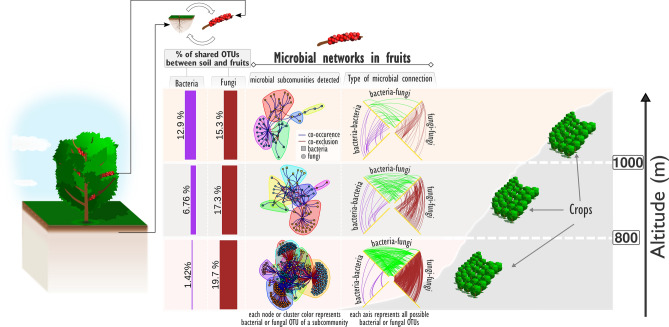
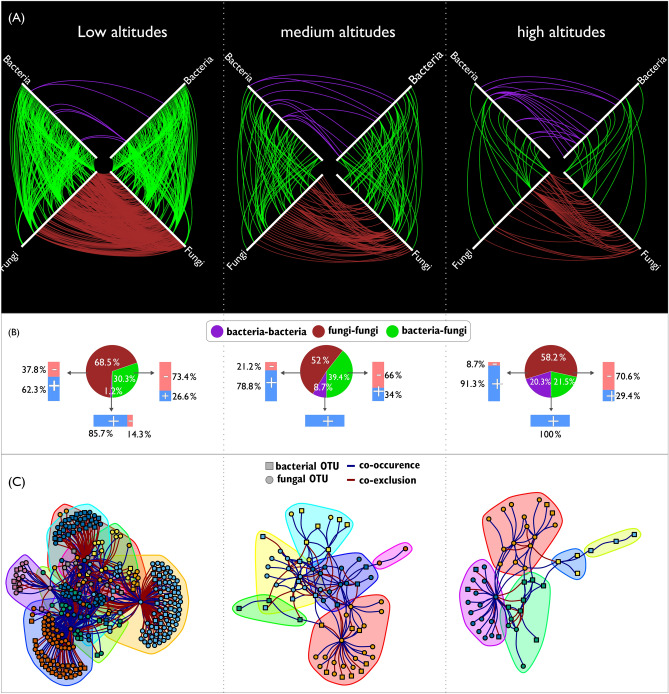
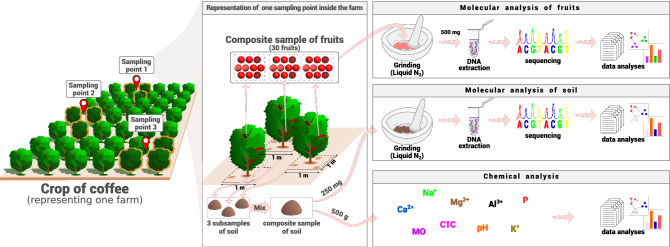
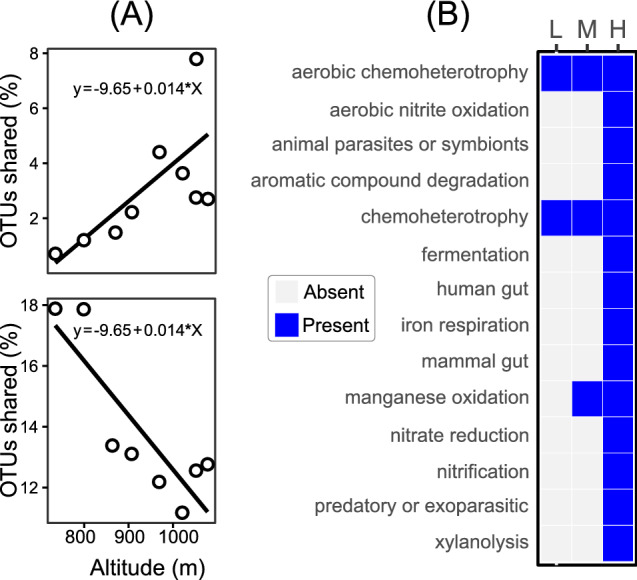
In recent years, several studies have been developed to understand the impact of fermentation on the final quality of coffee and have indicated that postharvest processing could be a determinant of quality. However, a trend has appeared as a scientific counterpoint, indicating that the interactions between soil, fruit, altitude, and slope exposures with respect to the Sun are important to understand the behavior of the microbiome in coffee. Studies on the microbiota of coffee have addressed its role during the fermentation process, however the knowledge of indigenous microorganisms harbored in fruits and soil of coffee trees growing in fields are essential, as they can contribute to fermentation. Therefore, the aim of this work was to evaluate the influence of topographic and edaphic factors on the bacterial and fungal communities present in the soil and in the fruits of Coffea arabica trees. Samples of fruits and soil were collected from different growing areas at different altitudes and soil conditions. The microbial DNA was extracted and sequenced. The results showed the contribution of environmental factors in the structure of bacterial and fungal communities. The richness, evenness and diversity of the mycobiome and bacteriome were higher in the soil than in the fruits, independent of altitude. In addition, coffee trees at higher altitudes tended to have more bacteria shared between the soil and fruits. The co-occurrence/co-exclusion network showed that bacteria-bacteria connections were greater in higher altitudes. On another hand, fungi-fungi and fungi-bacteria connections were higher in low altitudes. This was the first study that evaluates in deep the influence of environmental factors in the microbiota habiting fruits and soil coffee trees, which may affect the coffee beverage quality.
近年来,已有多项研究旨在了解发酵对咖啡最终品质的影响,并表明采后加工可能是决定品质的一个因素。然而,出现了一种相反的趋势,表明土壤、果实、海拔和坡面与太阳的相互作用对于理解咖啡微生物组的行为非常重要。关于咖啡微生物组的研究已经涉及到其在发酵过程中的作用,但是对于种植在田间的咖啡树果实和土壤中固有的微生物的了解是必不可少的,因为它们可以促进发酵。因此,本工作旨在评估地形和土壤因素对咖啡树土壤和果实中存在的细菌和真菌群落的影响。从不同海拔和土壤条件的不同种植区采集了果实和土壤样本。提取并测序了微生物 DNA。结果表明,环境因素对细菌和真菌群落的结构有贡献。土壤中的真菌和细菌的丰富度、均匀度和多样性均高于果实,与海拔无关。此外,海拔较高的咖啡树在土壤和果实之间共享的细菌更多。共现/排除网络显示,在较高海拔地区,细菌-细菌的连接更多。另一方面,在低海拔地区,真菌-真菌和真菌-细菌的连接更多。这是第一项深入评估环境因素对栖息在咖啡树果实和土壤中的微生物群影响的研究,这可能会影响咖啡饮料的质量。