Piccolomo Antonio, Schifone Claudia Pia, Strafella Vanda, Specchia Giorgina, Musto Pellegrino, Albano Francesco
Department of Emergency and Organ Transplantation (D.E.T.O.), Hematology and Stem cell Transplantation Unit, University of Bari "Aldo Moro", 70124 Bari, Italy.
Former Full Professor of Hematology, University of Bari "Aldo Moro", 70124 Bari, Italy.
Cancers (Basel). 2020 Sep 5;12(9):2528. doi: 10.3390/cancers12092528.
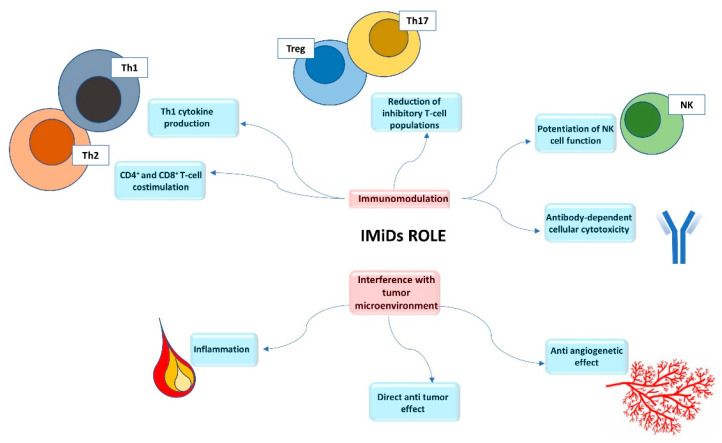
Immunomodulatory drugs (IMiDs) are analogs of thalidomide. They have immunomodulatory, antiangiogenic and proapoptotic properties and exert a role in regulating the tumor microenvironment. Recently IMiDs have been investigated for their pleiotropic properties and their therapeutic applications in both solid tumors (melanoma, prostate carcinoma and differentiated thyroid cancer) and hematological malignancies. Nowadays, they are applied in de novo and relapsed/refractory multiple myeloma, in myelodysplastic syndrome, in del5q syndrome with specific use of lenalidomide and B-cell lymphoma. Several studies have been conducted in the last few years to explore IMiDs possible use in acute myeloid leukemia treatment. Here we report the mechanisms of action of IMiDs in acute myeloid leukemia and their potential future therapeutic application in this disease.
免疫调节药物(IMiDs)是沙利度胺的类似物。它们具有免疫调节、抗血管生成和促凋亡特性,并在调节肿瘤微环境中发挥作用。最近,IMiDs因其多效性及其在实体瘤(黑色素瘤、前列腺癌和分化型甲状腺癌)和血液系统恶性肿瘤中的治疗应用而受到研究。如今,它们被应用于初治和复发/难治性多发性骨髓瘤、骨髓增生异常综合征、伴有来那度胺特定用途的del5q综合征以及B细胞淋巴瘤。在过去几年中进行了多项研究,以探索IMiDs在急性髓系白血病治疗中的可能用途。在此,我们报告IMiDs在急性髓系白血病中的作用机制及其在该疾病中潜在的未来治疗应用。