Ausó Eva, Gómez-Vicente Violeta, Esquiva Gema
Department of Optics, Pharmacology and Anatomy, University of Alicante, 03690 Alicante, Spain.
J Pers Med. 2020 Sep 4;10(3):114. doi: 10.3390/jpm10030114.
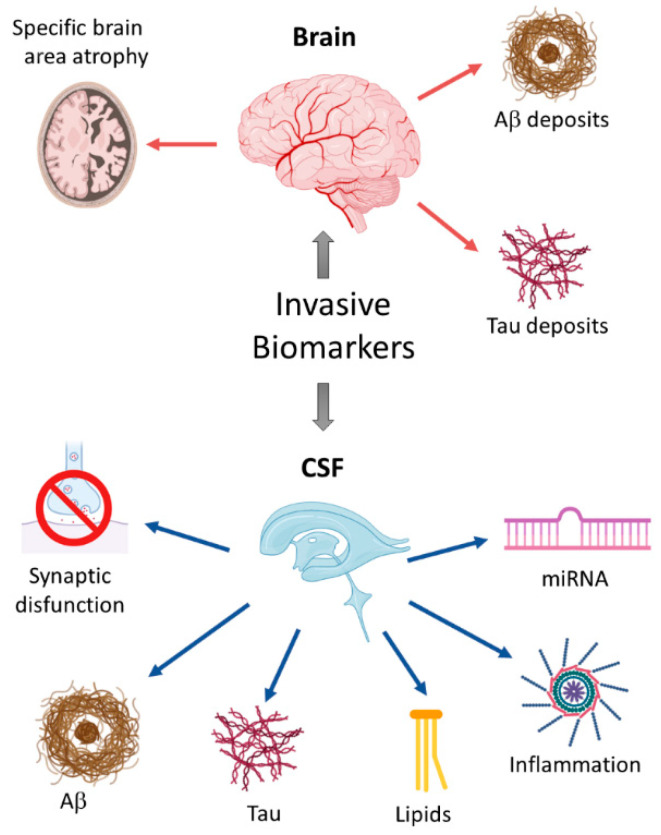
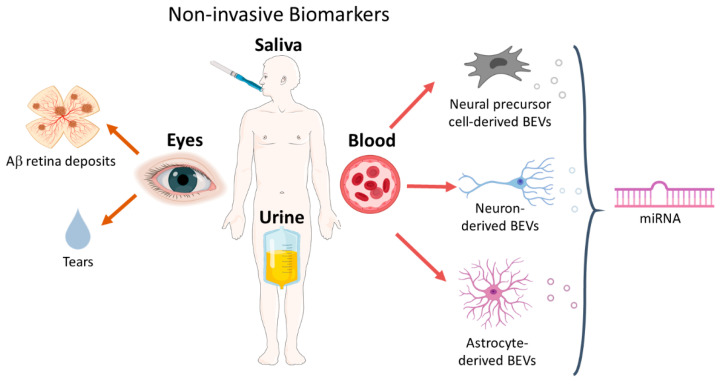
Alzheimer's disease (AD) is the most common cause of dementia, affecting the central nervous system (CNS) through the accumulation of intraneuronal neurofibrillary tau tangles (NFTs) and β-amyloid plaques. By the time AD is clinically diagnosed, neuronal loss has already occurred in many brain and retinal regions. Therefore, the availability of early and reliable diagnosis markers of the disease would allow its detection and taking preventive measures to avoid neuronal loss. Current diagnostic tools in the brain, such as magnetic resonance imaging (MRI), positron emission tomography (PET) imaging, and cerebrospinal fluid (CSF) biomarkers (Aβ and tau) detection are invasive and expensive. Brain-secreted extracellular vesicles (BEVs) isolated from peripheral blood have emerged as novel strategies in the study of AD, with enormous potential as a diagnostic evaluation of therapeutics and treatment tools. In addition; similar mechanisms of neurodegeneration have been demonstrated in the brain and the eyes of AD patients. Since the eyes are more accessible than the brain, several eye tests that detect cellular and vascular changes in the retina have also been proposed as potential screening biomarkers. The aim of this study is to summarize and discuss several potential markers in the brain, eye, blood, and other accessible biofluids like saliva and urine, and correlate them with earlier diagnosis and prognosis to identify individuals with mild symptoms prior to dementia.
阿尔茨海默病(AD)是痴呆最常见的病因,通过神经元内神经原纤维缠结(NFTs)和β-淀粉样蛋白斑块的积累影响中枢神经系统(CNS)。在AD临床诊断时,许多脑区和视网膜区域已经发生了神经元丢失。因此,获得该疾病早期且可靠的诊断标志物将有助于疾病的检测并采取预防措施以避免神经元丢失。目前脑部的诊断工具,如磁共振成像(MRI)、正电子发射断层扫描(PET)成像以及脑脊液(CSF)生物标志物(Aβ和tau)检测,具有侵入性且费用高昂。从外周血中分离的脑分泌细胞外囊泡(BEVs)已成为AD研究中的新策略,作为诊断评估治疗方法和治疗工具具有巨大潜力。此外,AD患者的脑和眼中已证实存在类似的神经退行性变机制。由于眼睛比大脑更容易进行检测,一些检测视网膜细胞和血管变化的眼部检查也被提议作为潜在的筛查生物标志物。本研究的目的是总结和讨论脑、眼、血液以及其他易于获取的生物流体(如唾液和尿液)中的几种潜在标志物,并将它们与早期诊断和预后相关联,以识别痴呆前期症状轻微的个体。