Department of Medicine, Division of Pulmonary, Allergy, Critical Care and Sleep Medicine, Emory University School of Medicine, Atlanta, Georgia, USA
Atlanta VA Healthcare System, Sleep Medicine Center, Decatur, Georgia, USA.
J Investig Med. 2020 Dec;68(8):1370-1378. doi: 10.1136/jim-2020-001448. Epub 2020 Sep 7.
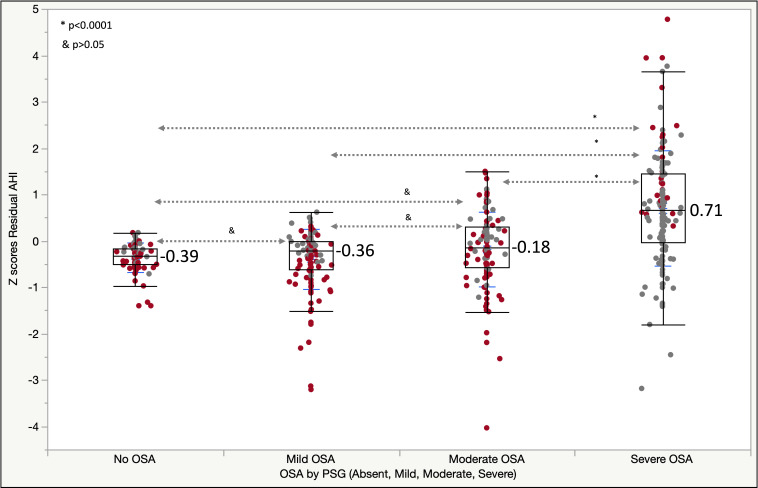
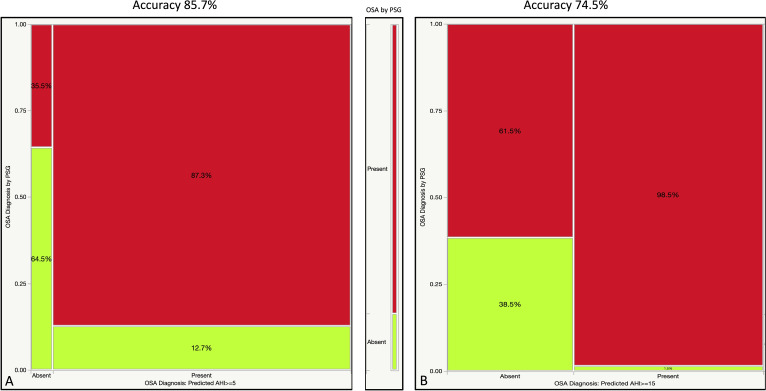
Outside sleep laboratory settings, peripheral arterial tonometry (PAT, eg, WatchPat) represents a validated modality for diagnosing obstructive sleep apnea (OSA). We have shown before that the accuracy of home sleep apnea testing by WatchPat 200 devices in diagnosing OSA is suboptimal (50%-70%). In order to improve its diagnostic performance, we built several models that predict the main functional parameter of polysomnography (PSG), Apnea Hypopnea Index (AHI). Participants were recruited in our Sleep Center and underwent concurrent in-laboratory PSG and PAT recordings. Statistical models were then developed to predict AHI by using robust functional parameters from PAT-based testing, in concert with available demographic and anthropometric data, and their performance was confirmed in a random validation subgroup of the cohort. Five hundred synchronous PSG and WatchPat sets were analyzed. Mean diagnostic accuracy of PAT was improved to 67%, 81% and 85% in mild, moderate-severe or no OSA, respectively, by several models that included participants' age, gender, neck circumference, body mass index and the number of 4% desaturations/hour. WatchPat had an overall accuracy of 85.7% and a positive predictive value of 87.3% in diagnosing OSA (by predicted AHI above 5). In this large cohort of patients with high pretest probability of OSA, we built several models based on 4% oxygen desaturations, neck circumference, body mass index and several other variables. These simple models can be used at the point-of-care, in order to improve the diagnostic accuracy of the PAT-based testing, thus ameliorating the high rates of misclassification for OSA presence or disease severity.
在睡眠实验室环境之外,外周动脉张力测定(PAT,例如 WatchPat)是诊断阻塞性睡眠呼吸暂停(OSA)的一种经过验证的方法。我们之前已经表明,WatchPat 200 设备进行家庭睡眠呼吸暂停测试在诊断 OSA 方面的准确性并不理想(50%-70%)。为了提高其诊断性能,我们构建了几个模型,这些模型可以预测多导睡眠图(PSG)的主要功能参数,即呼吸暂停低通气指数(AHI)。参与者在我们的睡眠中心招募,并进行了同步的实验室 PSG 和 PAT 记录。然后,使用基于 PAT 的测试中的稳健功能参数,结合可用的人口统计学和人体测量数据,开发了统计模型来预测 AHI,并在队列的随机验证子组中验证了其性能。分析了 500 套同步 PSG 和 WatchPat 数据。通过包含参与者的年龄、性别、颈围、体重指数和每小时 4%的血氧饱和度下降次数等参数的几个模型,PAT 的平均诊断准确性分别提高到轻度、中度重度或无 OSA 患者的 67%、81%和 85%。WatchPat 在预测 AHI 大于 5 时,用于诊断 OSA 的总体准确性为 85.7%,阳性预测值为 87.3%。在这个 OSA 高术前概率的患者大队列中,我们构建了基于 4%血氧饱和度下降、颈围、体重指数和其他几个变量的几个模型。这些简单的模型可以在床边使用,以提高基于 PAT 的测试的诊断准确性,从而降低 OSA 存在或疾病严重程度的分类错误率。