Department of Immunology, Roswell Park Comprehensive Cancer Center, Buffalo, NY 14263.
Department of Urology, Roswell Park Comprehensive Cancer Center, Buffalo, NY 14263.
Proc Natl Acad Sci U S A. 2020 Sep 22;117(38):23721-23729. doi: 10.1073/pnas.2001933117. Epub 2020 Sep 8.
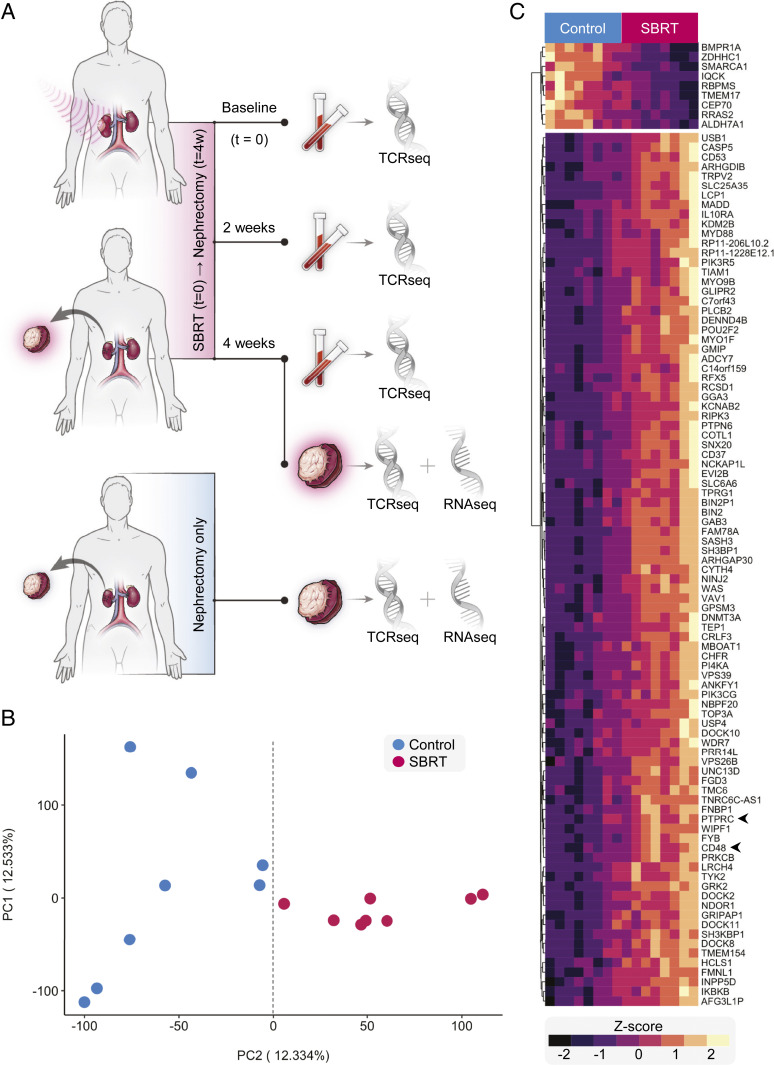
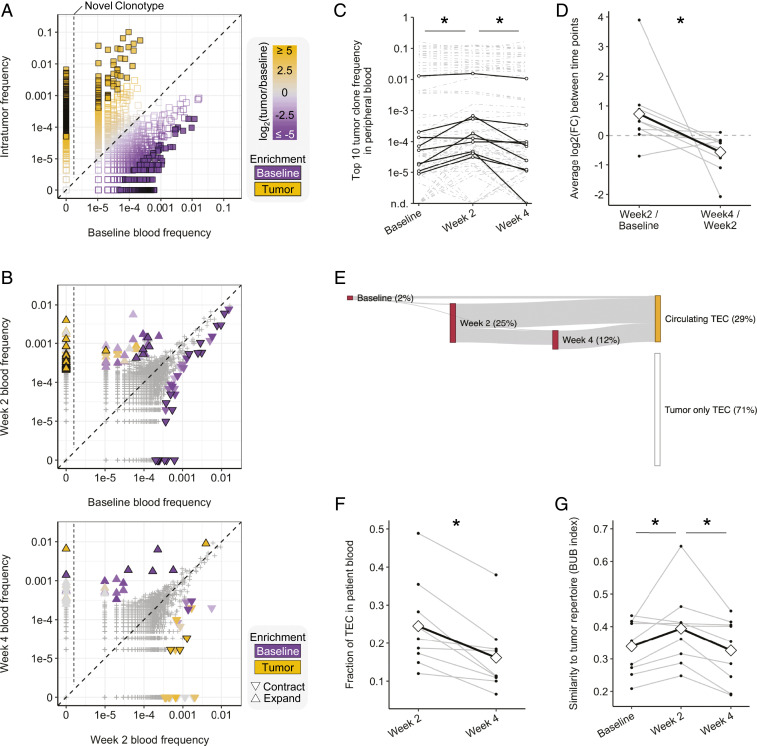
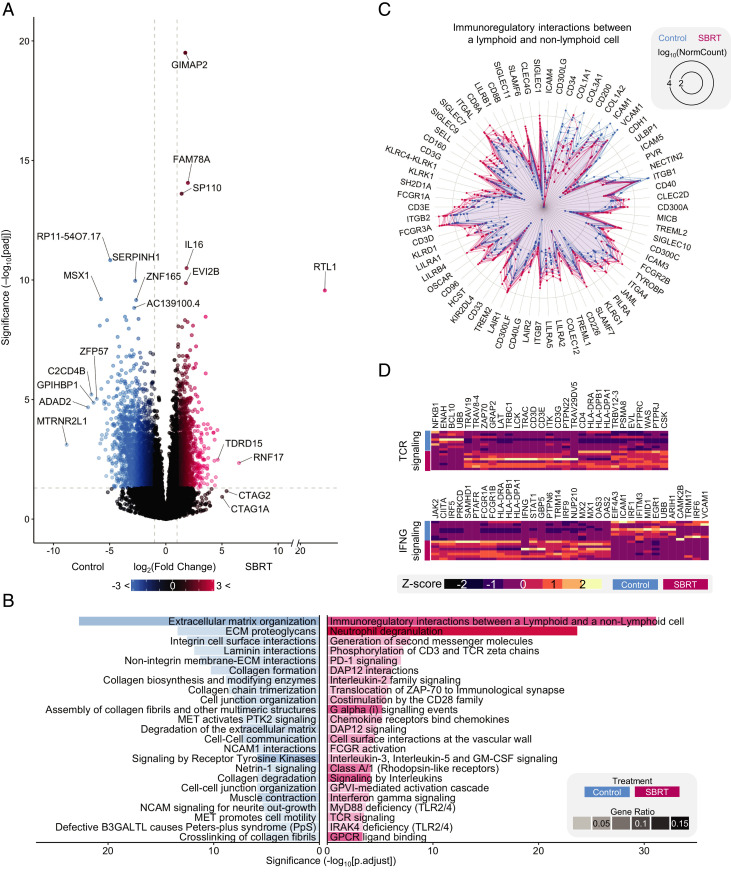
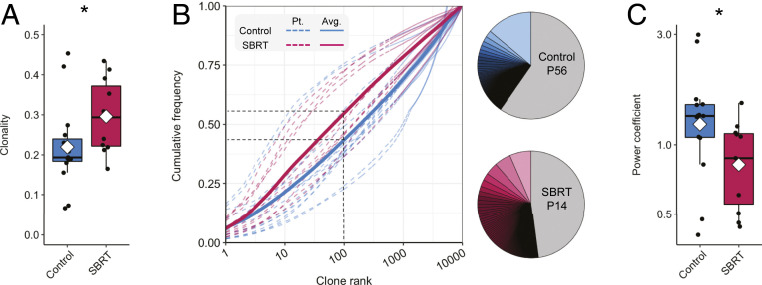
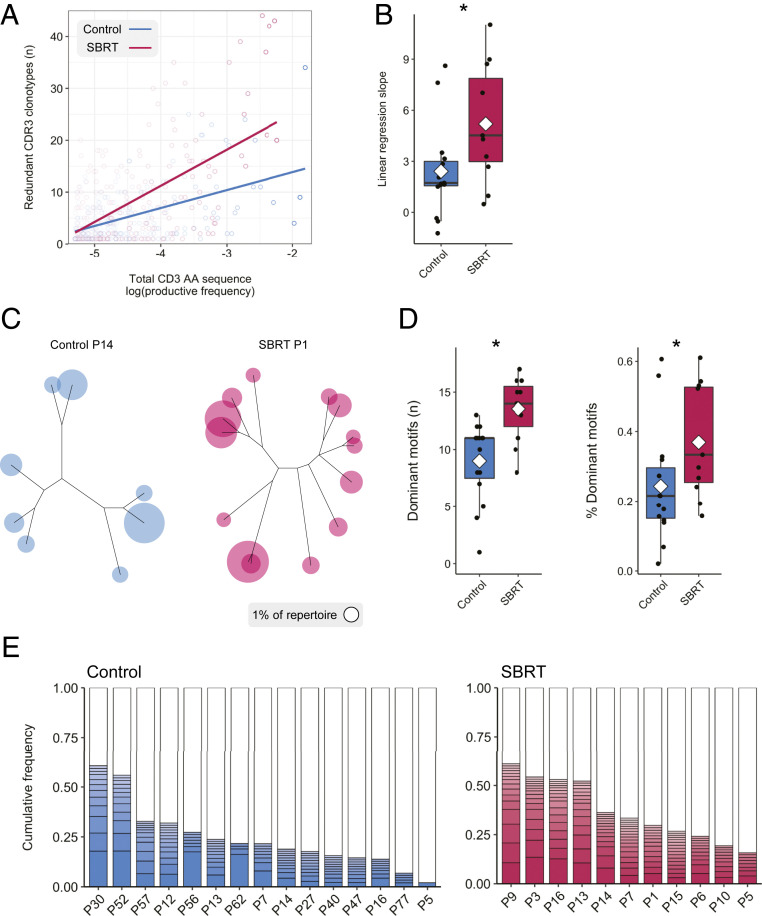
Clinical studies combining radiation and immunotherapy have shown promising response rates, strengthening efforts to sensitize tumors to immune-mediated attack. Thus, there is an ongoing surge in trials using preconditioning regimens with immunotherapy. Yet, due to the scarcity of resected tumors treated in situ with radiotherapy, there has been little investigation of radiation's sole contributions to local and systemic antitumor immunity in patients. Without this access, translational studies have been limited to evaluating circulating immune subsets and systemic remodeling of peripheral T cell receptor repertoires. This constraint has left gaps in how radiation impacts intratumoral responses and whether tumor-resident T cell clones are amplified following treatment. Therefore, to interrogate the immune impact of radiation on the tumor microenvironment and test the hypothesis that radiation initiates local and systemic expansion of tumor-resident clones, we analyzed renal cell carcinomas from patients treated with stereotactic body radiation therapy. Transcriptomic comparisons were evaluated by bulk RNA sequencing. T cell receptor sequencing monitored repertoires during treatment. Pathway analysis showed radiation-specific enrichment of immune-related processes, and T cell receptor sequencing revealed increased clonality in radiation-treated tumors. The frequency of identified, tumor-enriched clonotypes was tracked across serial blood samples. We observed increased abundance of tumor-enriched clonotypes at 2 wk postradiation compared with pretreatment levels; however, this expansion was not sustained, and levels contracted toward baseline by 4 wk posttreatment. Taken together, these results indicate robust intratumoral immune remodeling and a window of tumor-resident T cell expansion following radiation that may be leveraged for the rational design of combinatorial strategies.
联合放疗和免疫治疗的临床研究显示出了有希望的反应率,这加强了使肿瘤对免疫介导的攻击敏感的努力。因此,目前正在进行大量使用免疫治疗预处理方案的试验。然而,由于用放射疗法原位治疗的切除肿瘤数量稀少,因此很少研究放疗对患者局部和全身抗肿瘤免疫的单独贡献。没有这种方法,转化研究就仅限于评估循环免疫亚群和外周 T 细胞受体库的全身重塑。这种限制导致人们对放疗如何影响肿瘤内反应以及肿瘤内 T 细胞克隆在治疗后是否扩增存在空白。因此,为了探究放疗对肿瘤微环境的免疫影响,并检验放疗引发肿瘤内驻留克隆局部和全身扩增的假设,我们分析了接受立体定向体部放射治疗的肾癌患者的肿瘤样本。通过批量 RNA 测序评估转录组比较。在治疗过程中监测 T 细胞受体测序。通路分析显示辐射特异性富集免疫相关过程,T 细胞受体测序显示辐射治疗的肿瘤中克隆性增加。在一系列血液样本中跟踪鉴定出的、肿瘤富集的克隆型的频率。我们观察到与治疗前水平相比,放疗后 2 周肿瘤富集克隆型的丰度增加;然而,这种扩增没有持续下去,并且在治疗后 4 周时水平向基线收缩。综上所述,这些结果表明放疗后肿瘤内免疫重塑和肿瘤内 T 细胞扩增的窗口很大,这可能为组合策略的合理设计提供依据。