BERG LLC, 500 Old Connecticut Path, Bldg B, 3r Floor, Framingham, MA, 01701, USA.
Massey Cancer Center, Virginia Commonwealth University, Richmond, VA, 23298, USA.
J Racial Ethn Health Disparities. 2021 Aug;8(4):973-980. doi: 10.1007/s40615-020-00853-0. Epub 2020 Sep 8.
Hypertension, obesity and diabetes are major risk factors associated with morbidities underlying COVID-19 infections. Regression analysis correlated presence of ACE insertion/deletion (I/D) polymorphism to COVID-19 incidence and mortality. Furthermore, COVID-19 prevalence correlated to allele frequency of angiotensin-converting enzyme (ACE) deletion (D) polymorphism within the European population.
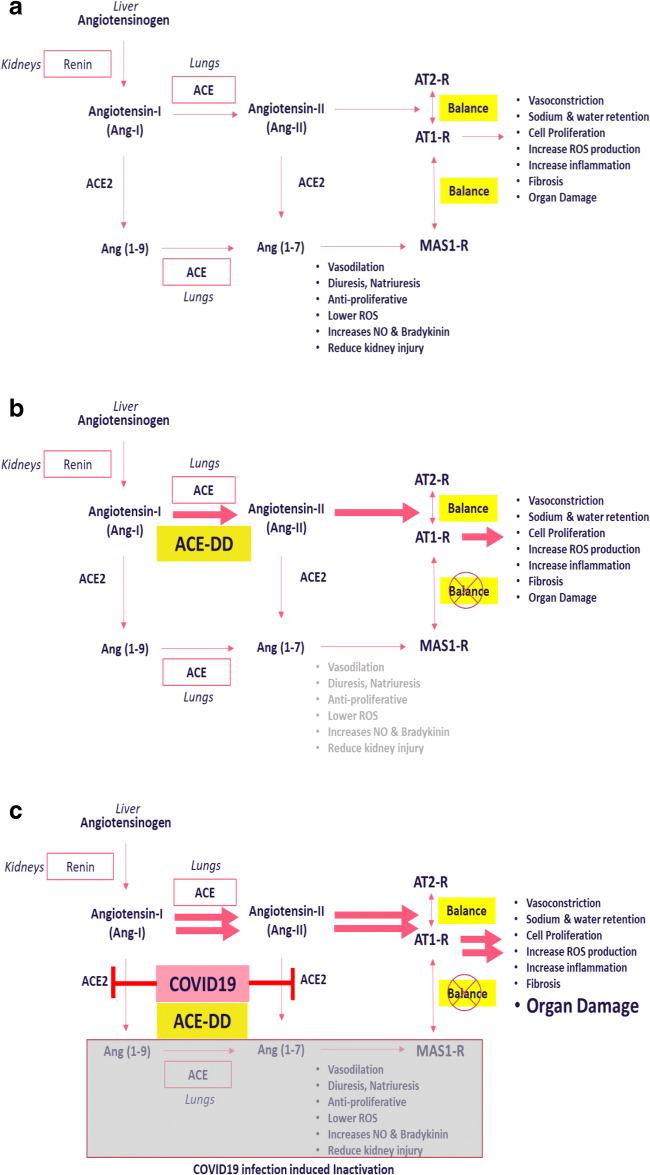
Homozygous ACE deletion polymorphism is associated with increase in ACE and angiotensin II (Ang-II), sustained levels can result in inflammation, fibrosis and organ damage. The ACE DD polymorphism is also associated with hypertension, acute respiratory distress and diabetic nephropathy, all considered high risk for COVID-19 infection and outcomes. The study objective was to describe a biological framework associating ethnic prevalence of ACE deletion polymorphism to COVID-19 comorbidities providing rationale for therapeutic utility of ACE-I/ARBs to improve outcomes.
The Allele Frequency Database (ALFRED) was queried for frequency of rs4646994 representing ACE I/D polymorphism. In a total of 349 worldwide population samples, frequency of ACE D allele was higher in European, Asian, and Africans cohorts. In the USA, the frequency of ACE D allele was higher in non-Hispanic Black compared with non-Hispanic White and Mexican Americans.
COVID-19 binding mediated reduction/inactivation of ACE-II can increase ACE/Ang-II signalling pathway and related pathologies. The presence of ACE DD polymorphism with COVID-19 infection likely augments ACE/Ang-II activities, increasing severity of COVID-19 morbidities and impacts outcomes. Thus, ethnic prevalence of ACE DD polymorphism can explain in part the severity of COVID-19 morbidity providing rationale for the use of ACE-I/ARBs to improve outcomes.
高血压、肥胖症和糖尿病是与 COVID-19 感染相关的主要疾病风险因素。回归分析将 ACE 插入/缺失(I/D)多态性的存在与 COVID-19 的发病率和死亡率相关联。此外,COVID-19 的流行率与欧洲人群中血管紧张素转化酶(ACE)缺失(D)多态性的等位基因频率相关。
ACE 缺失纯合子多态性与 ACE 和血管紧张素 II(Ang-II)的增加相关,持续的水平可能导致炎症、纤维化和器官损伤。ACE DD 多态性也与高血压、急性呼吸窘迫和糖尿病肾病相关,这些都被认为是 COVID-19 感染和结局的高风险因素。本研究的目的是描述一个将 ACE 缺失多态性的种族流行率与 COVID-19 合并症相关联的生物学框架,为 ACE-I/ARB 的治疗应用提供依据,以改善结局。
通过Allele Frequency Database(ALFRED)查询代表 ACE I/D 多态性的 rs4646994 的等位基因频率。在来自全球的 349 个样本中,ACE D 等位基因的频率在欧洲、亚洲和非洲人群中较高。在美国,非西班牙裔黑人的 ACE D 等位基因频率高于非西班牙裔白人和墨西哥裔美国人。
COVID-19 结合介导的 ACE-II 减少/失活可增加 ACE/Ang-II 信号通路及相关病理。ACE DD 多态性与 COVID-19 感染共存可能会增强 ACE/Ang-II 活性,增加 COVID-19 合并症的严重程度并影响结局。因此,ACE DD 多态性的种族流行率可以部分解释 COVID-19 发病率的严重程度,为 ACE-I/ARB 的应用提供了改善结局的依据。