Department of Obstetrics and Gynecology, The Second Hospital of Shanxi Medical University, Taiyuan, Shanxi 030001, P.R. China.
Int J Mol Med. 2020 Nov;46(5):1862-1872. doi: 10.3892/ijmm.2020.4716. Epub 2020 Aug 31.
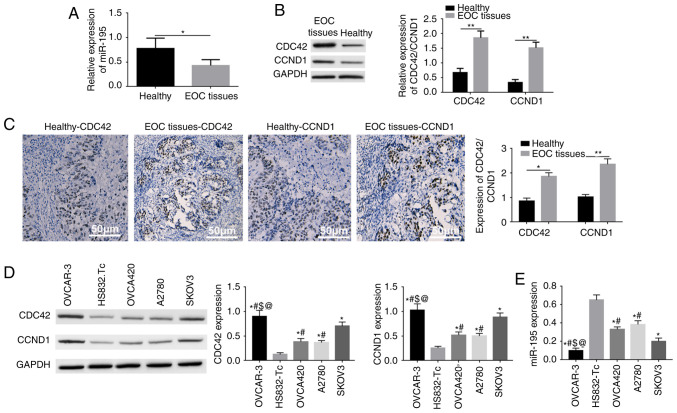
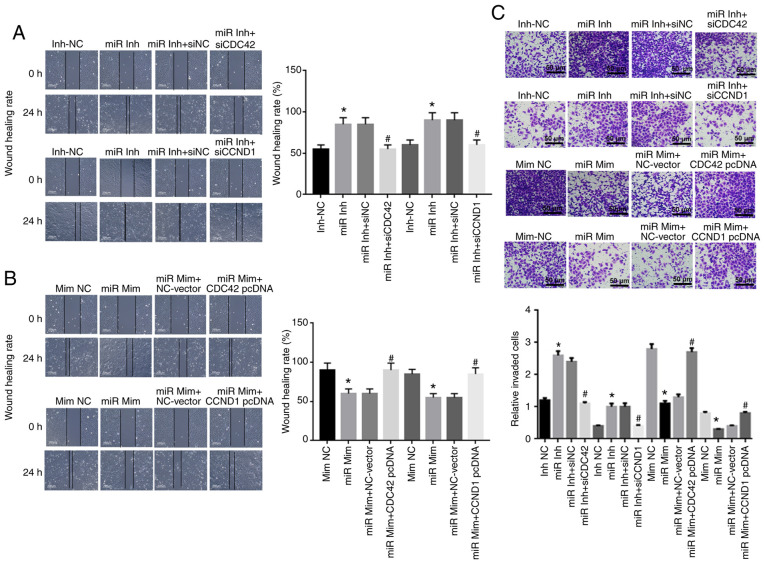
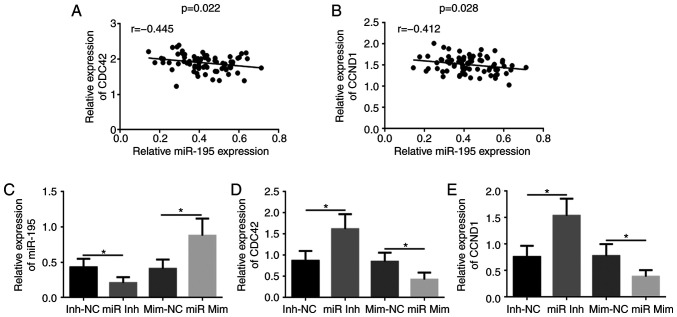
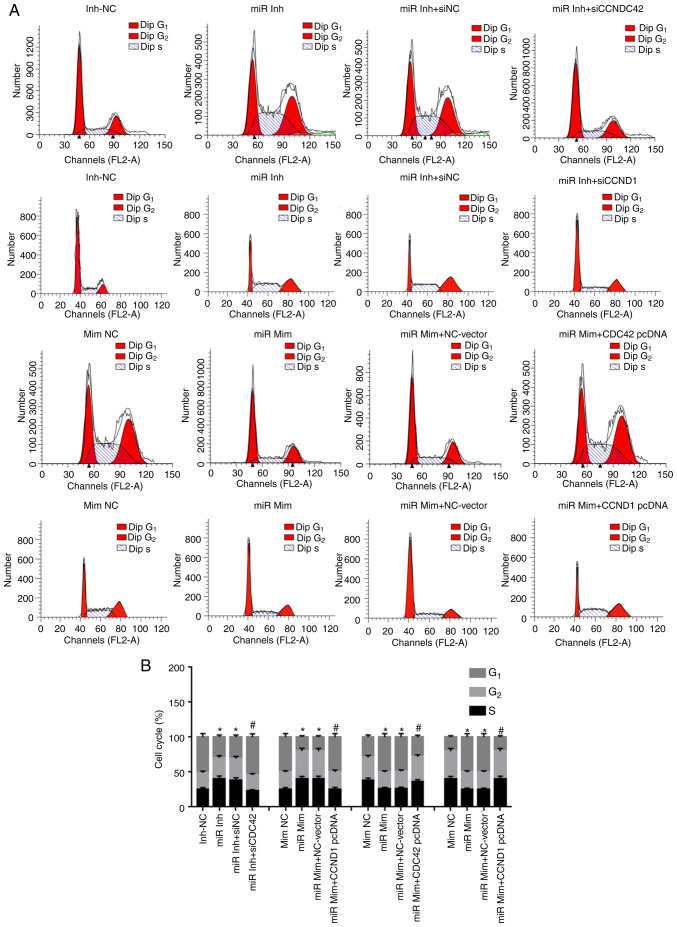
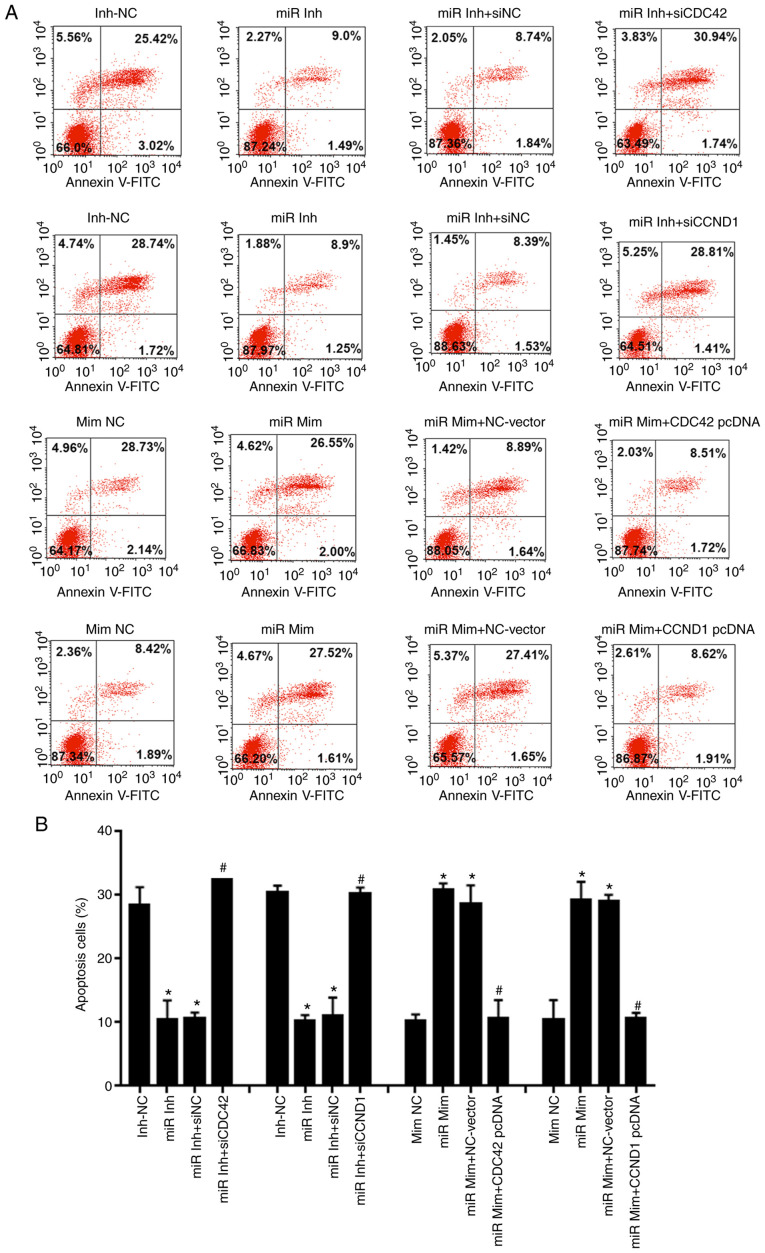
Epithelial ovarian carcinoma (EOC) is the most common cause of gynecological cancer mortality, and poses a threat to women. MicroRNA‑195 (miR‑195) has been reported to induce apoptosis of human OVCAR‑3 cells by inhibiting the VEGFR2/AKT pathway. However, the role of miR‑195 in EOC remains unknown. A previous study reported that cell division cycle 42 (CDC42) can serve as a target gene of miR‑195 and mediate malignant progression of esophageal squamous cell carcinoma (ESCC). The aim of the present study was to investigate the role of miR‑195 in EOC and the regulation in CDC42/CCND1 pathway. Tissues samples and clinical materials were collected from 78 enrolled patients with EOC to analyze the expression and clinical significance of miR‑195, CDC42 and cyclin D1 (CCND1). Human EOC cell lines OVCA420, OVCAR‑3, A2780 and SKOV3 cell lines were used to assess the expression and function of miR‑195, CDC42 and CCND1 in vitro. Cell proliferation, the cell cycle and apoptosis, as well as the cell migratory and invasive abilities were detected in vitro using BrdU incorporation, colony formation, wound healing and Transwell invasion assays, along with flow cytometry. miR‑195 was downregulated, while CDC42 and CCND1 were upregulated in human EOC tissues and cells, and the aberrant expression of both was associated with increased EOC malignancy. Moreover, miR‑195 expression was negatively correlated with CDC42 and CCND1 expression levels, and negatively regulated these expression levels. Thus, it was suggested that miR‑195 functions as a tumor suppressor, but CDC42 and CCND1 act as tumor promoters based their abilities to enhance cell proliferation, cell cycle entry, migration and invasion, as well as decrease apoptosis in OVCAR‑3 cells. the present results demonstrated that miR‑195 inhibited human EOC progression by downregulating CDC42 and CCND1 expression. Furthermore, it was identified that miR‑195, CDC42 and CCND1 may be effective biomarkers for EOC diagnosis and treatment.
上皮性卵巢癌 (EOC) 是妇科癌症死亡的最常见原因,对女性构成威胁。有研究报道,微小 RNA-195 (miR-195) 通过抑制 VEGFR2/AKT 通路诱导人 OVCAR-3 细胞凋亡。然而,miR-195 在 EOC 中的作用尚不清楚。先前的研究报道称,细胞分裂周期蛋白 42 (CDC42) 可作为 miR-195 的靶基因,并介导食管鳞状细胞癌 (ESCC) 的恶性进展。本研究旨在探讨 miR-195 在 EOC 中的作用及其在 CDC42/CCND1 通路中的调控作用。收集 78 例上皮性卵巢癌患者的组织样本和临床资料,分析 miR-195、CDC42 和细胞周期蛋白 D1 (CCND1) 的表达及临床意义。体外采用人卵巢癌细胞系 OVCA420、OVCAR-3、A2780 和 SKOV3 细胞系评估 miR-195、CDC42 和 CCND1 的表达和功能。采用 BrdU 掺入、集落形成、划痕愈合和 Transwell 侵袭实验以及流式细胞术检测细胞增殖、细胞周期和细胞凋亡以及细胞迁移和侵袭能力。结果显示,miR-195 在人卵巢癌组织和细胞中下调,而 CDC42 和 CCND1 上调,并且两者的异常表达与卵巢癌恶性程度增加有关。此外,miR-195 的表达与 CDC42 和 CCND1 的表达水平呈负相关,并负调控这些表达水平。因此,提示 miR-195 作为一种肿瘤抑制因子发挥作用,而 CDC42 和 CCND1 则作为肿瘤促进因子,通过增强 OVCAR-3 细胞的增殖、细胞周期进入、迁移和侵袭以及降低细胞凋亡来发挥作用。本研究结果表明,miR-195 通过下调 CDC42 和 CCND1 的表达抑制人卵巢癌的进展。此外,miR-195、CDC42 和 CCND1 可能是 EOC 诊断和治疗的有效生物标志物。