Dong Xiaohan, Ding Shanshan, Yu Miao, Niu Limin, Xue Linlin, Zhao Yajing, Xie Li, Song Xingguo, Song Xianrang
Department of Clinical Laboratory, Shandong Cancer Hospital and Institute, Shandong First Medical University & Shandong Academy of Medical Sciences, Jinan, China.
Department of Clinical Laboratory, Shandong Provincial Third Hospital, Cheeloo College of Medicine, Shandong University, Jinan, China.
Front Oncol. 2020 Aug 12;10:1627. doi: 10.3389/fonc.2020.01627. eCollection 2020.
Small nuclear RNA (snRNA) levels are extremely variable across a wide range of biological conditions. SnRNAs could potentially regulate alternative splicing to drive genetic, dysplastic and neoplastic disease, which might be the main reason for mRNA profile alteration in tumor educated platelets (TEPs).
Platelets were isolated from the plasma of lung cancer patients and healthy donors by low-speed centrifugation and subjected to RNA isolation. SnRNA U1, U2, U5 levels were detected by quantitative real-time polymerase chain reaction (qRT-PCR). Exosomes were isolated by ultracentrifugation and identified by qNano.
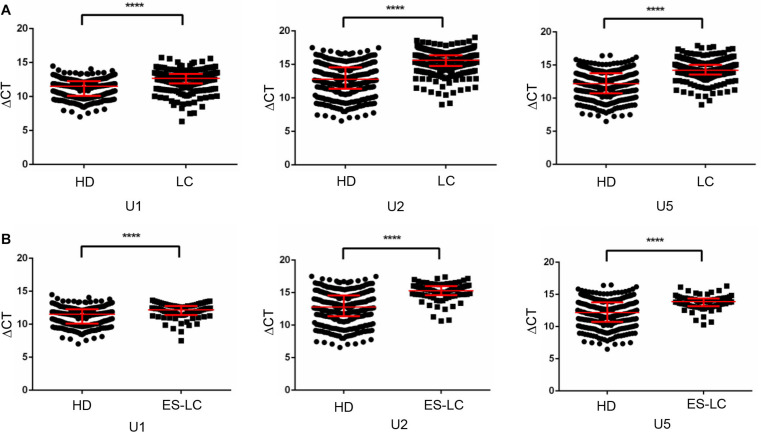
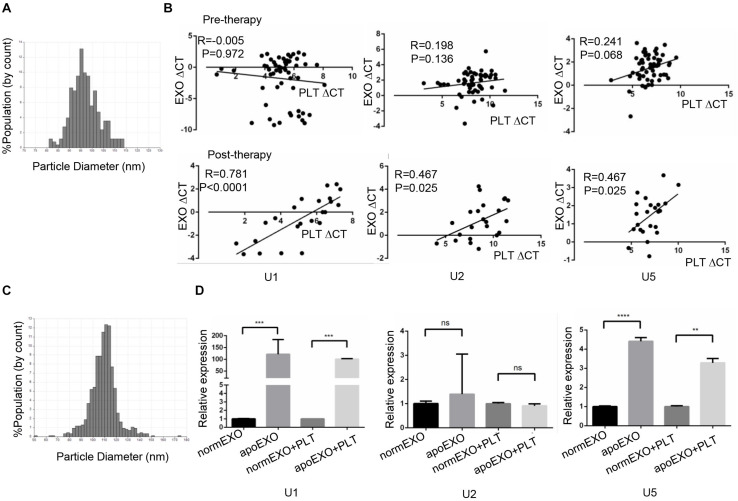
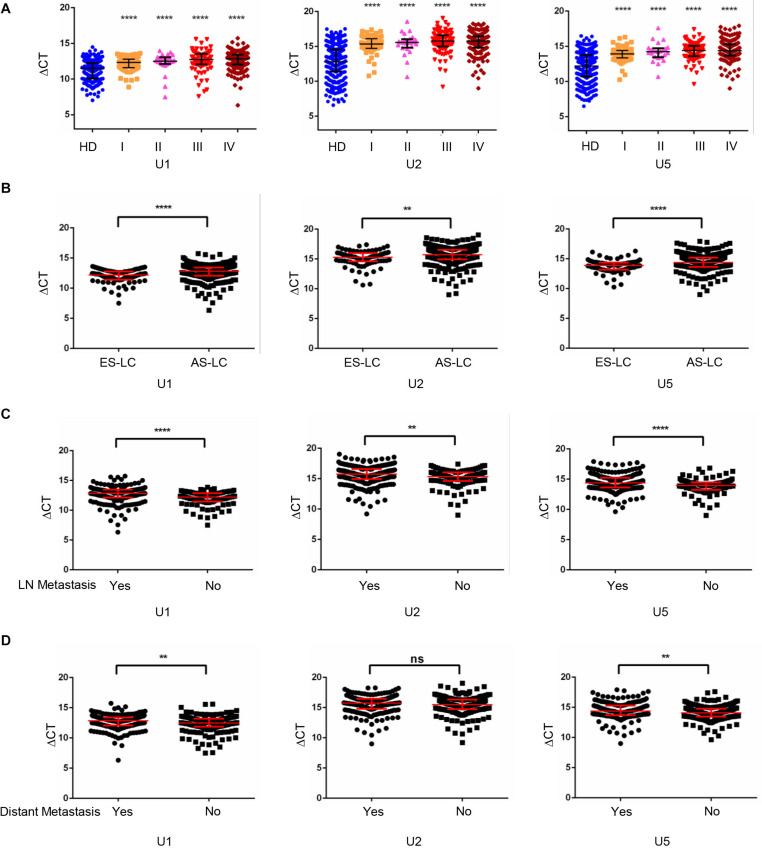
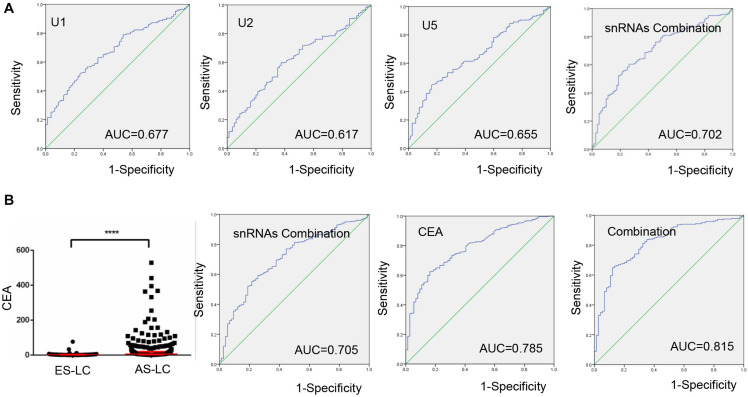
TEP U1, U2, U5 levels were significantly decreased in patients with lung cancer as well as with early stage patients, their downregulation was correlated with lung cancer progression, possessing favorable diagnostic efficiency. More importantly, TEP U1, U2 and U5 levels were closely correlated between paired exosomes and TEP from treated patients but not from untreated ones, and U1, U5 but not U2 in platelets were elevated by apo-exosomes.
Tumor educated platelet small nuclear RNAs are downregulated and act as promising biomarkers in lung cancer.
小核RNA(snRNA)水平在广泛的生物学条件下极具变异性。SnRNAs可能潜在地调节可变剪接,从而引发遗传性、发育异常性和肿瘤性疾病,这可能是肿瘤驯化血小板(TEPs)中mRNA谱改变的主要原因。
通过低速离心从肺癌患者和健康供体的血浆中分离血小板,并进行RNA分离。通过定量实时聚合酶链反应(qRT-PCR)检测SnRNA U1、U2、U5水平。通过超速离心分离外泌体并通过qNano进行鉴定。
肺癌患者以及早期患者的TEP U1、U2、U5水平显著降低,其下调与肺癌进展相关,具有良好的诊断效率。更重要的是,配对的外泌体与治疗患者而非未治疗患者的TEP之间,TEP U1、U2和U5水平密切相关,载脂蛋白外泌体可使血小板中的U1、U5而非U2升高。
肿瘤驯化血小板小核RNA下调,并在肺癌中作为有前景的生物标志物。