Dewan Monia Vanessa, Serdar Meray, van de Looij Yohan, Kowallick Mirjam, Hadamitzky Martin, Endesfelder Stefanie, Fandrey Joachim, Sizonenko Stéphane V, Herz Josephine, Felderhoff-Müser Ursula, Bendix Ivo
Department of Paediatrics I, Neonatology and Experimental Perinatal Neurosciences, University Hospital Essen, University Duisburg-Essen, Essen, Germany.
Division of Child Development and Growth, Department of Paediatrics, School of Medicine, University of Geneva, Geneva, Switzerland.
Front Neurol. 2020 Aug 12;11:804. doi: 10.3389/fneur.2020.00804. eCollection 2020.
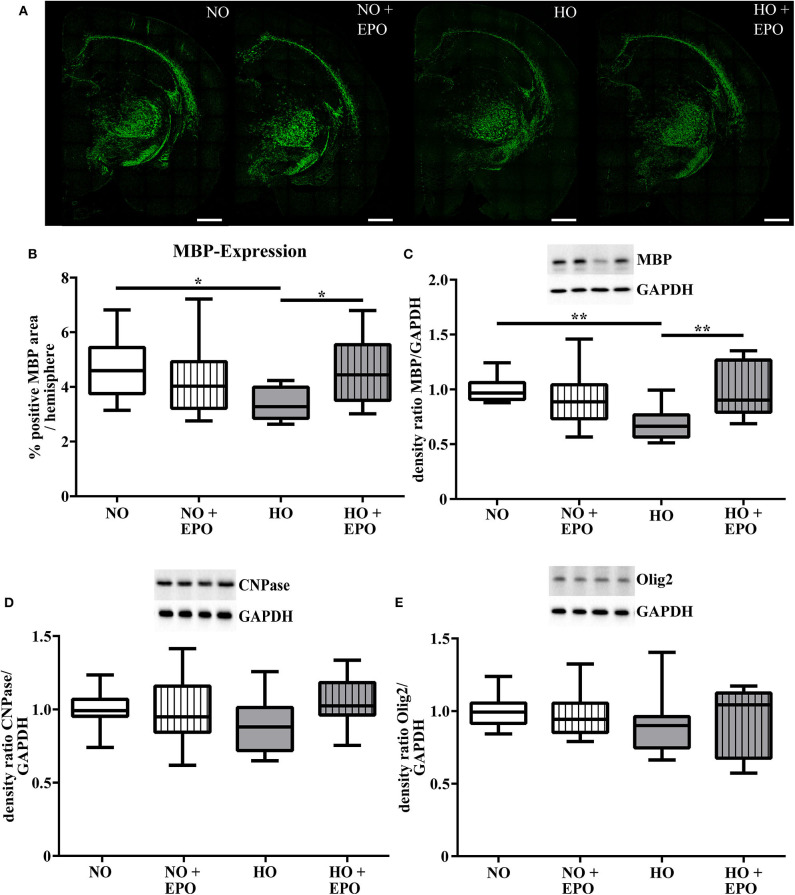
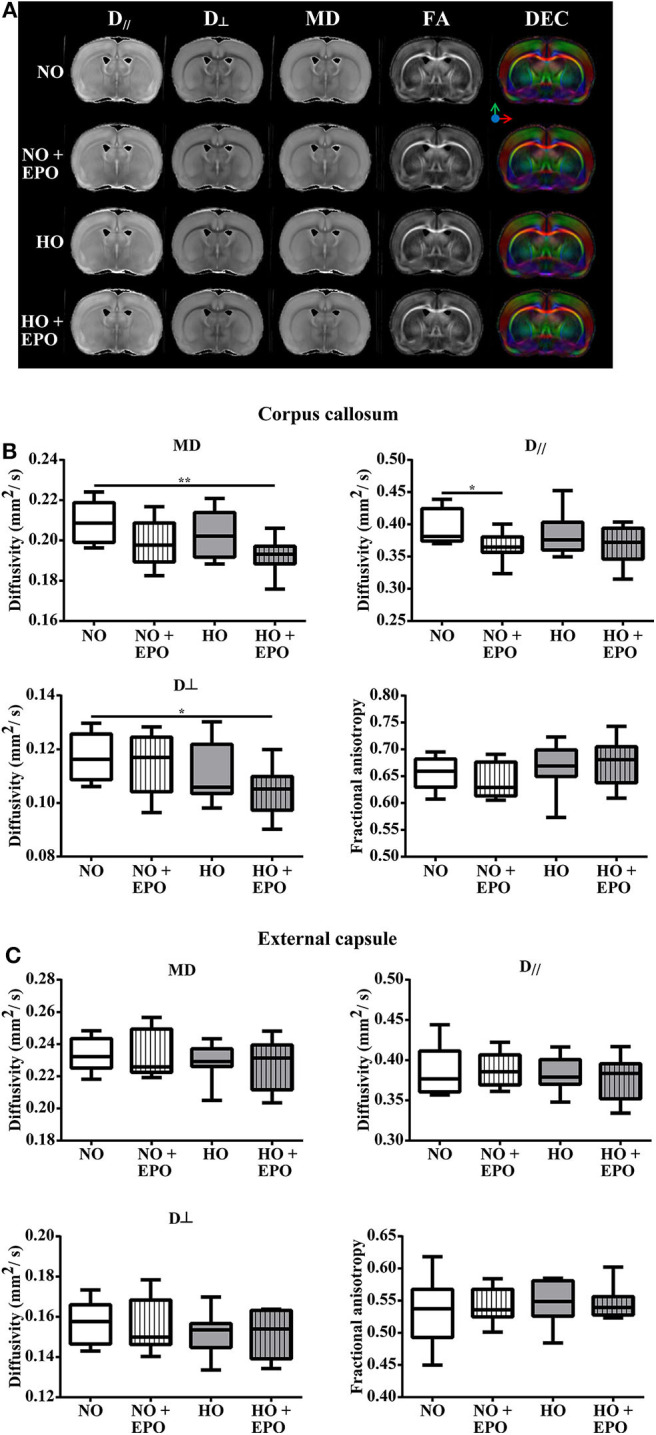
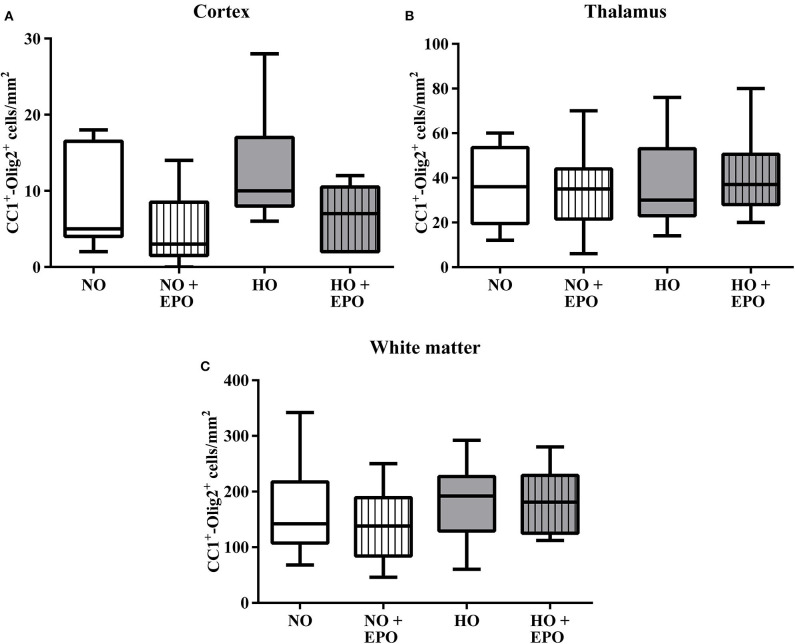
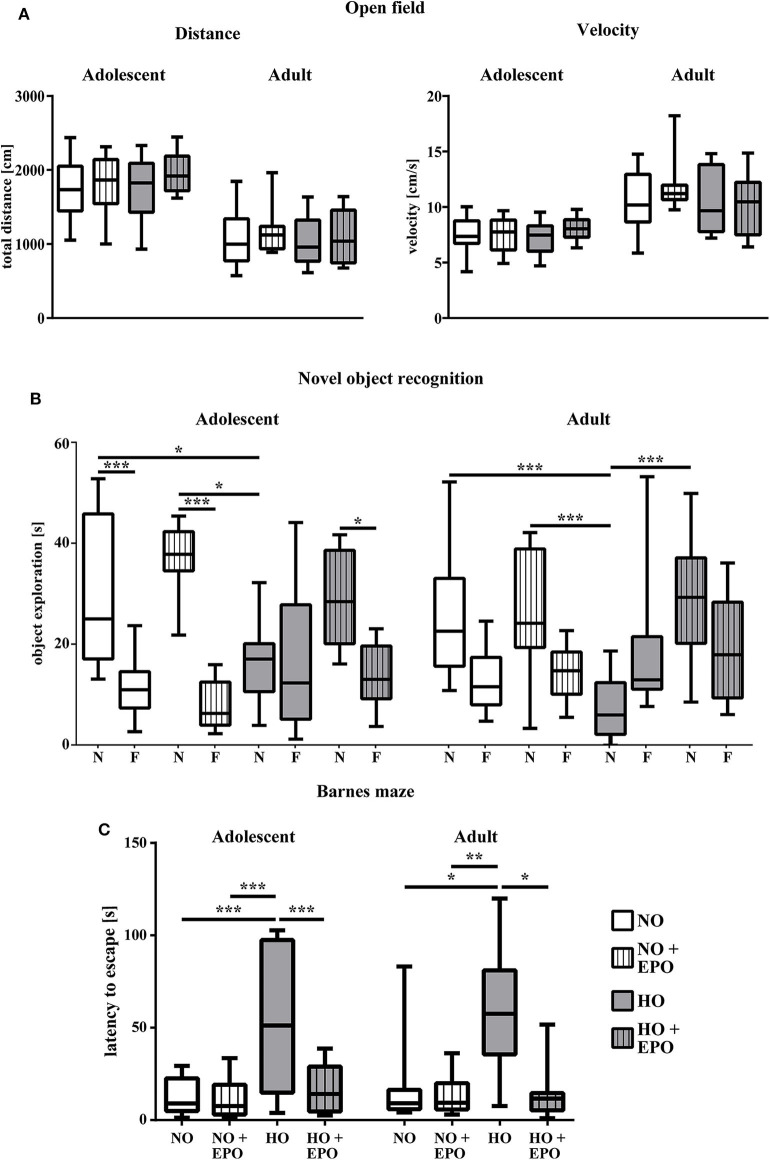
Preterm infants born before 28 weeks of gestation are at high risk of neurodevelopmental impairment in later life. Cerebral white and gray matter injury is associated with adverse outcomes. High oxygen levels, often unavoidable in neonatal intensive care, have been identified as one of the main contributing factors to preterm brain injury. Thus, preventive and therapeutic strategies against hyperoxia-induced brain injury are needed. Erythropoietin (Epo) is a promising and also neuroprotective candidate due to its clinical use in infants as erythropoiesis-stimulating agent. The objective of this study was to investigate the effects of repetitive Epo treatment on the cerebral white matter and long-term motor-cognitive outcome in a neonatal rodent model of hyperoxia-induced brain injury. Three-day old Wistar rats were exposed to hyperoxia (48 h, 80% oxygen). Four doses of Epo (5,000 IU/kg body weight per day) were applied intraperitoneally from P3-P6 with the first dose at the onset of hyperoxia. Oligodendrocyte maturation and myelination were evaluated via immunohistochemistry and Western blot on P11. Motor-cognitive deficits were assessed in a battery of complex behavior tests (Open Field, Novel Object Recognition, Barnes maze) in adolescent and fully adult animals. Following behavior tests animals underwent post-mortem diffusion tensor imaging to investigate long-lasting microstructural alterations of the white matter. Repetitive treatment with Epo significantly improved myelination deficits following neonatal hyperoxia at P11. Behavioral testing revealed attenuated hyperoxia-induced cognitive deficits in Epo-treated adolescent and adult rats. A multiple Epo dosage regimen protects the developing brain against hyperoxia-induced brain injury by improving myelination and long-term cognitive outcome. Though current clinical studies on short-term outcome of Epo-treated prematurely born children contradict our findings, long-term effects up to adulthood are still lacking. Our data support the essential need for long-term follow-up of preterm infants in current clinical trials.
妊娠28周前出生的早产儿在日后生活中面临神经发育障碍的高风险。脑白质和灰质损伤与不良后果相关。在新生儿重症监护中常常不可避免的高氧水平,已被确定为早产脑损伤的主要促成因素之一。因此,需要针对高氧诱导脑损伤的预防和治疗策略。促红细胞生成素(Epo)因其在婴儿中作为促红细胞生成剂的临床应用,是一种有前景且具有神经保护作用的候选药物。本研究的目的是在高氧诱导脑损伤的新生啮齿动物模型中,研究重复给予Epo治疗对脑白质和长期运动认知结局的影响。3日龄的Wistar大鼠暴露于高氧环境(48小时,80%氧气)。从出生后第3天至第6天,每天腹腔注射4剂Epo(5000 IU/kg体重),第一剂在高氧暴露开始时注射。在出生后第11天,通过免疫组织化学和蛋白质印迹法评估少突胶质细胞成熟和髓鞘形成。在青春期和成年动物中,通过一系列复杂行为测试(旷场试验、新物体识别、巴恩斯迷宫)评估运动认知缺陷。行为测试后,对动物进行死后扩散张量成像,以研究白质的长期微观结构改变。重复给予Epo治疗显著改善了出生后第11天新生儿高氧后的髓鞘形成缺陷。行为测试显示,Epo治疗的青春期和成年大鼠中,高氧诱导的认知缺陷有所减轻。多次Epo给药方案通过改善髓鞘形成和长期认知结局,保护发育中的大脑免受高氧诱导的脑损伤。尽管目前关于Epo治疗早产儿短期结局的临床研究与我们的发现相矛盾,但直至成年期的长期影响仍缺乏研究。我们的数据支持在当前临床试验中对早产儿进行长期随访的必要性。