Zou Yan-Hui, Guan Pei-Pei, Zhang Shen-Qing, Guo Yan-Su, Wang Pu
College of Life and Health Sciences, Northeastern University, Shenyang, China.
Beijing Geriatric Healthcare Center, Xuanwu Hospital, Capital Medical University, Beijing, China.
Front Neurosci. 2020 Aug 13;14:817. doi: 10.3389/fnins.2020.00817. eCollection 2020.
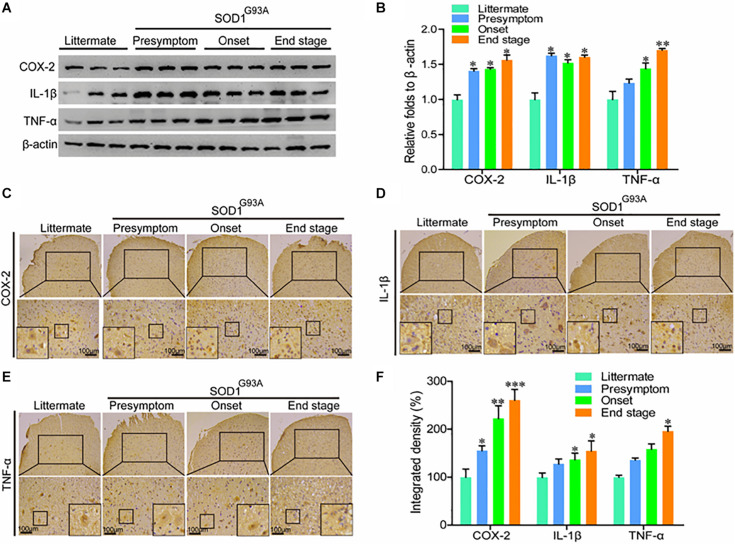
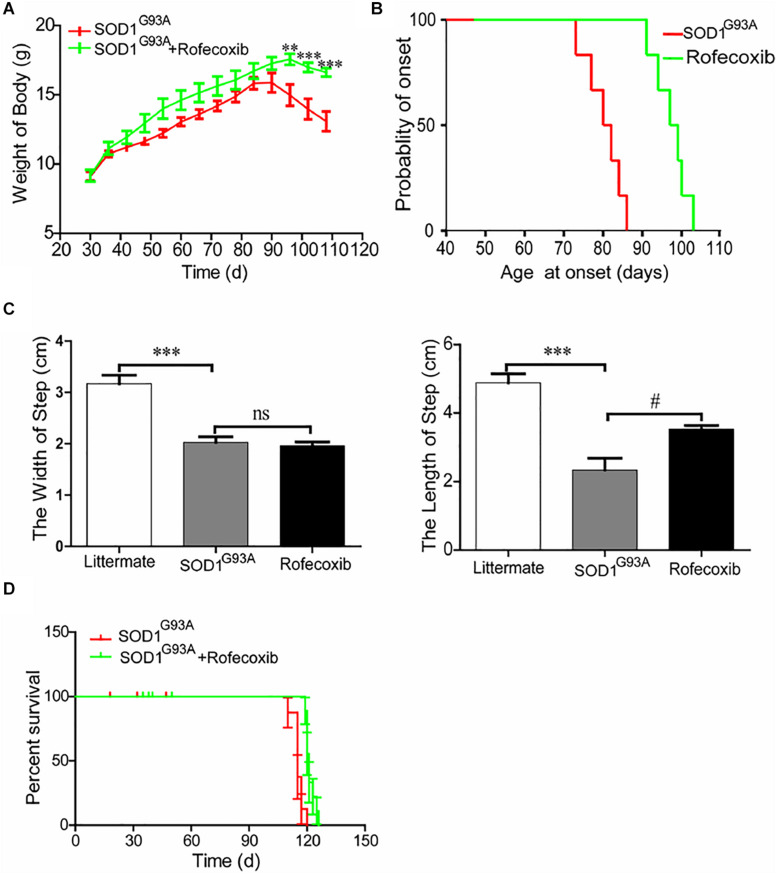
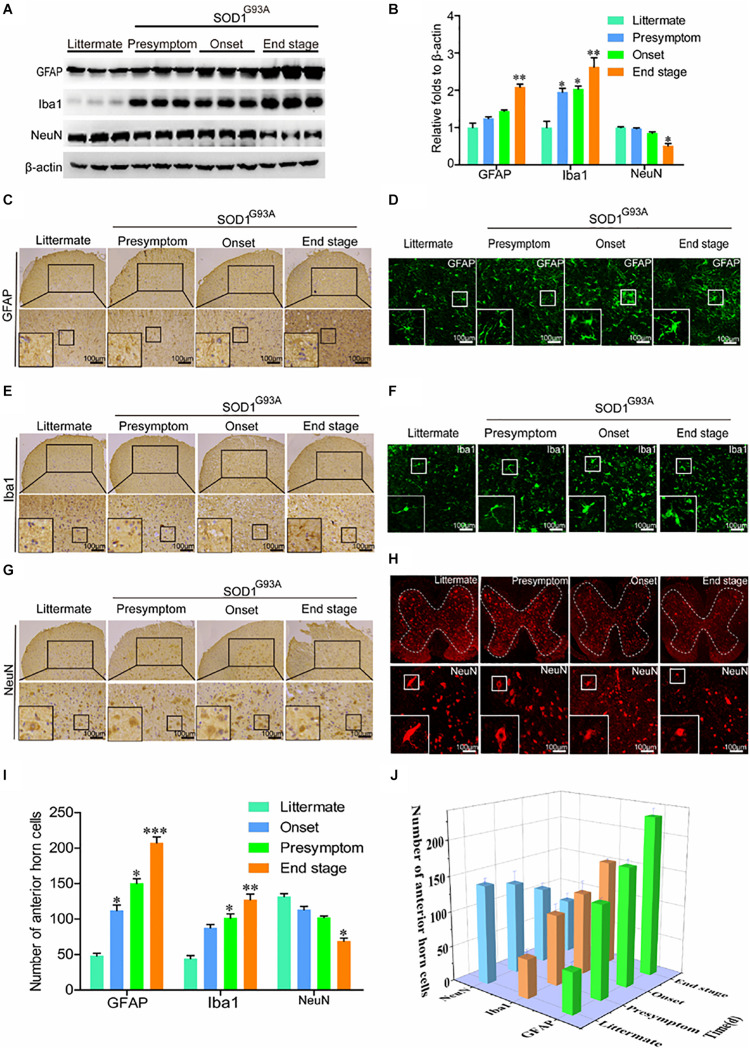
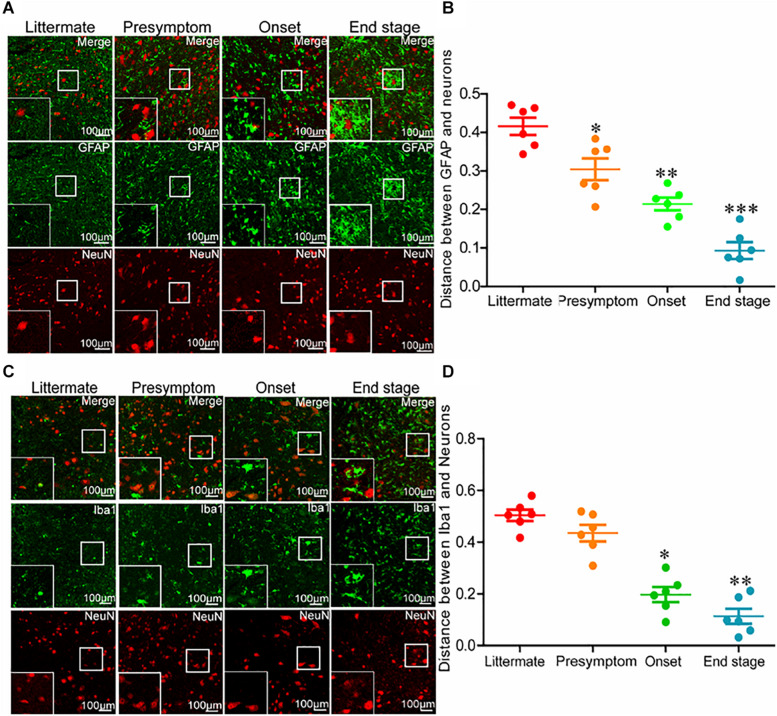
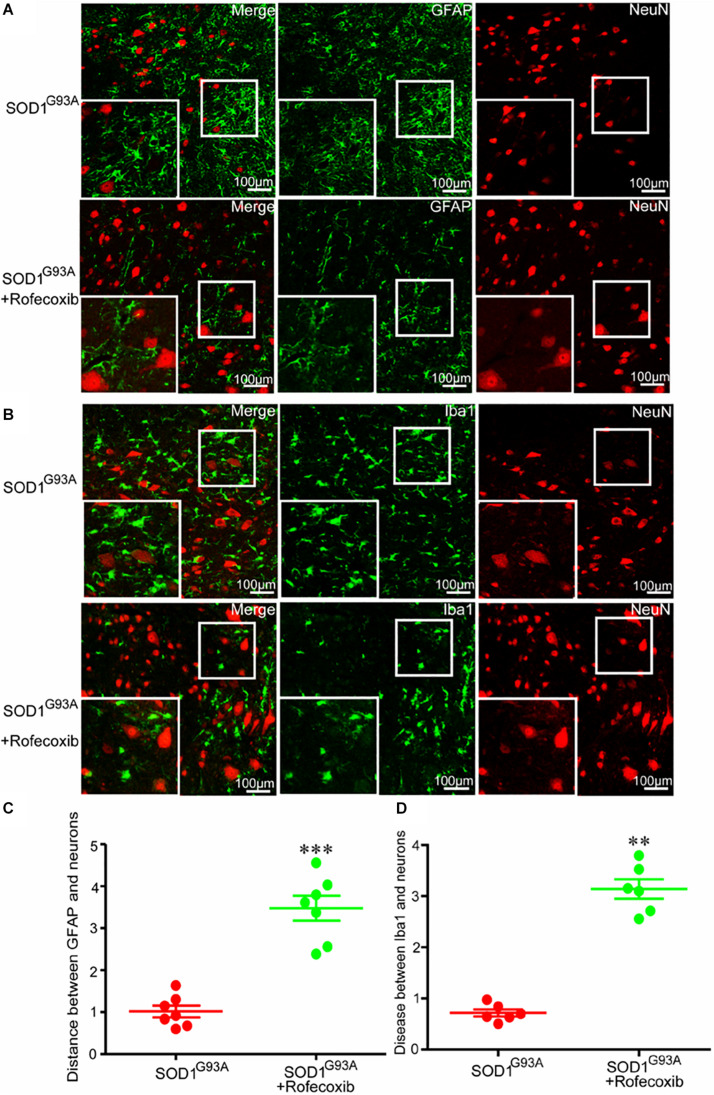
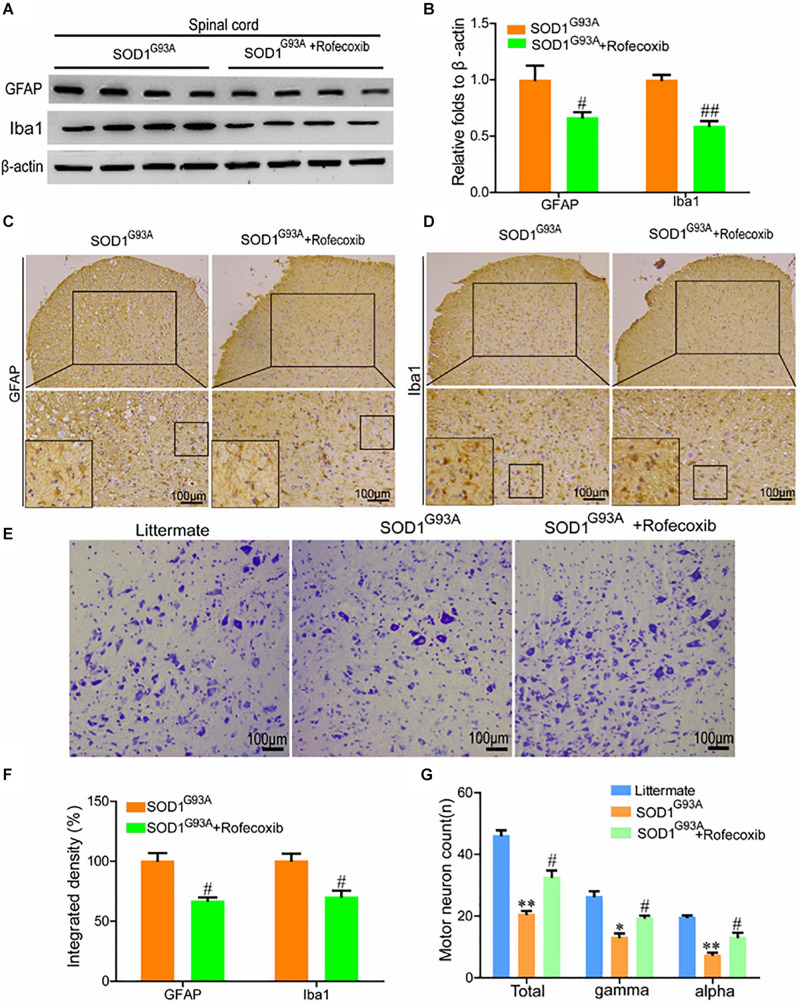
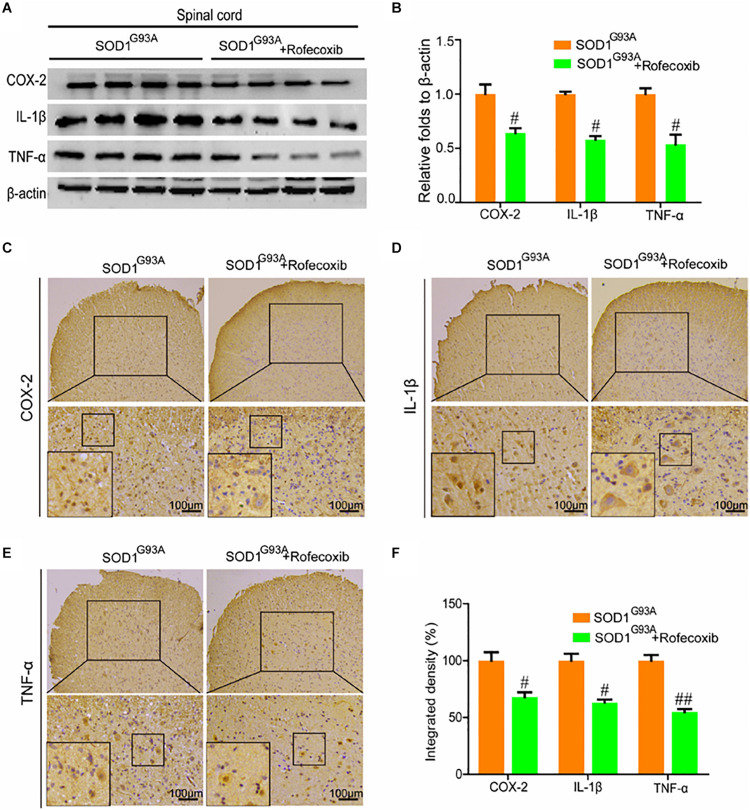
Cyclooxygenase-2 (COX-2) is reported to be activated during the course of amyotrophic lateral sclerosis (ALS) development and progression. However, the roles of COX-2 in aggravating ALS and the underlying mechanism have been largely overlooked. To reveal the mechanisms, the canonical SOD1 mouse model was used as an experimental model for ALS in the current study. In addition, a specific inhibitor of COX-2 activity, rofecoxib, was orally administered to SOD1 mice. With this approach, we revealed that COX-2 proinflammatory signaling cascades were inhibited by rofecoxib in SOD1 mice. Specifically, the protein levels of COX-2, interleukin (IL)-1β, and tumor necrosis factor (TNF)-α were elevated as a result of activation of astrocytes and microglia during the course of ALS development and progression. These proinflammatory reactions may contribute to the death of neurons by triggering the movement of astrocytes and microglia to neurons in the context of ALS. Treatment with rofecoxib alleviated this close association between glial cells and neurons and significantly decreased the density of inflammatory cells, which helped to restore the number of motor neurons in SOD1 mice. Mechanistically, rofecoxib treatment decreased the expression of COX-2 and its downstream signaling targets, including IL-1β and TNF-α, by deactivating glial cells, which in turn ameliorated the progression of SOD1 mice by postponing disease onset and modestly prolonging survival. Collectively, these results provide novel insights into the mechanisms of ALS and aid in the development of new drugs to improve the clinical treatment of ALS.
据报道,环氧化酶-2(COX-2)在肌萎缩侧索硬化症(ALS)的发生和发展过程中被激活。然而,COX-2在加重ALS中的作用及其潜在机制在很大程度上被忽视了。为了揭示其机制,在本研究中使用经典的SOD1小鼠模型作为ALS的实验模型。此外,将COX-2活性的特异性抑制剂罗非昔布口服给予SOD1小鼠。通过这种方法,我们发现罗非昔布在SOD1小鼠中抑制了COX-2促炎信号级联反应。具体而言,在ALS发生和发展过程中,由于星形胶质细胞和小胶质细胞的激活,COX-2、白细胞介素(IL)-1β和肿瘤坏死因子(TNF)-α的蛋白质水平升高。这些促炎反应可能通过在ALS背景下触发星形胶质细胞和小胶质细胞向神经元的移动而导致神经元死亡。罗非昔布治疗减轻了神经胶质细胞与神经元之间的这种紧密关联,并显著降低了炎性细胞的密度,这有助于恢复SOD1小鼠运动神经元的数量。从机制上讲,罗非昔布治疗通过使神经胶质细胞失活来降低COX-2及其下游信号靶点(包括IL-1β和TNF-α)的表达,进而通过推迟疾病发作和适度延长生存期来改善SOD1小鼠的病情进展。总的来说,这些结果为ALS的机制提供了新的见解,并有助于开发新的药物以改善ALS的临床治疗。