Department of Orthopaedic Surgery, Loyola University Medical Center, Maywood, IL, USA.
Clin Orthop Surg. 2020 Sep;12(3):318-323. doi: 10.4055/cios19058. Epub 2020 Jun 29.
Antibiotic-loaded bone cement (ALBC) is commonly used in total knee arthroplasty (TKA), especially among high-risk patients. While previous studies have reported on the efficacy of ALBC in reducing the rate of periprosthetic joint infection (PJI), its impact on antibiotic resistance has not been determined. The purpose of this study was to investigate antibiotic resistance among organisms causing PJIs after TKA in which ALBC was utilized.
A retrospective review from December 1998 through December 2017 identified 36 PJIs that met inclusion criteria. Patients with culture-negative infection and unknown cement type were excluded. Patient characteristics, infecting organism, and antibiotic susceptibilities were recorded. ABLC included an aminoglycoside in all cases.
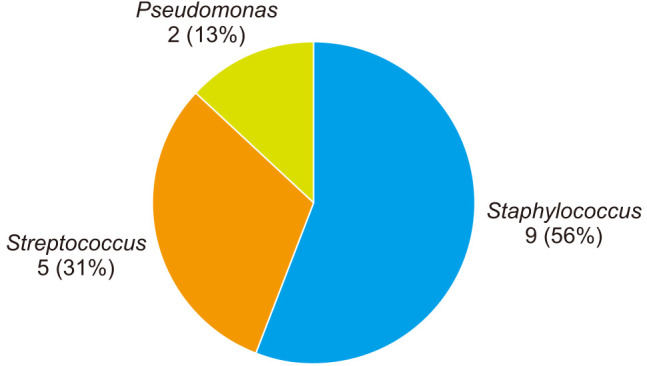
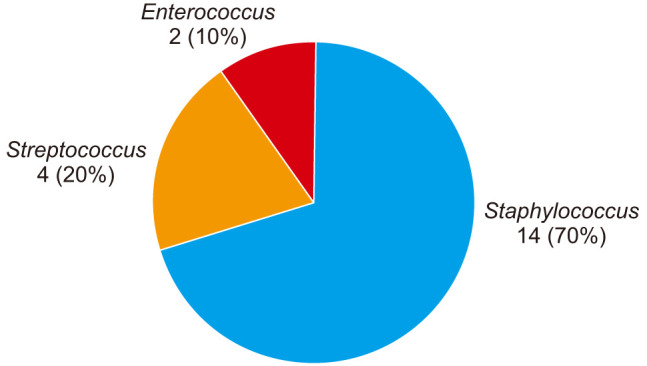
There was no difference in the type of PJI between the 2 groups. species was the most commonly isolated, with 9 of 16 cases (56.3%) using non-ALBC and 14 of 20 (65.0%) cases using ALBC. Of those infected with , there was no significant difference in antibiotic susceptibilities between groups. Overall, there were only 3 cases where the infecting organism was aminoglycoside resistant (standard cement, 1; ALBC, 2).
These results suggest that the use of ALBC does not increase the risk of antibiotic resistance or affect the pattern of infection, even as the use of ALBC continues to increase, particularly among high-risk patients.
抗生素骨水泥(ALBC)在全膝关节置换术(TKA)中被广泛应用,尤其适用于高危患者。尽管先前的研究已经报告了 ALBC 在降低假体周围关节感染(PJI)发生率方面的疗效,但它对抗生素耐药性的影响尚未确定。本研究旨在探讨在 TKA 中使用 ALBC 后导致 PJI 的病原体的抗生素耐药性。
回顾性分析了 1998 年 12 月至 2017 年 12 月间符合纳入标准的 36 例 PJI。排除培养阴性感染和未知骨水泥类型的患者。记录患者特征、感染病原体和抗生素药敏情况。所有 ABLC 均包含氨基糖苷类抗生素。
两组之间 PJI 的类型无差异。 是最常分离出的菌种,在未使用 ALBC 的 16 例病例中有 9 例(56.3%),在使用 ALBC 的 20 例病例中有 14 例(65.0%)。在感染 的病例中,两组之间抗生素药敏性无显著差异。总体而言,只有 3 例感染病原体对氨基糖苷类药物耐药(标准骨水泥 1 例;ALBC 2 例)。
这些结果表明,即使随着 ALBC 的使用不断增加,尤其是在高危患者中,使用 ALBC 并不会增加抗生素耐药性的风险或影响感染模式。